



Food has always been more than fuel. It is memory, identity, ritual, pleasure, and communication. Yet when food crosses a certain threshold—when it stops merely nourishing and begins deliberately expressing ideas, emotions, or critiques—it enters a fascinating territory: art. This transformation raises questions that ripple across culture, philosophy, economics, and even science. What happens when food becomes art? Does it still need to be eaten? Should it be preserved? Who decides its value? And perhaps most intriguingly, what does this transformation reveal about us?
This article explores food as art from multiple angles: historical roots, aesthetic theory, sensory science, cultural symbolism, technology, ethics, and the future of creative expression. The goal is not to romanticize food artistry, nor to dismiss it as pretension, but to understand what changes—conceptually and practically—when cuisine is no longer only about taste, but also about meaning.
1. The Ancient Roots of Edible Expression
Long before museums, food carried symbolic weight. Ancient banquets were theatrical performances designed to demonstrate power, hierarchy, and divine favor. In imperial China, dishes were named after poems or landscapes. In ancient Rome, extravagant feasts showcased rare ingredients arranged to astonish guests. These were not just meals; they were spectacles.
Religious offerings further blurred the line between sustenance and symbolism. Bread, wine, rice, fruit, and meat were shaped, arranged, and ritualized. Their value lay not in calories but in meaning. When food was sculpted, colored, or ceremonially presented, it already functioned as a form of artistic language.
Thus, the idea of food as art is not new. What is new is our conscious framing of it as art—subject to critique, exhibition, documentation, and theory.
2. Defining the Moment Food Becomes Art
At what exact point does food stop being “just food”?
Is it when presentation outweighs portion size?
When concept matters more than flavor?
When a dish is designed to provoke thought rather than satisfaction?
Art theory offers no single answer, but several useful criteria emerge:
- Intentionality: The creator intends the food to communicate beyond taste.
- Conceptual Framework: The dish refers to ideas—cultural, political, emotional, or philosophical.
- Audience Engagement: The eater becomes a participant, not just a consumer.
- Context: A plate in a gallery means something different from the same plate in a kitchen.
Food becomes art not because it is beautiful, expensive, or complex, but because it operates as a medium of expression.
3. The Plate as Canvas, the Kitchen as Studio
When chefs think like artists, the kitchen transforms into a studio. Ingredients become materials, techniques become tools, and recipes become evolving drafts rather than fixed instructions.
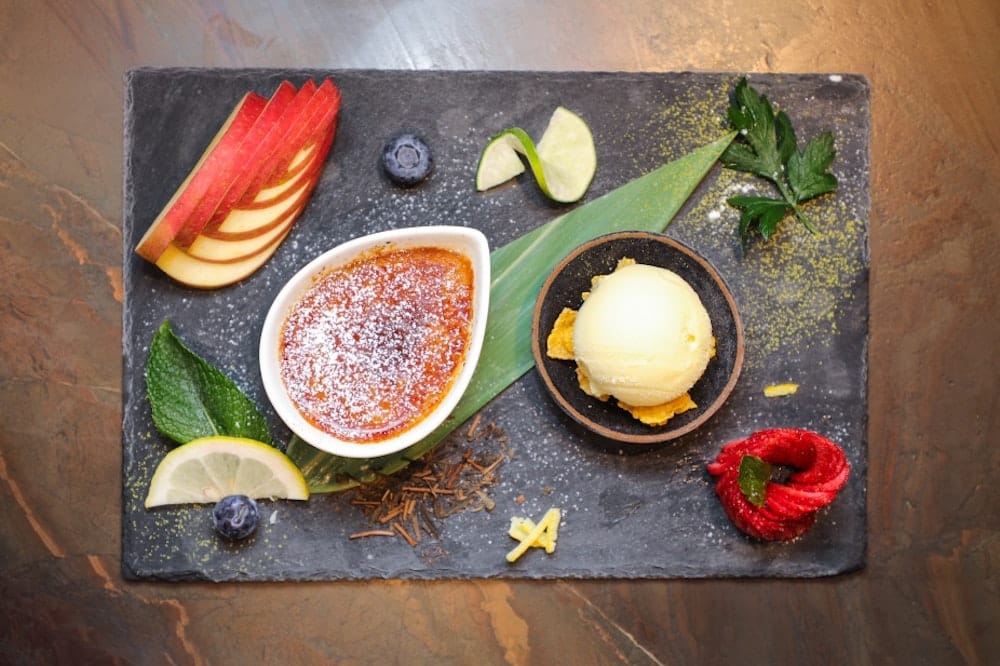
Plating, often dismissed as superficial, plays a central role. Composition, negative space, color contrast, and balance mirror principles found in painting and sculpture. A smear of sauce can echo a brushstroke. A vertical arrangement can suggest architectural tension. Even deliberate imperfection can signal authenticity or rebellion.
But unlike paint or stone, food is unstable. It wilts, melts, oxidizes, and decays. This fragility introduces time as a core element of the artwork. The dish exists fully only for a brief moment—between plating and consumption.
In this sense, culinary art is inherently performative.
4. Taste as an Aesthetic Sense
Traditional aesthetics privileged sight and sound, often sidelining taste and smell as too subjective or bodily. Yet food art forces a rethinking of this hierarchy.
Taste is complex. It is chemical, neurological, emotional, and cultural. Flavor perception involves memory, expectation, temperature, texture, and context. A single bite can evoke childhood, geography, or loss.
When food becomes art, taste is no longer evaluated solely by pleasure. Bitterness may be intentional. Discomfort may be the point. Surprise, confusion, or even refusal can be valid responses.
This reframes the eater as a co-creator of meaning. Each person’s sensory history shapes the artwork differently. Unlike a painting, which remains the same regardless of viewer, a dish changes with every mouth.
5. The Role of Narrative in Culinary Art
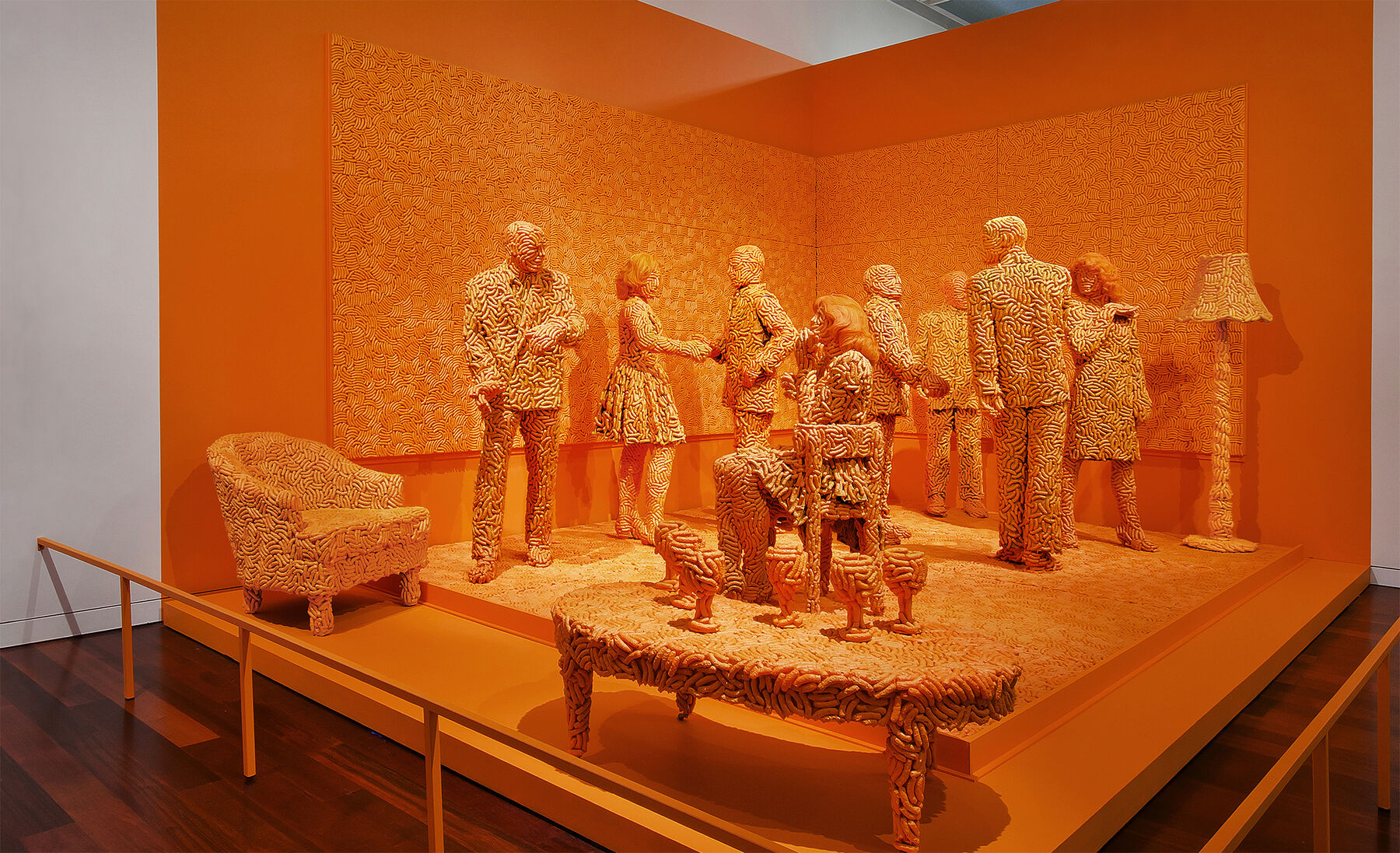
Art thrives on stories, and food is rich with them.
Ingredients carry narratives of origin: soil, climate, labor, migration. Techniques encode history: fermentation, smoking, drying, preserving. When chefs foreground these stories, a dish becomes a narrative object.
A single menu might tell a story of displacement, colonialism, environmental loss, or personal identity. Courses can function as chapters. Textures can mirror emotional shifts. Even silence between bites can be meaningful.
Importantly, narrative does not require explanation. Some food art speaks quietly, allowing the eater to infer meaning. Others rely on framing—titles, descriptions, or settings—to guide interpretation.
The balance between mystery and clarity is itself an artistic decision.
6. Museums, Galleries, and the Institutional Question
When food enters museums or galleries, it challenges institutional norms. Art spaces are designed for permanence; food is ephemeral. Conservation becomes impossible. Documentation—photos, videos, recipes—often replaces the object itself.
This raises uncomfortable questions:
- Can something that disappears still be art?
- Is the documentation the artwork, or merely its shadow?
- Who owns a dish once it has been eaten?
Some institutions embrace the problem, treating food art as an event rather than an object. Others resist, preferring safer, more durable media. Either way, food exposes the limitations of traditional art systems.
It also democratizes access. Unlike many art forms, food invites participation. You do not just observe; you ingest. The boundary between artwork and audience collapses.
7. The Economics of Edible Art
Art and money have always been uneasy companions, and food art intensifies the tension.
On one hand, high-end culinary experiences can be extremely expensive, raising concerns about elitism. When a meal costs more than a monthly salary, can it still claim universality?
On the other hand, food art is labor-intensive, perishable, and difficult to scale. Unlike a painting that can be sold once and resold endlessly, a dish must be recreated again and again.
This leads to a paradox: food art is both fleeting and costly, intimate and commercial.
Some practitioners respond by moving outside traditional markets—into pop-ups, community kitchens, temporary installations, or digital documentation. Others embrace the luxury model, arguing that intensity and rarity justify the price.
Neither approach resolves the tension, but both reveal how value is constructed.
8. Technology as a New Ingredient
Modern food art increasingly relies on technology—not as a gimmick, but as an expressive tool.
Techniques borrowed from science allow unprecedented control over texture, temperature, and transformation. Digital tools enable precise design, simulation, and replication. Projection, sound, and interactive interfaces expand the sensory field beyond the plate.
At the same time, technology introduces new questions:
- Does automation diminish craftsmanship?
- Where does authorship lie when machines assist creation?
- Can data itself become an ingredient?
Some of the most compelling food art today explores these ambiguities, using technology to highlight rather than hide the human hand.
9. Ethics on the Plate
When food becomes art, ethical considerations intensify.
Waste is a major concern. Creating something to be admired rather than eaten can seem irresponsible in a world of scarcity. Yet art has always grappled with resource use, from marble quarries to oil paints.
Sourcing also matters. Ingredients carry environmental and social costs. Food art that ignores these realities risks becoming hollow spectacle.
Many practitioners respond by working with overlooked ingredients, by-products, or invasive species. Others use art to critique consumption itself, presenting dishes that force the eater to confront discomfort or contradiction.
In these cases, ethics are not an afterthought—they are the core material.
10. Cultural Identity and Power
Food is deeply tied to identity. When it becomes art, questions of representation and power emerge.
Who gets to elevate a cuisine to “art” status?
Whose traditions are celebrated, and whose are exoticized?
When does reinterpretation become appropriation?
These questions have no simple answers. However, food art can either reinforce hierarchies or challenge them. It can erase origins, or amplify them. It can simplify cultures into flavors, or reveal their complexity.
Responsible food art acknowledges lineage. It listens as much as it invents.
11. The Audience: From Consumer to Participant
In conventional dining, the diner consumes. In food art, the diner participates.
Participation may be subtle—choosing how to eat, when to pause, what to combine. Or it may be explicit—assembling components, following instructions, or even refusing to eat.
This shift empowers the audience but also demands more from them. Attention replaces appetite. Curiosity replaces expectation.
Some people resist this demand, preferring comfort over challenge. Others find it liberating. Either response is valid—and meaningful.
12. Memory, Ephemerality, and Loss
Perhaps the most poetic aspect of food as art is its disappearance.
Once eaten, the artwork survives only as memory. This aligns food art with performance, music, and ritual. Its value lies not in preservation, but in experience.
Memory, however, is unstable. It changes with retelling. Flavors fade. Details blur. What remains is impression.
This impermanence can be unsettling in a culture obsessed with documentation. Yet it also offers relief. Not everything needs to last to matter.
Food art teaches us to value presence over permanence.
13. Education and the Expansion of Literacy
As food becomes art, it also becomes a form of literacy.
Understanding a dish may require knowledge of history, agriculture, chemistry, or politics. Eating becomes an act of interpretation. This expands what it means to be “educated” in art.
At the same time, food art can make complex ideas accessible. A single bite can communicate climate change more viscerally than a lecture. Sensation bypasses abstraction.
In this way, food art is both sophisticated and inclusive—intellectually demanding, yet immediately human.
14. The Risk of Pretension
No discussion of food as art is complete without acknowledging skepticism.
Critics argue that some food art prioritizes concept over craft, explanation over pleasure. When dishes require lengthy descriptions to justify themselves, something may be wrong.
This risk is real. Art that forgets its medium becomes hollow. Food, at its core, must still be edible—even if discomfort is intentional.
The most compelling food art does not ask for permission to exist. It convinces through coherence, honesty, and respect for the eater.
15. The Future: Where Is Food Art Going?
Looking ahead, food art is likely to become more interdisciplinary, more ethical, and more reflective.
We may see:
- Greater integration with environmental activism
- Deeper collaboration between chefs, artists, and scientists
- More emphasis on local systems and global responsibility
- Expanded digital and virtual documentation
- A shift from spectacle to subtlety
As boundaries dissolve, the distinction between cooking and art may matter less than the quality of thought behind the act.
16. So, What Really Happens When Food Becomes Art?
When food becomes art, it slows us down.
It asks us to pay attention.
It transforms eating into thinking, tasting into questioning.
Food does not lose its function—it gains dimensions. Nourishment expands from the body to the mind. Pleasure coexists with critique. Beauty shares space with discomfort.
Ultimately, food as art is not about elevation. It is about awareness.
It reminds us that every meal already contains culture, labor, memory, and choice. Art simply makes these elements visible.
And perhaps that is the most powerful outcome: once we have experienced food as art, it becomes difficult to eat thoughtlessly again.