





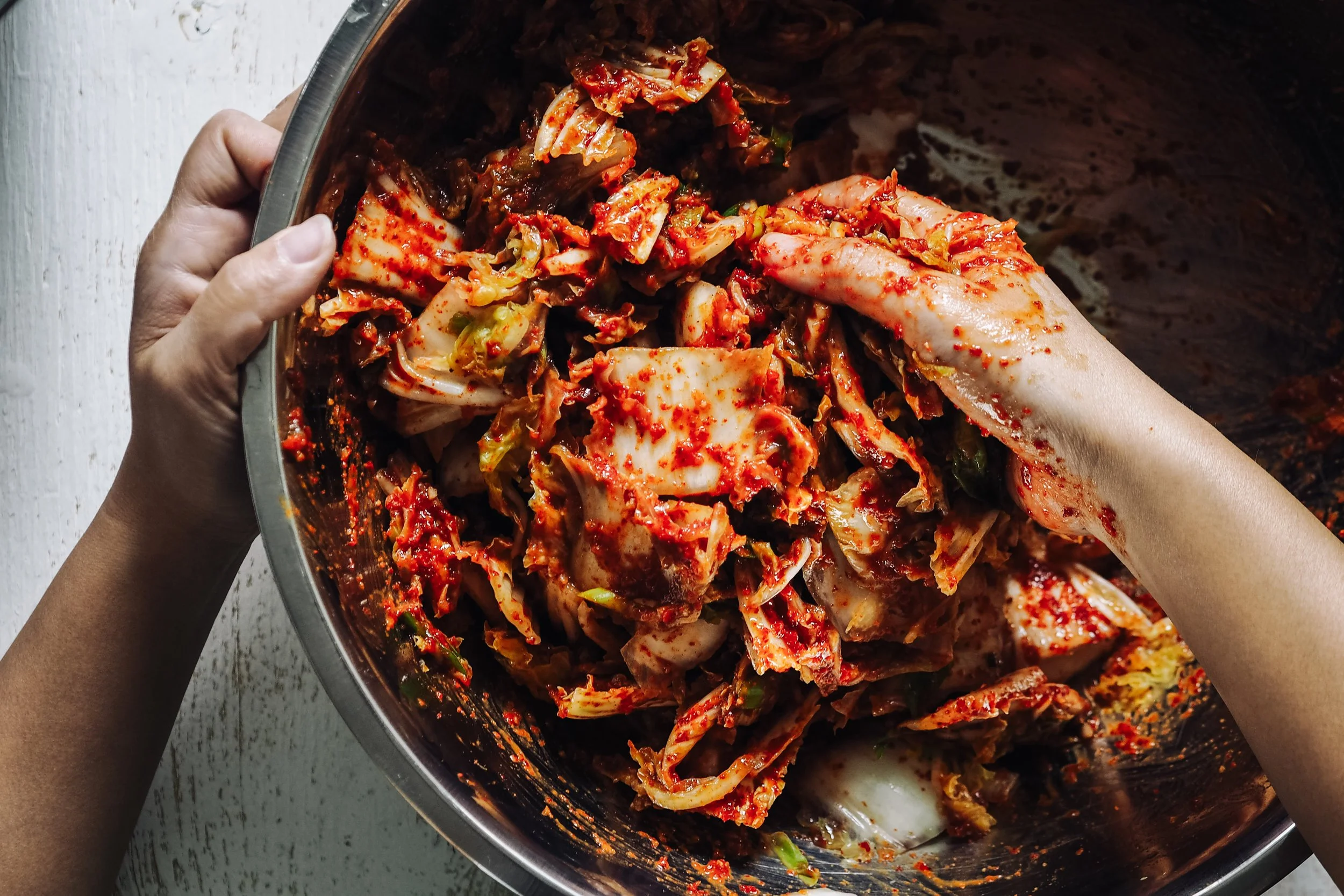

Fermented food is one of humanity’s oldest culinary technologies, yet it still feels modern, even trendy. From sourdough bread and yogurt to kimchi, miso, tempeh, cheese, garum, dosa batter, and pickled vegetables of every imaginable color, fermentation appears again and again in cuisines separated by oceans, climates, languages, and belief systems. Some food cultures lean into fermentation lightly, while others seem to build entire culinary identities around it.
Why is that? Why do certain cuisines—Korean, Chinese, Japanese, Southeast Asian, Central Asian, Eastern European, African, and Nordic traditions, to name just a few—use so much fermented food, while others rely on it more sparingly?
The answer is not a single reason but a dense web of biology, geography, climate, history, economy, culture, taste psychology, and even philosophy. Fermentation is not just a way to make food last longer; it reshapes flavor, nutrition, social rituals, and how people understand nature itself.
This article explores why fermented foods became so central in some cuisines, how they shaped cooking systems over centuries, and what fermentation reveals about the relationship between humans and microorganisms.
1. Fermentation as a Universal Human Discovery
Fermentation is not an invention in the modern sense. It is a discovery—an accidental collaboration between humans and microbes.
Long before anyone understood bacteria or yeast, people noticed a strange pattern: certain foods, when left alone under specific conditions, transformed. Milk thickened and turned pleasantly sour. Grains soaked in water became bubbly and aromatic. Vegetables submerged in brine softened, developed tang, and resisted spoilage.
These transformations were predictable enough to be repeated and refined, even without scientific explanation. Over time, communities learned:
- Which containers worked best
- How much salt to use
- How temperature affected results
- Which raw materials fermented reliably
This knowledge became tradition, passed down through daily cooking rather than written instruction.
Because fermentation emerges wherever humans store food, it is nearly universal. What differs is how deeply it becomes embedded in a cuisine.
2. Preservation: The Original Driving Force
2.1 Life Before Refrigeration
For most of human history, food preservation was not optional. It was survival.
In regions with long winters, monsoon seasons, or periods of drought, fresh food was seasonal and unpredictable. Fermentation offered a powerful solution:
- It extended shelf life without fuel or complex tools
- It reduced food waste
- It allowed people to store nutrients for lean seasons
Unlike drying or salting alone, fermentation actively protects food by creating environments hostile to spoilage organisms.
2.2 Why Some Regions Needed Fermentation More Than Others
Cuisines that rely heavily on fermented foods often developed in environments with at least one of the following conditions:
- Long winters (Korea, Northern China, Eastern Europe)
- Hot, humid climates that accelerate spoilage (Southeast Asia, parts of Africa)
- Seasonal abundance followed by scarcity (temperate and monsoon regions)
Fermentation provided a low-energy, low-technology preservation method ideally suited to these conditions.
3. Climate Shapes Microbial Strategy
Microbes are deeply sensitive to temperature and humidity. As a result, climate shapes not just whether fermentation happens, but how it happens.
3.1 Cold Climates: Slow, Deep Fermentation
In colder regions, fermentation tends to be slower and more subtle:
- Sauerkraut
- Kvass
- Rye sourdough
- Nordic fermented fish and dairy
Low temperatures encourage longer fermentation periods, resulting in complex flavors and stable storage.
3.2 Warm Climates: Fast and Assertive Fermentation
In warm regions, fermentation moves quickly:
- Fish sauce
- Shrimp paste
- Fermented soybean products
- Palm wine
Heat accelerates microbial activity, producing strong aromas and intense umami. These flavors may seem extreme to outsiders but are deeply comforting to those raised with them.
4. Salt, Scarcity, and Strategy
Salt plays a crucial role in many fermented foods. It regulates microbial activity by inhibiting harmful bacteria while allowing beneficial organisms to thrive.
Historically, salt was not evenly distributed across the world. Some regions had easy access to sea salt or salt mines, while others treated it as a precious commodity.
Where salt was available but refrigeration was not, fermentation flourished. Cuisines evolved precise salt ratios that balanced preservation, safety, and taste. Over generations, these ratios became instinctive.
5. Fermentation and Nutrition: An Invisible Advantage
Many traditional cuisines relied on fermentation not only to preserve food but to improve it nutritionally—often without knowing why.

5.1 Breaking Down Barriers
Fermentation can:
- Reduce anti-nutrients in grains and legumes
- Increase mineral bioavailability
- Pre-digest proteins and carbohydrates
- Synthesize vitamins
For example, fermented soy products are easier to digest and richer in usable nutrients than raw soybeans.
5.2 Feeding Large Populations Efficiently
In societies where animal protein was scarce or expensive, fermentation allowed plant-based staples to become more nourishing. This made it possible to sustain dense populations with limited resources.
Over time, cuisines that depended heavily on grains, beans, and vegetables developed fermentation as a quiet nutritional upgrade system.
6. Flavor Architecture: Why Fermented Food Tastes So Good
One of the most compelling reasons fermented food dominates certain cuisines is simple: it tastes amazing.
6.1 Umami and Complexity
Fermentation generates:
- Amino acids
- Organic acids
- Esters
- Alcohols
- Sulfur compounds
Together, these create deep, layered flavors that fresh ingredients alone cannot achieve.
Many cuisines use fermented foods as flavor engines rather than main ingredients:
- Soy sauce as seasoning
- Fish sauce as background depth
- Miso as a base note
This allows cooks to build complexity with small quantities.
6.2 Cultural Flavor Memory
Flavor preferences are learned early. If a cuisine introduces fermented flavors at the table from childhood, those tastes become comforting rather than challenging.
What smells “strong” or “pungent” to one culture may smell warm, savory, or nostalgic to another.
7. Fermentation as Culinary Infrastructure
In some cuisines, fermented foods are not side items—they are foundational.
7.1 Fermented Condiments as Structural Elements
Consider cuisines where:
- A meal is incomplete without fermented condiments
- Sauces define dishes more than cooking techniques
- Fermented pastes function like culinary grammar
These systems rely on fermentation the way others rely on butter, cream, or stock.
7.2 Modular Cooking Systems
Fermented foods allow modular cooking:
- One fermented base
- Endless variations
This is efficient, flexible, and ideal for home cooking. Over time, it encourages creativity within a stable flavor framework.
8. Social and Cultural Dimensions
Fermentation is rarely a solitary act. In many cultures, it is communal.

8.1 Collective Labor
Traditional fermentation often involves:
- Seasonal preparation
- Family or village participation
- Shared tools and spaces
These activities reinforce social bonds and shared identity.
8.2 Ritual and Rhythm
Fermented foods mark time:
- Annual kimchi-making seasons
- Festival foods tied to fermentation cycles
- Generational starter cultures
The process itself becomes meaningful, not just the result.
9. Fermentation and Identity
For cuisines rich in fermented food, these items are often identity markers.
To reject them can feel like rejecting home. To crave them abroad is to crave belonging.
Fermented foods carry:
- Regional signatures
- Family histories
- Emotional weight
They are edible memory.
10. Microbial Terroir: Place Matters
Just as wine reflects terroir, fermented foods reflect local microbial ecosystems.
Wild yeasts and bacteria vary by region. Over centuries, cuisines adapt to these invisible partners, resulting in distinctive flavors that cannot be fully replicated elsewhere.
This microbial uniqueness reinforces the centrality of fermentation in certain cuisines. It becomes something of that place, not easily replaced.
11. Fermentation vs. Industrialization
Modern refrigeration and industrial food processing reduced the necessity of fermentation, but not its cultural importance.
In some cuisines, fermentation declined temporarily. In others, it remained central because:
- Industrial substitutes lacked depth
- Home fermentation carried emotional value
- Traditional flavors resisted standardization
Today, fermentation is resurging globally—not as a survival tool, but as a marker of authenticity and craftsmanship.
12. Psychological Comfort and Gut-Brain Links
While modern science now explores gut microbiota, traditional cuisines intuited something important: fermented foods feel good.
People associate them with:
- Warmth
- Satisfaction
- Balance
Cuisines that emphasize fermentation often frame food as something that supports the body, not just fuels it.
13. Why Some Cuisines Use Less Fermentation
It is equally important to ask why some cuisines rely less on fermentation.
Common reasons include:
- Abundant fresh food year-round
- Early access to preservation alternatives
- Culinary traditions emphasizing freshness or minimal transformation
These cuisines may still use fermentation, but as accent rather than backbone.
14. Fermentation as Philosophy
At its core, fermentation reflects a worldview:
- Trust in natural processes
- Patience over immediacy
- Collaboration rather than control
Cuisines that embrace fermentation often value transformation, balance, and continuity.
15. A Living Tradition
Fermented foods are not relics. They are living systems, constantly evolving.
Modern cooks reinterpret traditional ferments. New hybrid cuisines blend fermentation techniques across cultures. Home fermenters experiment with global ingredients.
Yet the underlying reasons remain unchanged.
Conclusion: Why Fermentation Endures
Some cuisines use so much fermented food because fermentation solved real problems: preservation, nutrition, flavor, and resource efficiency. Over time, these practical solutions became cultural pillars.
Fermentation taught people to work with nature instead of fighting it. It turned microbes from enemies into partners. It created flavors that define entire culinary worlds.
In the end, cuisines rich in fermented food are not obsessed with the past. They are deeply invested in continuity—honoring the slow, invisible processes that make food more than food.
Fermentation is time made edible.