






Garlic is one of those magical kitchen ingredients that can transform a dish from bland to unforgettable. Its pungent aroma, complex flavor, and subtle sweetness when roasted make it a staple in countless cuisines around the world. Yet, as much as we adore garlic, the process of peeling it often deters even the most enthusiastic cooks. The lingering smell on your hands, the sticky texture, and the sometimes time-consuming effort can be frustrating. Fear not. In this article, we will explore the best ways to peel garlic efficiently, without the unwanted lingering odor, along with tips, tricks, and professional insights to make this simple task a joy rather than a chore.
Understanding Garlic: Why It Smells
Before diving into peeling techniques, it helps to understand why garlic smells so intensely. The characteristic odor comes from sulfur compounds, primarily allicin, which forms when garlic is chopped, crushed, or peeled. Allicin is responsible not only for the aroma but also for many of garlic’s health benefits, including antibacterial properties and cardiovascular support.
Interestingly, intact garlic cloves have relatively mild odor. Once the clove is broken, enzymes interact with sulfur compounds, producing the smell we know—and sometimes love to hate—on our hands. This is why peeling garlic carefully, and in certain ways, can minimize direct exposure to the compounds that cling to skin.
Traditional Garlic Peeling Methods
1. The Knife Smash
The classic method involves laying a garlic clove under the flat side of a chef’s knife and giving it a firm press. The skin loosens and can be peeled away easily.
Pros:
- Quick and efficient for a few cloves
- Also slightly crushes the garlic for cooking
Cons:
- Hands still touch the clove
- Releases more aroma, which can stick to skin
Pro Tip: After smashing, scrape the clove onto a cutting board using the knife’s edge rather than your fingers to reduce odor transfer.
2. Rolling Method
Place several cloves under the flat side of your palm and roll them gently back and forth. The skins loosen and can be shaken off.
Pros:
- Great for small amounts
- Keeps fingers cleaner than knife smashing
Cons:
- Not as effective with very tight skins
- Still requires hand contact
3. Microwave Loosening
Pop unpeeled cloves in the microwave for 10–15 seconds. Heat softens the skin, making peeling effortless.
Pros:
- Minimal effort
- Hands stay cleaner
Cons:
- Can slightly change garlic texture
- Overheating may start cooking cloves
Pro Tip: Use this method when prepping large quantities for roasting or soups.
Modern Tools for Effortless Garlic Peeling

1. Silicone Garlic Peeler Tubes
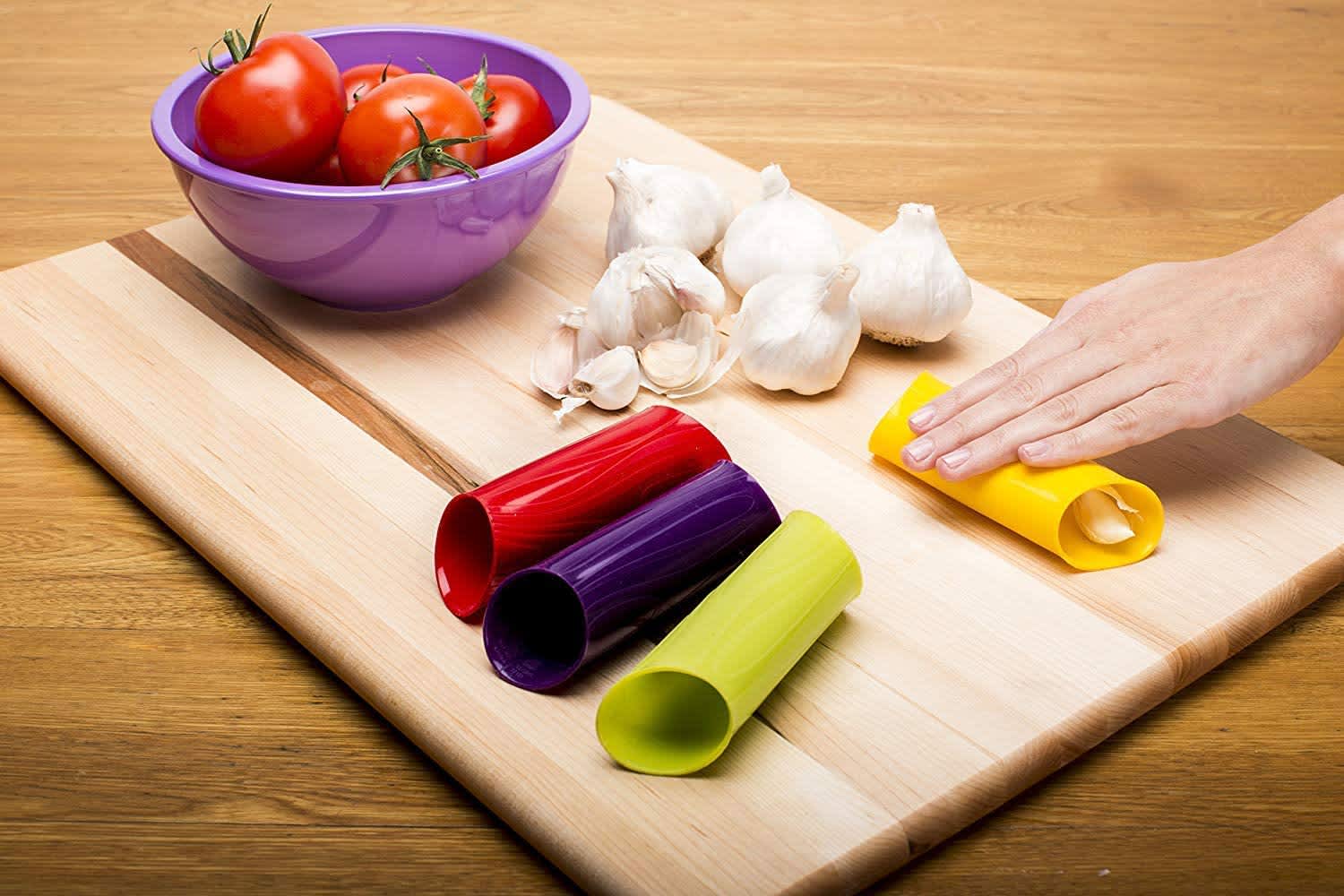
Silicone tubes designed specifically for garlic peeling have become a kitchen favorite. Drop cloves inside and roll the tube under your palm; the skins separate from the garlic.
Pros:
- Very clean; hands rarely touch garlic
- Works for multiple cloves at once
Cons:
- Requires storage space
- Occasional stubborn cloves may need extra rolling
Tip: Use fresh, room-temperature garlic for best results—cold garlic can be harder to peel.
2. Garlic Presses with Peeling Feature
Some modern garlic presses come with a built-in peeling chamber. Insert unpeeled cloves, squeeze, and extract minced garlic—skins remain trapped.
Pros:
- Peels and minces simultaneously
- Virtually odor-free hands
Cons:
- Slightly more expensive than a simple press
- Cleaning can be tricky if garlic fibers stick
3. Shaking in a Jar
For larger quantities, a simple but surprisingly effective method is to place cloves in a metal or glass jar, seal tightly, and shake vigorously for 20–30 seconds.
Pros:
- Great for batch prep
- No sharp tools involved
Cons:
- Can bruise cloves
- May require multiple shakes for stubborn skins
Pro Tip: Use a jar with a wide mouth to reduce friction and skin breakage.
Innovative Techniques from Professional Chefs
Professional kitchens often need to peel pounds of garlic quickly, so chefs have devised some clever hacks:
- Blanching in Hot Water
Dip cloves in boiling water for 10–15 seconds, then transfer to cold water. The skins slip off almost instantly. - Freezing Garlic
Freeze cloves before peeling. Once frozen, skins become brittle and peel away easily. Bonus: garlic can be used directly in cooking without thawing fully. - Rolling with a Silicone Mat
Place cloves on a flexible silicone mat, fold it over, and roll with a rolling pin. This prevents odor transfer to hands.
These methods are particularly useful for cooking enthusiasts who love efficiency and precision.
Hands-Free Garlic Peeling: Zero Odor Methods
If your ultimate goal is zero garlic smell on your hands, consider hands-free or minimal-contact methods:
- Garlic Peeling Gloves
Special gloves coated with non-stick silicone allow you to rub cloves without direct contact. - Mechanical Peelers
Devices that use vibration or friction to remove skins from multiple cloves at once. - Peel in a Colander
Place cloves in a colander, cover, and shake. You touch the cloves minimally while most skins fall off.
Each of these approaches is designed for clean cooking, where the pungent aroma stays in the dish, not on your skin.
Avoiding the Garlic Hand Smell
Even after peeling, garlic odor can linger. Here’s how chefs neutralize it:
- Use Stainless Steel – Rub hands on a stainless steel surface (sink or special bar tool) under cold running water. Compounds bind to the metal, reducing smell.
- Lemon Juice or Vinegar – Acidic liquids help neutralize sulfur compounds.
- Baking Soda Paste – Mix water and baking soda, rub on hands, then rinse.
- Salt Scrub – Coarse salt acts as an exfoliant and removes oils carrying the odor.
These tricks are essential for anyone who cooks frequently with garlic but wants to keep fingers fresh and odor-free.
Preparing Garlic for Specific Dishes
The way you peel garlic can vary depending on its intended use:
- Roasting Whole Bulbs: Leave skins mostly intact; remove only outer layers. Minimal hand contact.
- Garlic Paste or Mince: Smashing or using a press helps release maximum flavor.
- Sautéing or Stir-Fry: Peel cloves individually; use rolling or jar shaking for small amounts.
- Pickling or Infused Oils: Peel cleanly with minimal bruising to avoid bitterness.
The right technique enhances flavor while keeping prep clean and efficient.
Garlic Varieties and Peelability
Not all garlic peels are created equal. Understanding varieties can improve your experience:
- Softneck Garlic – Easy to peel, thin skins, common in supermarkets.
- Hardneck Garlic – More robust flavor but tighter skins; may require rolling or blanching.
- Elephant Garlic – Huge cloves, mild flavor, easy to peel; excellent for roasting.
Selecting the right garlic variety can reduce peeling time and frustration, especially in larger recipes.
Common Garlic Peeling Mistakes and How to Avoid Them
Even experienced cooks sometimes stumble. Avoid these pitfalls:
- Using Cold Garlic – Refrigerated cloves are harder to peel. Let them reach room temperature.
- Peeling Too Early – If not using immediately, peeled garlic dries out or becomes rubbery.
- Over-Smashing – Crushing before cooking can alter texture and flavor.
- Skipping Tools – Silicone rollers, jars, or presses save time and reduce odor.
A little planning makes garlic prep smoother and more enjoyable.
Garlic in Global Kitchens: Peeling Techniques Around the World
Different cultures have their own clever methods:
- Italy: Smash cloves lightly with a knife for pasta sauces.
- China: Use the side of a cleaver to crush and peel for stir-fries.
- India: Peel with a quick chop on the cutting board; often blended immediately for curry pastes.
- Middle East: Garlic is often roasted whole; skins removed only after softening.
Exploring international approaches can inspire new, efficient ways to peel garlic at home.
Batch Peeling and Storage
If you cook with garlic frequently, batch peeling and storing can save time:
- Peel a large batch using a jar or silicone tube.
- Store in airtight containers in the fridge or freezer.
- Use directly in recipes without thawing if frozen.
Batch prepping also allows you to avoid multiple instances of garlic-smelling hands throughout the week.
DIY Garlic Peeling Hacks
Sometimes the simplest hacks are the most satisfying:
- Toothpick Trick – Slide a toothpick under the skin to lift it off intact.
- Rolling Pin Smash – Roll cloves gently on a cutting board to loosen skins.
- Paper Towel Shake – Wrap cloves in a towel and shake vigorously; skins separate cleanly.
Experimenting with these small tricks can make garlic prep surprisingly fun.
Conclusion
Peeling garlic doesn’t have to be a messy, smelly chore. With the right techniques, tools, and understanding of garlic’s structure, you can enjoy clean hands and maximum flavor. From traditional smashing to innovative jar shaking, silicone rollers, or professional chef hacks, there’s a method for every kitchen style and skill level.
By combining minimal-contact peeling, odor-neutralizing methods, and batch prepping strategies, you can transform garlic from a potential kitchen nuisance into a culinary delight, all while keeping your hands fresh and odor-free.
Garlic is magical—but your hands don’t need to smell like it afterward.