






Roasting vegetables seems simple: toss them with oil, slide them into a hot oven, and wait for magic. Yet anyone who has tried knows the results can swing wildly—from soggy zucchini and burnt broccoli to pale carrots that never quite caramelize. Perfectly roasted vegetables are crisp on the outside, tender inside, deeply flavored, and visually inviting. Achieving that consistency every single time is not about luck; it’s about understanding a set of principles that turn roasting from guesswork into a reliable, repeatable craft.
This article breaks down roasting vegetables into its essential components: heat, moisture, fat, surface area, seasoning, timing, and technique. We’ll explore the science behind browning, the practical decisions that matter most, and the small adjustments that separate “fine” from “fantastic.” Whether you’re cooking a weeknight dinner or preparing a vegetable platter worthy of a celebration, mastering these ideas will ensure your vegetables come out perfectly roasted—every time.
1. What “Perfectly Roasted” Really Means
Before talking technique, it helps to define success. Perfect roasting is not a single universal outcome; it depends on the vegetable and your intention. However, most people agree on a few core traits:
- Even browning without blackened spots or pale, steamed sections
- Concentrated flavor, where natural sugars have caramelized
- Balanced texture, crisp or lightly crunchy on the outside, tender inside
- Clean, distinct taste, not greasy or waterlogged
- Appealing appearance, with rich color and defined edges
Understanding this goal clarifies every decision that follows. Roasting is fundamentally about driving off excess moisture while encouraging browning reactions. Every step you take should support those two outcomes.
2. The Science of Roasting: Why Vegetables Brown (or Don’t)
At the heart of roasting lies a chemical process called the Maillard reaction, along with caramelization of natural sugars. These reactions occur when heat interacts with amino acids and sugars, creating hundreds of new flavor compounds.
However, there’s a catch: water is the enemy of browning. As long as moisture is actively evaporating from the surface of a vegetable, the temperature there stays relatively low. Browning can’t begin until that moisture is gone.
This explains many common roasting failures:
- Overcrowded pans trap steam
- Wet vegetables never brown properly
- Low oven temperatures encourage drying without caramelization
To roast well, you must manage moisture and heat so the vegetable surface gets hot enough, fast enough, for browning to occur.
3. Choosing the Right Vegetables for Roasting
Almost any vegetable can be roasted, but not all behave the same. Understanding categories helps you adapt your approach.
Dense, Low-Moisture Vegetables
Examples: potatoes, carrots, parsnips, beets, squash
These are ideal roasting candidates. They hold their structure, contain sugars that caramelize beautifully, and tolerate high heat.
Key strategy: Cut evenly and roast hot and long enough to soften the interior.
Cruciferous Vegetables
Examples: broccoli, cauliflower, Brussels sprouts, cabbage
These develop intense, nutty flavors when roasted correctly but burn easily if neglected.
Key strategy: High heat, sufficient oil, and enough space to prevent steaming.
High-Moisture Vegetables
Examples: zucchini, eggplant, mushrooms, tomatoes
These release water rapidly and can become soggy.
Key strategy: Larger cuts, higher heat, and sometimes pre-salting or pre-roasting steps.
Tender Vegetables
Examples: asparagus, green beans, snap peas
These roast quickly and can overcook fast.
Key strategy: Short roasting times and careful timing.
4. Knife Skills: Why Cutting Matters More Than You Think
How you cut vegetables directly affects how they roast.
Size Consistency
Evenly sized pieces cook at the same rate. Uneven cuts guarantee uneven results—some burnt, some underdone.
Surface Area
More surface area means more browning. Flat sides brown better than rounded ones.
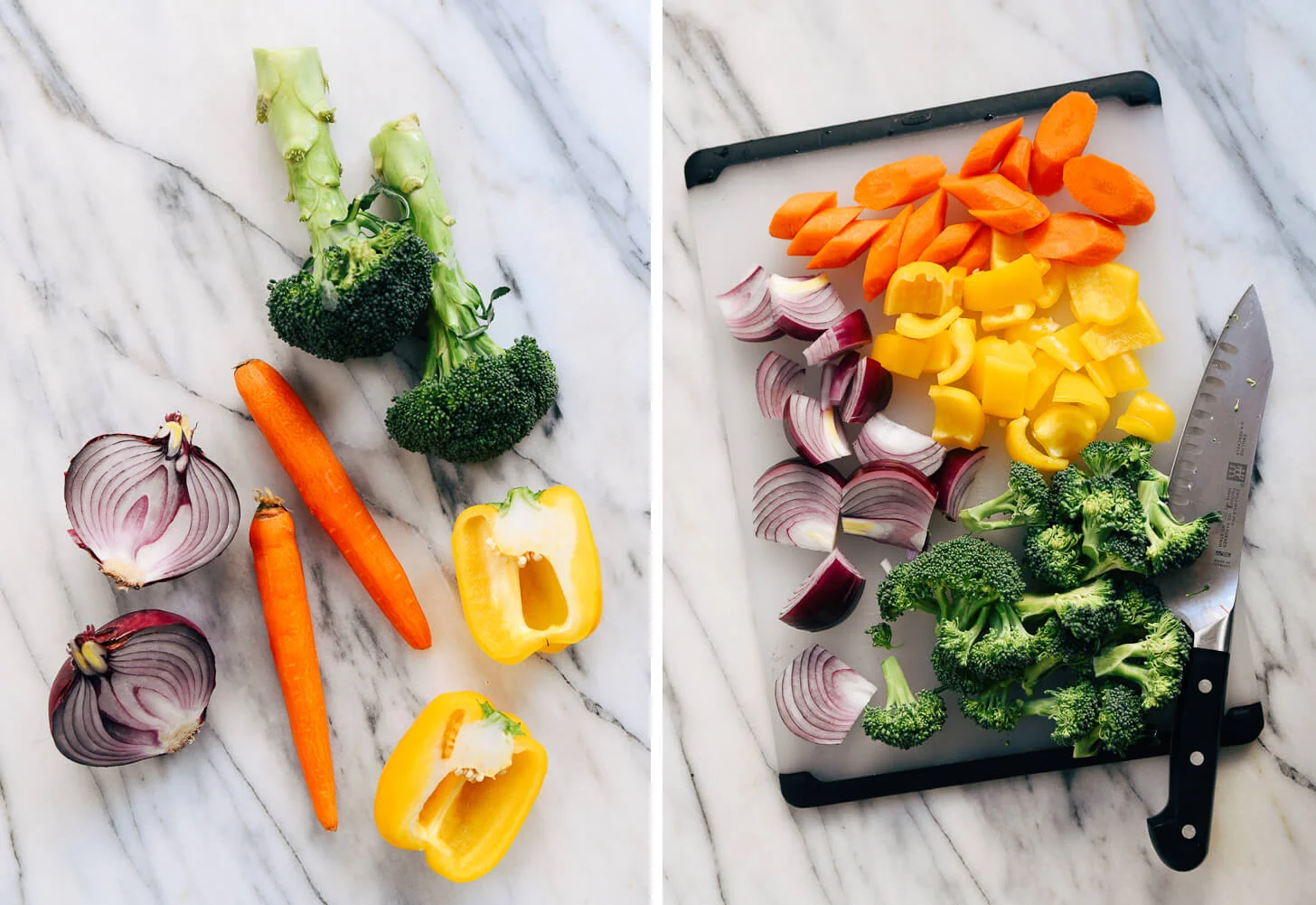
- Halve Brussels sprouts lengthwise
- Slice carrots on a diagonal
- Cut cauliflower into flat-edged florets
Thickness Control
Thin pieces brown faster but risk burning; thick pieces take longer but develop deeper flavor. Choose based on the vegetable and desired texture.
Rule of thumb: If a piece is thicker than your thumb, it probably needs more time or a parboil.
5. Dryness Is Non-Negotiable
Moisture is the most underestimated enemy of roasting.
Washing and Drying
After washing vegetables, dry them thoroughly. Use:
- Clean kitchen towels
- Paper towels
- A salad spinner for leafy or small items
Even a thin film of water can sabotage browning.
When to Pre-Salt (and When Not To)
Salt draws out moisture. For some vegetables, this is helpful; for others, it’s disastrous.

- Eggplant: Pre-salt to remove bitterness and moisture
- Zucchini: Optional pre-salting if very watery
- Potatoes and carrots: Salt just before roasting
Always dry vegetables again after pre-salting.
6. Oil: How Much, What Kind, and Why It Matters
Oil does more than prevent sticking. It:
- Conducts heat
- Promotes even browning
- Carries fat-soluble flavors
How Much Oil?
Too little oil leads to dry, scorched vegetables. Too much oil causes greasiness and inhibits browning.
Ideal ratio: Enough to lightly coat every surface, with no pooling on the pan.
Choosing the Right Oil
Use oils with suitable smoke points and neutral or complementary flavors.
Good options:
- Olive oil (refined for high heat, extra virgin for moderate heat)
- Avocado oil
- Grapeseed oil
Avoid strongly flavored oils unless intentional.
When to Add Butter
Butter browns quickly and can burn. Add it:
- Midway through roasting
- At the end for flavor
7. Seasoning: Timing Is Everything
Seasoning isn’t just about salt and pepper—it’s about when and how flavors are introduced.
Salt
Salt enhances flavor and helps break down vegetable cell walls.
- Add before roasting for most vegetables
- Add after roasting for delicate greens
Pepper and Spices
Ground spices can burn.
- Add robust spices early (paprika, cumin)
- Add delicate spices late (garlic powder, dried herbs)
Fresh Herbs
Fresh herbs burn easily.
- Add woody herbs (rosemary, thyme) at the start
- Add tender herbs (parsley, basil) after roasting
8. The Pan: Your Most Underrated Tool
Your roasting pan or sheet tray plays a critical role.
:max_bytes(150000):strip_icc()/Simply-Recipes-Oven-Roasted-Vegetables-LEAD-8-58102e6b825944c68aee7565401974f2.jpg)
Material Matters
- Heavy aluminum or steel retains heat and promotes browning
- Thin pans warp and cause uneven cooking
Color and Finish
- Light-colored pans brown more evenly
- Dark pans brown faster but can burn food
Parchment vs Bare Pan
- Parchment prevents sticking but slightly reduces browning
- Bare pans brown better but require good oiling
Avoid silicone mats for roasting vegetables—they trap moisture.
9. Space: The Golden Rule of Not Overcrowding
If there is one rule to memorize, it’s this: Never overcrowd the pan.
Vegetables release steam as they cook. If packed too tightly, that steam has nowhere to go, and your vegetables will steam instead of roast.
Practical guidelines:
- Vegetables should be in a single layer
- Pieces should not touch too much
- Use two pans instead of one if needed
This single choice often determines success or failure.
10. Oven Temperature: Hotter Than You Think
Roasting requires high heat.
Ideal Temperature Range
- 400–450°F (205–230°C) for most vegetables
- 475°F (245°C) for dense vegetables like potatoes
Lower temperatures dry vegetables without browning.
Preheating Is Essential
A cold oven delays browning and encourages moisture loss. Always preheat fully.
11. Positioning in the Oven
Where you place the pan matters.
- Middle rack: balanced heat
- Upper rack: more browning, risk of burning
- Lower rack: slower browning
For most vegetables, start in the middle and move up near the end if needed.
12. To Flip or Not to Flip?
Flipping exposes new surfaces to heat and promotes even browning.
When to Flip
- Once halfway through cooking
- When the underside is deeply golden
When Not to Flip
- Very small vegetables that brown evenly
- Delicate vegetables that might break
Use a spatula, not tongs, to preserve structure.
13. Timing: Knowing When Vegetables Are Done
Forget the clock. Learn to read the vegetables.
Signs of doneness:
- Deep golden-brown edges
- Fork-tender interiors
- Concentrated aroma
Under-roasted vegetables taste raw and grassy. Over-roasted ones taste bitter.
14. Layering Flavors After Roasting
Some flavors shine brightest after heat.
Finish with:
- Lemon zest or juice
- Vinegars or fermented sauces
- Fresh herbs
- Toasted nuts or seeds
These contrast with the deep, roasted flavors and add complexity.
15. Common Roasting Mistakes (and How to Fix Them)
Soggy Vegetables
Cause: overcrowding, low heat, excess moisture
Fix: more space, higher heat, better drying
Burnt Outside, Raw Inside
Cause: pieces too large, heat too high
Fix: cut smaller or start lower and finish hotter
Bland Results
Cause: under-seasoning, low-quality oil
Fix: season assertively and finish with acid
16. Mastering Specific Vegetables
Potatoes
Parboil briefly, rough up edges, roast hot.
Broccoli
High heat, cut florets with flat sides.
Carrots
Diagonal cuts, enough oil, long roasting time.
Mushrooms
Dry thoroughly, don’t crowd, roast until deeply browned.
17. Batch Cooking and Reheating Without Ruin
Roasted vegetables can be made ahead.
- Store uncovered until cool
- Reheat in a hot oven, not a microwave
- Add fresh seasoning after reheating
18. Making Roasting a Habit, Not a Hassle
Once you understand the principles, roasting becomes intuitive. You’ll glance at a pan and know whether it needs more space, more heat, or more time. That confidence is what turns good cooks into great ones.
Perfectly roasted vegetables aren’t about secret recipes or expensive tools. They come from respecting heat, managing moisture, and letting vegetables do what they naturally do best when treated correctly: transform.
Final Thoughts
Roasting vegetables perfectly every time is a skill built on awareness rather than complexity. When you control dryness, heat, space, and timing, the oven becomes a powerful ally rather than an unpredictable threat. With practice, roasting shifts from a method you follow to an instinct you trust.
And when vegetables emerge from the oven golden, fragrant, and irresistibly flavorful, they don’t just support a meal—they become the reason for it.