





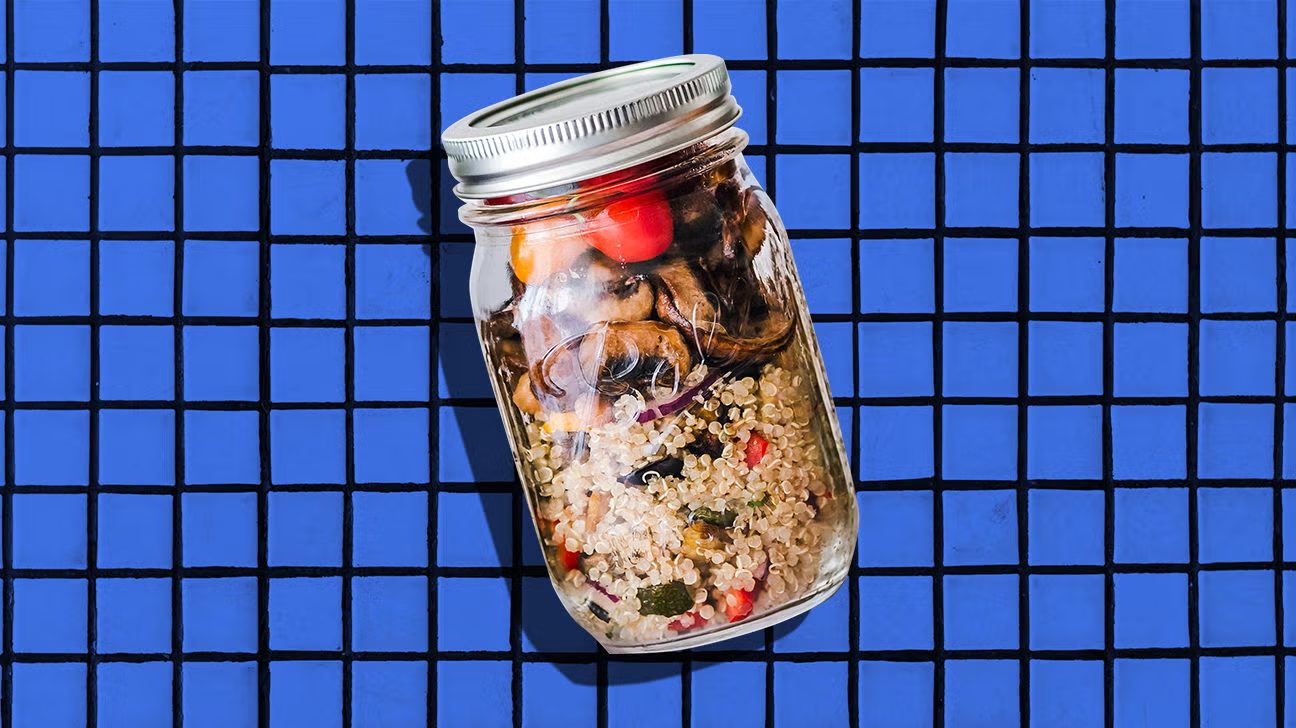

A Serious Question with a Surprisingly Elegant Answer
At first glance, the idea sounds playful, even gimmicky: a gourmet meal—the kind associated with white tablecloths, deliberate plating, and precise technique—sealed inside a humble jar. Jars are for pickles, preserves, overnight oats, or emergency snacks, right?
And yet, ask a modern chef, food scientist, or design-minded home cook, and the answer becomes unexpectedly nuanced.
Yes.
Not only can you make a gourmet meal in a jar—you can do it with intention, depth of flavor, visual beauty, and technical sophistication.
This article explores how, why, and what it takes to elevate food-in-a-jar from novelty to legitimate gourmet craft. We will look at culinary theory, ingredient architecture, texture management, flavor layering, thermal physics, visual design, and practical execution. No shortcuts, no hype—just smart cooking, thoughtfully contained.
1. Redefining “Gourmet” Beyond the Plate
Before we place anything into a jar, we need to clarify what gourmet actually means.
Contrary to popular belief, gourmet food is not defined by luxury ingredients alone. Truffles and caviar do not automatically make a dish gourmet, just as their absence does not disqualify one.
At its core, gourmet cuisine is characterized by:
- Intentional flavor composition
- Technical control over texture
- Balance and contrast
- Aesthetic coherence
- Respect for ingredients
None of these principles require a flat plate.
A jar is simply a container. What matters is how intelligently the container is used.
2. The Jar as a Culinary Vessel
2.1 Structural Constraints (and Opportunities)
A jar introduces three defining constraints:
- Vertical space instead of horizontal
- Limited surface exposure
- Enclosed environment
These constraints fundamentally change how food behaves—and how it must be designed.
However, limitations often sharpen creativity. In fact, the jar excels at several gourmet objectives:
- Preserving aroma
- Maintaining temperature
- Protecting delicate textures
- Creating visual depth through layers
In fine dining, chefs already use similar concepts in verrines, glass domes, and sealed vessels. The jar is simply a more democratic version of the same idea.
3. Flavor Architecture: Building Vertically, Not Randomly
3.1 The Concept of Flavor Stratification
In a gourmet jar meal, flavors are layered, not mixed indiscriminately. Each layer has a purpose and interacts with the others in controlled ways.
Think in terms of:
- Foundation – grounding flavors and textures
- Core – primary protein or vegetable focus
- Accent – contrast, acidity, or aromatic lift
- Finish – final notes that linger
This vertical architecture allows the eater to experience different combinations with each spoonful, rather than a uniform blend.
3.2 Avoiding the “Salad Jar Problem”
Many jar meals fail because they follow a purely practical logic rather than a culinary one—everything stacked simply to avoid sogginess.
A gourmet approach asks deeper questions:
- Should layers remain distinct, or gently merge?
- Which flavors improve through contact?
- Which textures must be protected until the last moment?
Intentional interaction is the key difference between convenience food and cuisine.
4. Texture: The Silent Language of Gourmet Food
4.1 Why Texture Matters More in a Jar
In traditional plating, texture contrast is achieved through spatial separation. In a jar, textures are experienced sequentially or simultaneously through layering.
A well-designed gourmet jar meal balances:
- Creamy vs. crisp
- Soft vs. structured
- Juicy vs. dry
- Warm vs. cool (when appropriate)

4.2 Preserving Crispness in an Enclosed Space
One of the greatest technical challenges is maintaining crisp textures in a sealed environment.
Professional solutions include:
- Fat-based barriers (oil, nut paste, clarified butter alternatives)
- Dehydrated elements added at the final moment
- Structural elevation using firm components
Crispness should feel intentional, not accidental.
5. Temperature Control and Thermal Intelligence
5.1 Hot Jars vs. Cold Jars
Gourmet meals in jars can be:
- Served cold
- Served warm
- Reheated
- Temperature-contrasted internally
Each approach requires a different design logic.
5.2 Heat Retention and Distribution
Glass retains heat differently from ceramic or metal. Thick-walled jars hold warmth longer but reheat more slowly. Thin glass responds quickly but loses heat faster.
Gourmet jar design accounts for:
- Heat-sensitive components placed away from the jar wall
- Insulating layers (purees, grains)
- Reheating pathways that avoid overcooking
A jar meal should respect physics, not fight it.
6. Visual Design: Gourmet Food Is Eaten with the Eyes First
6.1 Transparency as an Advantage
Unlike a plate, a jar reveals its entire structure at once. This makes visual composition critical.
Key visual principles include:
- Color contrast between layers
- Clean, deliberate boundaries
- Negative space near the top
- Vertical rhythm
A gourmet jar should look composed, not crowded.
6.2 Minimalism Over Excess
More ingredients do not equal better food. In fact, visual clutter often signals confusion in flavor.
Professional jar meals often limit themselves to:
- 4–6 core components
- 1–2 accent elements
- 1 finishing garnish or oil
Restraint is a hallmark of sophistication.
7. Ingredient Selection: Precision Over Prestige
7.1 Ingredients That Perform Well in Jars
Certain ingredients naturally thrive in layered, enclosed environments:
- Slow-cooked vegetables
- Grain-based components
- Legumes
- Purees and emulsions
- Marinated proteins
- Roasted roots
These ingredients hold structure, develop flavor over time, and respond well to gentle reheating.
7.2 Ingredients That Require Special Handling
Some elements demand caution:
- Leafy greens (wilt easily)
- Fried components (lose crispness)
- Fresh herbs (oxidize)
- Raw fruits (release water)
In gourmet jar cooking, these are either protected, transformed, or added last.
8. The Role of Time: Flavor Evolution in a Jar
One unique advantage of jar meals is controlled aging.

Flavors can:
- Marry
- Deepen
- Soften
- Become more cohesive
A gourmet jar meal often tastes better after resting—when designed correctly.
However, this requires understanding:
- Acid-fat interactions
- Enzymatic activity
- Moisture migration
Time should be an ally, not a threat.
9. Examples of Gourmet Jar Meal Concepts (Without Recipes)
To keep the focus on theory rather than imitation, here are conceptual models, not instructions.
9.1 Mediterranean-Inspired Warm Jar
- Base: Herbed grain with olive oil
- Core: Slow-roasted vegetables
- Accent: Spiced legume puree
- Finish: Citrus zest and aromatic oil
Balanced, comforting, and structurally sound.
9.2 Modern Plant-Based Protein Jar
- Base: Savory root vegetable mash
- Core: Marinated protein alternative
- Accent: Pickled vegetable ribbons
- Finish: Seed-based crumble
Complex, satisfying, and visually striking.
9.3 Dessert-Style Gourmet Jar
- Base: Light cream or custard
- Core: Fruit reduction
- Accent: Textural crunch
- Finish: Aromatic spice or citrus oil
Elegant without excess sweetness.
10. Professional Techniques Adapted for the Jar
10.1 Emulsions and Sauces
Sauces should be:
- Stable
- Purposefully placed
- Balanced in viscosity
Too thin, and they flood. Too thick, and they dominate.
10.2 Knife Work and Size Consistency
Uniform cuts ensure:
- Even flavor distribution
- Predictable texture
- Clean visual lines
Precision is visible even through glass.
11. Sustainability and Practical Elegance
Gourmet jar meals naturally align with sustainable values:
- Reusable containers
- Portion control
- Reduced food waste
- Efficient storage
Elegance does not require excess—it requires thoughtfulness.
12. Common Mistakes That Undermine Gourmet Intent
Even well-intentioned jar meals fail when they:
- Overload ingredients
- Ignore texture contrast
- Rely on novelty alone
- Confuse convenience with quality
A gourmet jar meal should feel composed, not improvised.
13. The Psychology of Eating from a Jar
Interestingly, jars change how people eat.
They encourage:
- Slower pacing
- Curiosity
- Exploration of layers
- Mindful interaction
This psychological engagement enhances perceived quality—a powerful tool in gourmet dining.
14. Is the Jar a Gimmick or a Legitimate Gourmet Medium?
The answer depends on execution.
A poorly designed jar meal is a gimmick.
A thoughtfully engineered jar meal is modern cuisine.
The jar is not replacing plates—it is expanding the language of food presentation.
15. Final Answer: Can You Make a Gourmet Meal in a Jar?
Yes—but only if you respect what “gourmet” truly demands.
A gourmet meal in a jar is not about stacking ingredients. It is about:
- Culinary intention
- Structural intelligence
- Flavor clarity
- Textural balance
- Visual restraint
When these principles are honored, the jar becomes more than a container. It becomes a stage.
And on that small, transparent stage, truly refined food can perform beautifully.