







Pizza has long held a special place in kitchens and hearts worldwide. The aroma of fresh dough rising, mingling with the tang of tomato sauce and the earthy scent of melted cheese, is enough to make anyone’s mouth water. Traditionally, pizza dough is a labor of love, requiring hours of proofing to achieve that perfect balance of chewiness and crispiness. But what if time is short and the craving is strong? Is it really possible to make pizza dough in just 30 minutes? The answer is yes, but achieving it requires understanding the science behind dough, a few strategic techniques, and a willingness to experiment.
This article dives deep into the world of fast pizza dough, explaining not only the methods that make it possible but also the chemistry and artistry behind a quick-yet-delicious pizza crust. By the end, you’ll have a professional, playful guide to whipping up a pizza dough that rivals your favorite pizzeria—all in under half an hour.
Understanding Traditional Pizza Dough
Before diving into accelerated techniques, it’s essential to grasp why traditional pizza dough takes so long. At its core, pizza dough is a simple mixture of flour, water, yeast, and salt. Yet simplicity masks complexity: gluten development, yeast fermentation, and moisture balance are all crucial to the final product.
- Gluten Development
Gluten is a network of proteins in wheat flour that forms when flour is mixed with water. This elastic web traps gases released by yeast, giving the dough structure and chewiness. In traditional recipes, gluten develops slowly, often requiring kneading and a long resting period. - Yeast Fermentation
Yeast consumes sugars in flour, releasing carbon dioxide and alcohol. The gas inflates the dough, creating a light, airy texture. Slow fermentation (usually several hours to overnight) also produces complex flavors. - Hydration and Dough Texture
The water content—or hydration—determines how soft or firm your dough will be. Higher hydration makes the dough softer and airier, but handling it requires skill. Traditional dough recipes balance hydration, yeast activity, and kneading to produce an ideal texture.
All of these processes take time. But the question is: can we speed them up without sacrificing too much quality?
The Science of Fast Pizza Dough
To make pizza dough in 30 minutes, we need to hack the natural processes that normally take hours. This is where science and a little culinary ingenuity come into play.
1. Fast-Acting Yeast
The yeast you choose makes a huge difference. Instant yeast or “rapid-rise” yeast is specially formulated to kickstart fermentation almost immediately. Unlike traditional active dry yeast, instant yeast can be mixed directly into the flour without proofing in water first. This reduces waiting time and produces gas quickly for a fast rise.
2. Warm Water Activation
Yeast is temperature-sensitive. Water that’s too cold slows activity, while water that’s too hot kills the yeast. For quick dough, warm water around 40–45°C (105–115°F) is ideal. This “activates” the yeast and accelerates gas production, allowing the dough to rise much faster.
3. Sugar Boost
Adding a small amount of sugar or honey can give yeast an instant energy source, prompting rapid fermentation. Typically, just 1–2 teaspoons per cup of flour is enough. Be careful: too much sugar can make the crust overly sweet or interfere with gluten development.
4. Kneading Hacks
Kneading develops gluten. Traditional kneading may take 10–15 minutes, but high-speed kneading or the “stretch and fold” technique can achieve similar results in less time. Some chefs even use food processors or stand mixers to save effort and maximize gluten formation in minutes.

5. Pressure Rising Techniques
For a 30-minute dough, conventional proofing might not suffice. Here, “pressure rising” techniques can help:
- Warm Oven Method: Preheat your oven to 50°C (120°F), then turn it off and let the dough rise inside. The gentle heat encourages rapid fermentation.
- Microwave Steam Method: Place the dough in a microwave-safe bowl with a cup of hot water nearby (but not touching). The warm, humid environment accelerates yeast activity.
By combining these scientific hacks, you can produce a dough that is surprisingly light, elastic, and flavorful in a fraction of the usual time.
Ingredients for a 30-Minute Pizza Dough
Here’s a practical recipe that leverages these fast-rising techniques. Quantities are for roughly two medium-sized pizzas:
- All-purpose flour: 2 ½ cups (preferably 00 flour for a more professional texture)
- Warm water (105–115°F / 40–45°C): 1 cup
- Instant yeast: 2 ¼ teaspoons (1 packet)
- Sugar or honey: 1 teaspoon
- Salt: 1 teaspoon
- Olive oil: 1 tablespoon
Optional: a pinch of garlic powder or dried herbs for extra flavor.
This combination balances hydration, yeast activity, and elasticity for quick, tasty dough.
Step-by-Step Guide to 30-Minute Pizza Dough
Step 1: Activate the Yeast
Combine warm water, sugar, and instant yeast in a bowl. Stir lightly and wait 2–3 minutes. You should notice a slight froth forming—this signals that the yeast is active and ready to work.
Step 2: Mix the Dough
Add flour, salt, and olive oil to the yeast mixture. Mix until it begins to form a sticky ball. Don’t worry if it feels wet; the hydration is crucial for softness and elasticity.
Step 3: Quick Kneading
Turn the dough onto a lightly floured surface and knead for 5–7 minutes. Focus on stretching and folding rather than traditional pounding motions. You want a smooth, elastic texture that bounces back when pressed.
Tip: If using a stand mixer, use the dough hook at medium speed for 3–5 minutes.
Step 4: Rapid Rise
Place the dough in a lightly oiled bowl. Cover with a damp cloth or plastic wrap. Use one of the accelerated rising methods:
- Warm oven (turned off, 50°C / 120°F) for 15–20 minutes
- Microwave steam environment for 15–20 minutes
You’ll notice the dough doubling in size quickly, ready to shape.
Step 5: Shaping the Pizza
Once risen, gently punch the dough to release gas. Divide into two balls for medium pizzas. Stretch or roll out each piece into your desired thickness.
Pro Tip: For extra airy crust, stretch gently instead of using a rolling pin; it preserves the gas bubbles inside.
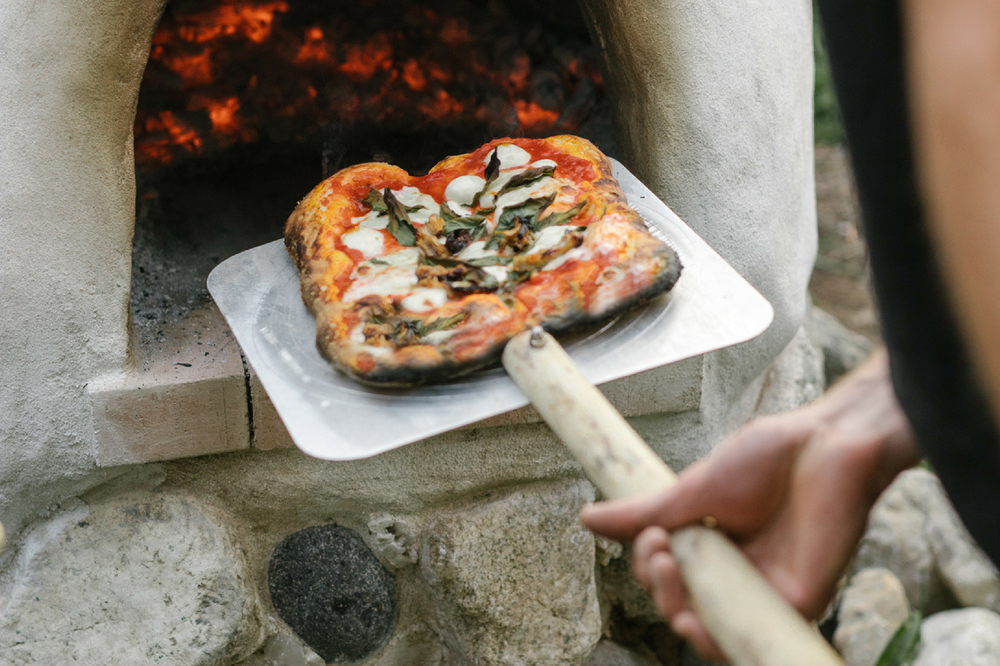
Step 6: Pre-Bake (Optional)
For a crisper bottom, you can pre-bake the dough for 3–4 minutes at 220°C (425°F) before adding toppings.
Step 7: Add Toppings and Bake
Top with sauce, cheese, and your favorite ingredients. Bake in a preheated oven at 220–250°C (425–480°F) for 10–15 minutes, or until the crust is golden brown and the cheese bubbles.
Flavor and Texture Tips for Fast Dough
Fast dough can sometimes lack the depth of flavor found in long-fermented dough. Here are ways to enhance taste and texture:
- Oil Infusion: Adding olive oil during mixing and brushing the crust before baking adds richness and golden color.
- Herbs and Spices: Garlic powder, dried oregano, or rosemary in the dough can give a subtle aromatic lift.
- High Heat: Baking at the highest safe temperature your oven allows helps create a professional-style crust with slight charring.
- Hydration Balance: If dough feels dry, add a teaspoon of water at a time; if too sticky, dust with flour.
Even in a short timeframe, these small adjustments can elevate your pizza from “good” to “restaurant-quality.”
Common Mistakes and How to Avoid Them
Making pizza dough in 30 minutes is tricky. Here’s what to watch out for:
- Overproofing: Even rapid-rise dough can over-expand in warm environments. Keep a close eye and don’t exceed 20 minutes.
- Undermixing: Dough that’s not kneaded enough will tear easily and lack chewiness. Stretch and fold until smooth and elastic.
- Too Much Flour: Adding excessive flour to prevent sticking makes the crust dense. Use just enough to handle the dough.
- Cold Oven: Preheat thoroughly. Baking in a lukewarm oven produces soggy crust and uneven cooking.
Avoiding these pitfalls ensures your quick pizza dough is light, airy, and flavorful.
Beyond 30 Minutes: Variations and Experiments
Once comfortable with the 30-minute method, you can experiment:
- Whole Wheat Fast Dough: Replace half the flour with whole wheat flour for a nuttier flavor. Increase water slightly.
- Cheesy Crust Dough: Fold shredded mozzarella or parmesan into the dough for melty pockets of cheese.
- Gluten-Free Quick Dough: Use a mix of gluten-free flour, xanthan gum, and warm water with rapid-rise yeast. Expect a slightly different texture, but still tasty.
- Flavor-Infused Dough: Add roasted garlic puree, sun-dried tomato paste, or herbs directly to the dough.
These variations maintain the fast preparation time while offering unique flavors.
The Verdict: Is 30-Minute Pizza Dough Worth It?
Absolutely. While nothing can completely replicate the depth of flavor from slow fermentation, a well-executed 30-minute dough delivers:
- Satisfying chewiness
- Golden, crisp edges
- Pleasant aroma and flavor
- The joy of homemade pizza in record time
It’s perfect for weeknight dinners, last-minute gatherings, or simply indulging in pizza cravings without the wait. With the right techniques and a bit of science, fast dough becomes a culinary adventure rather than a compromise.
Conclusion
Making pizza dough in 30 minutes is not just possible—it’s practical, fun, and surprisingly delicious. By understanding yeast behavior, manipulating temperature and hydration, and applying smart kneading and rising techniques, you can transform a simple dough into a pizza worthy of any pizzeria. Experiment with toppings, hydration levels, and flavor additions to make this recipe your own.
Fast pizza dough doesn’t just save time; it challenges you to engage with the science and artistry of baking. In the end, the smell of fresh pizza, the warmth of the oven, and the first bite of a homemade crust are rewards well worth the effort—no matter how little time you have.
Whether you’re a busy teen craving a cheesy slice after school or a budding chef looking to master quick dough techniques, the 30-minute pizza dough proves that great food doesn’t always require hours—it just requires understanding, precision, and a dash of creativity.