






Smoothie bowls have exploded in popularity over the last decade, becoming a breakfast, brunch, or snack-time staple for health enthusiasts and foodies alike. But what makes a smoothie bowl truly perfect? Is it the creamy texture, the vibrant colors, the balance of flavors, or the nutrient-rich toppings? The answer is: all of the above. In this article, we will break down everything you need to know about crafting the ultimate smoothie bowl—from selecting ingredients and blending techniques to topping artistry and presentation tips. By the end, you’ll be equipped to make a smoothie bowl that not only tastes phenomenal but also looks like it belongs in a magazine.
1. Understanding the Foundation: Smoothie Bowl Basics
A smoothie bowl is essentially a thicker, more indulgent version of a smoothie designed to be eaten with a spoon rather than sipped through a straw. The key difference lies in consistency. A smoothie bowl should be thick enough to hold toppings without them sinking but smooth enough to create a creamy mouthfeel.
Key Components:
- Base Fruits or Vegetables: Common choices include bananas, berries, mango, pineapple, and avocado. Frozen fruits are ideal because they provide thickness without needing too much ice, which can water down flavor.
- Liquid: The liquid binds the base ingredients together. Popular options include plant-based milks (almond, oat, soy), coconut water, or even yogurt. The trick is to start with less liquid than a regular smoothie; you can always add more if needed.
- Boosters: These include protein powders, nut butters, oats, chia seeds, or spinach. Boosters enhance nutrition and texture without diluting flavor.
Pro Tip: Use at least one frozen banana in your base. Bananas add natural sweetness and a creamy texture that makes every spoonful indulgent.
2. Choosing Ingredients Like a Pro
The perfect smoothie bowl isn’t just about taste—it’s about nutrition, color, and harmony of flavors. Here’s how to approach ingredient selection.
Fruits
- Bananas: Naturally sweet and creamy, perfect as a base.
- Berries: Blueberries, raspberries, strawberries, and blackberries provide antioxidants, color, and tang.
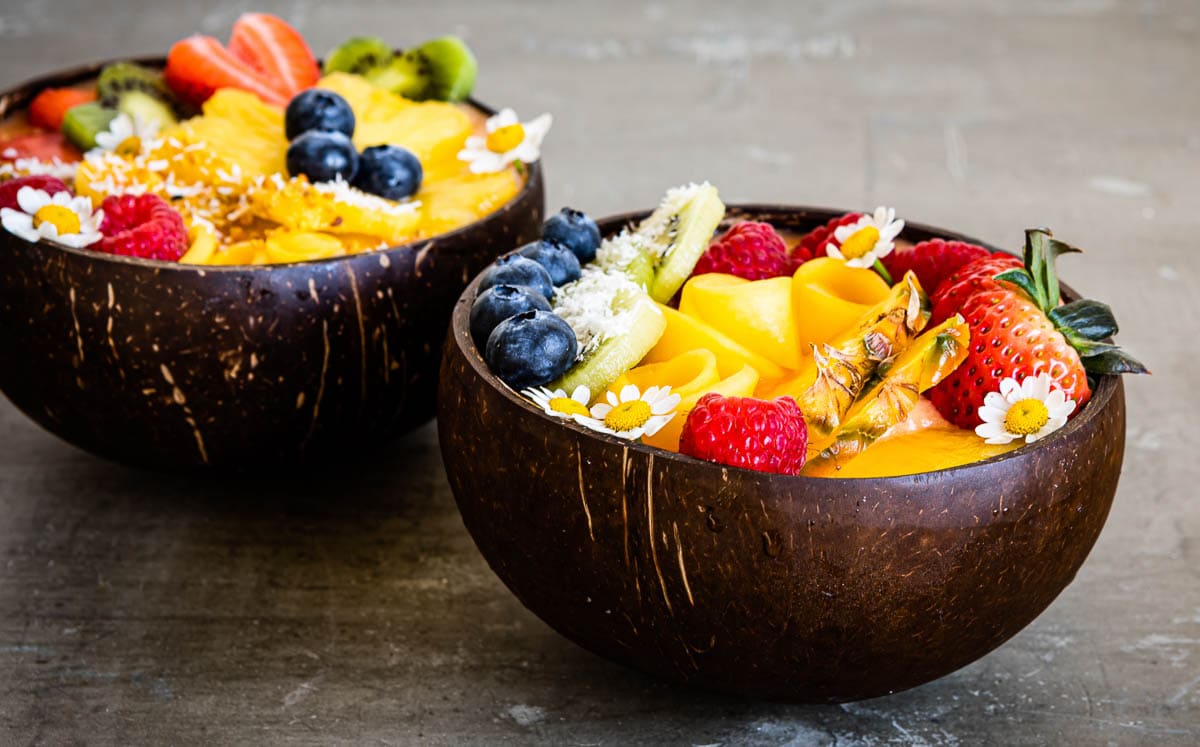
- Mango & Pineapple: Tropical fruits give a vibrant yellow/orange hue and a sweet, sunny flavor.
- Avocado: Adds healthy fats and silkiness without overpowering taste.
Vegetables
- Spinach: Mild flavor, boosts fiber and iron.
- Kale: Stronger taste, excellent for antioxidants.
- Beets: Sweet, earthy, and perfect for creating bright pink hues.
- Carrot or Pumpkin: Adds subtle sweetness and nutrients, especially vitamin A.
Liquids
- Almond milk: Creamy and neutral.
- Coconut water: Light and refreshing, adds subtle sweetness.
- Yogurt: Tangy and protein-rich; Greek yogurt thickens the base.
Pro Tip: Choose liquid quantity carefully. Start with ¼ cup per serving and increase gradually. Too much liquid = runny smoothie bowl.
3. Mastering the Blending Technique
Even with the best ingredients, a poorly blended base can ruin a smoothie bowl. Here’s the step-by-step method for achieving the perfect texture:
- Layer Ingredients in Order: Liquids first, followed by soft fruits, then frozen fruits and boosters. This prevents motor overload in your blender.
- Pulse Before Blending: Use short pulses to break down ingredients before full-speed blending. This helps prevent chunks and uneven texture.
- Scrape and Reblend: Stop halfway, scrape the sides, and blend again. This ensures uniform creaminess.
- Check Consistency: It should be thicker than a regular smoothie. You want a “spoon stands up” texture.
Pro Tip: High-powered blenders like Vitamix or Blendtec create the silkiest results, but even a standard blender works with patience and smaller batches.
4. Flavor Pairing Secrets
Creating a visually stunning smoothie bowl is half the battle; flavor harmony is the other half. Think about sweet, tart, creamy, and nutty notes:
- Sweet + Tart: Banana + strawberry or mango + raspberry.
- Creamy + Nutty: Avocado + almond butter + cocoa powder.
- Fruity + Citrus: Pineapple + orange juice + kiwi slices.
Pro Tip: Avoid overloading with too many fruits. 2-3 complementary fruits are usually perfect.
5. The Art of Toppings
Toppings transform a simple smoothie bowl into an Instagram-worthy masterpiece. They add texture, flavor contrast, and extra nutrients.
Popular Topping Categories:
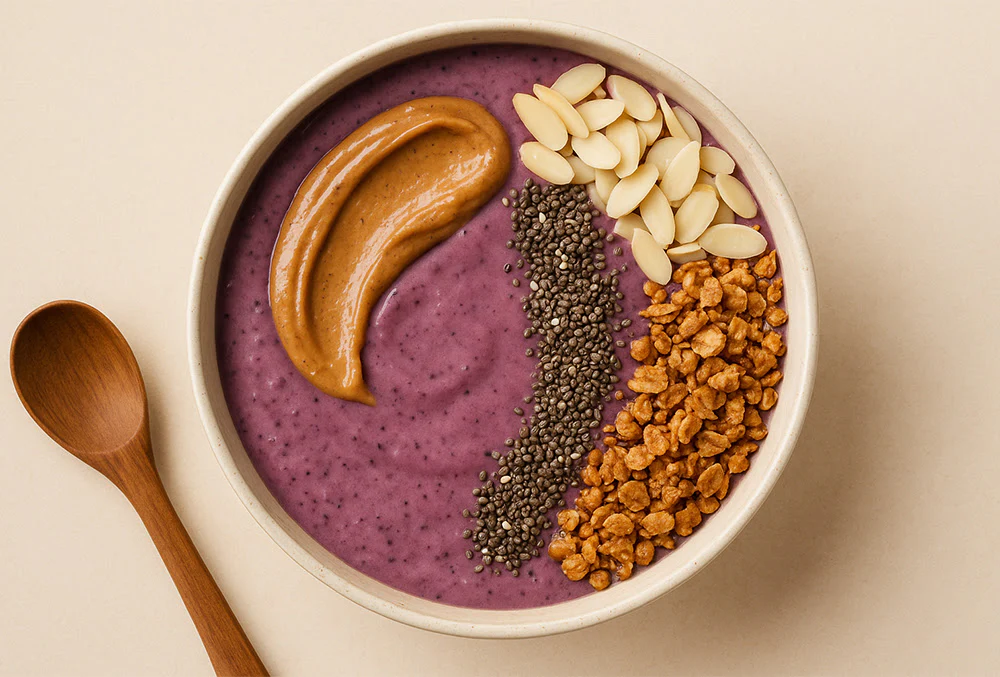
- Crunchy: Granola, nuts, seeds (pumpkin, chia, flax), coconut flakes.
- Fruity: Fresh berries, sliced banana, kiwi, dragon fruit.
- Drizzle: Nut butter, honey, cacao nibs, or yogurt swirls.
- Superfood Dusting: Matcha, cacao powder, spirulina, or bee pollen.
Pro Tip: Place toppings in patterns—lines, spirals, or clusters—for a visually stunning effect.
6. Color Psychology in Smoothie Bowls
Believe it or not, the colors in your smoothie bowl can influence how delicious it feels. Here’s a quick guide:
- Red & Pink: Strawberry, raspberry, dragon fruit. Energetic and fun.
- Green: Spinach, kiwi, matcha. Fresh, earthy, and calming.
- Yellow & Orange: Mango, pineapple, carrot. Vibrant and cheerful.
- Purple & Blue: Blueberry, acai, blackberry. Mysterious and rich.
Pro Tip: For maximum visual appeal, aim for three contrasting colors per bowl.
7. Nutritional Power-Ups
A smoothie bowl can be a balanced meal if done right. Focus on these nutritional elements:
- Protein: Greek yogurt, protein powder, nut butters.
- Healthy Fats: Avocado, coconut, nuts, seeds.
- Fiber: Fruits, vegetables, oats, chia seeds.
- Micronutrients: Vitamins and minerals come from colorful fruits and vegetables.
Pro Tip: A scoop of powdered superfoods like spirulina, maca, or acai can elevate both color and nutrient density.
8. Seasonal & Special Variations
Smoothie bowls can be tailored to seasons, dietary preferences, or flavor adventures.
Seasonal Inspiration:
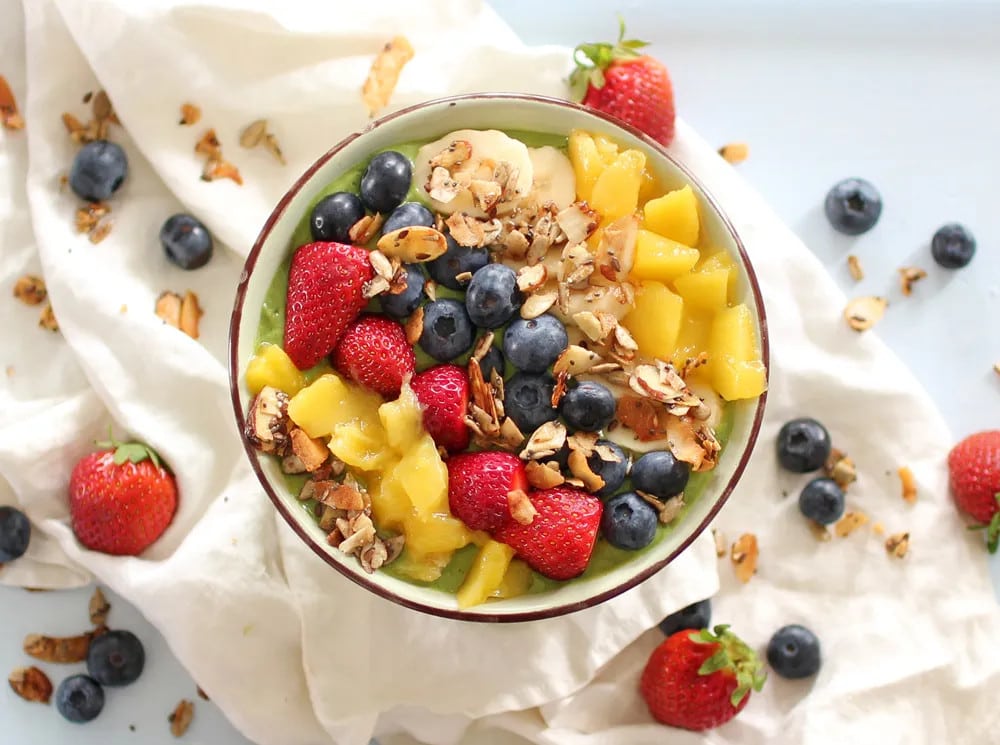
- Spring: Strawberry + spinach + almond milk + chia seeds.
- Summer: Mango + pineapple + coconut milk + shredded coconut.
- Autumn: Pumpkin puree + banana + cinnamon + oat milk.
- Winter: Beet + banana + berry mix + almond butter.
Special Diets:
- Vegan: Plant-based milk, no honey, use maple syrup or dates.
- Low Sugar: Focus on berries, avocado, and unsweetened liquids.
- Protein Boost: Add protein powder, Greek yogurt, or silken tofu.
Pro Tip: Seasonal fruits not only taste better but are more nutrient-dense and often more affordable.
9. Presentation: Making Your Bowl Instagram-Ready
Presentation is the icing on the smoothie bowl cake. Here are some tips:
- Choose a bowl with a wide rim – more surface area for creative topping placement.
- Layer toppings strategically – lines, halves, clusters, or geometric patterns.
- Texture Contrast: Include something soft (banana), crunchy (granola), and juicy (berries).
- Garnish Last: Drizzle nut butter, sprinkle seeds, or dust with superfood powder after all toppings are arranged.
Pro Tip: Take photos under natural light for best color representation. A white bowl makes colors pop dramatically.
10. Common Mistakes and How to Avoid Them
Even seasoned smoothie bowl makers can stumble. Here’s what to watch out for:
- Too Runny: Add frozen fruits or reduce liquid.
- Bland Flavor: Balance sweetness, tartness, and creaminess. Taste before blending completely.
- Overcrowded Toppings: Less is more. Focus on three to five topping types for elegance.
- Unbalanced Nutrition: Ensure protein, fiber, and healthy fats are included to make it a proper meal.
Pro Tip: Always taste the base before pouring. If it’s perfect plain, it will be perfect topped.
11. Expert Tips and Tricks
- Freeze Banana Slices in Advance: Makes the base creamy instantly.
- Use a Tamper or Spoon While Blending: Helps blend thick mixtures evenly.
- Add a Citrus Splash: Lemon or lime juice brightens flavor and color.
- Keep Toppings Separate Until Serving: Preserves crunch and freshness.
- Experiment With Layers: Pour base in layers with different colors for a rainbow effect.
12. Why Smoothie Bowls Are More Than Just Food
Smoothie bowls combine art, nutrition, and mindfulness. Making them can be a creative, almost meditative process. You choose the colors, textures, and flavors, crafting a bowl that nourishes both body and soul. The beauty is that each bowl is unique—a reflection of your taste, mood, and creativity.
Pro Tip: Invite friends or family for a “smoothie bowl bar” experience. It’s fun, interactive, and encourages healthy eating.
Conclusion
The perfect smoothie bowl is more than just a thick smoothie with toppings. It’s a careful balance of texture, flavor, nutrition, and visual appeal. By selecting the right ingredients, mastering blending techniques, layering toppings artfully, and understanding color and flavor dynamics, you can create a smoothie bowl that is both a feast for the eyes and a powerhouse of nutrients. Whether you are a beginner experimenting with your first bowl or a seasoned smoothie artist, these tips and techniques will help elevate your smoothie bowl game to perfection.
Remember, the ultimate smoothie bowl is flexible. Don’t be afraid to experiment with seasonal fruits, superfood powders, or unusual toppings. Every bowl is an opportunity to express creativity, nourish your body, and enjoy one of the most satisfying meals of the day.