






A dull knife is one of the great quiet frustrations of daily life. It turns a simple tomato into a wrestling match, transforms neat herb chiffonade into bruised confetti, and makes cooking feel harder than it should. Many people assume a knife goes dull because it’s “old,” or because it was never very good to begin with. That explanation is comforting—and wrong.
Knives go dull for specific, understandable reasons. Better still, most of those reasons can be addressed at home with knowledge, patience, and respect for safety. Sharpening is not a mysterious art reserved for professionals in leather aprons. It’s a form of basic tool care, closer to tuning a bicycle than forging a sword.
This article takes a deep but friendly look at why knives lose their edge, how sharpening actually works, and how thoughtful home practices can restore performance without drama. The goal is not to turn your kitchen into a workshop, but to help you understand your tools well enough to treat them kindly—and get better results every time you cook.
1. What “Sharp” Really Means (And Why It Doesn’t Last Forever)
To understand dullness, you first need to understand sharpness. A knife is sharp when the two sides of its blade meet in a very thin, clean line called the edge. That line doesn’t need to be perfect; it needs to be consistent. When you cut, all the force of your hand is concentrated into that microscopic line, allowing the blade to separate food fibers efficiently.
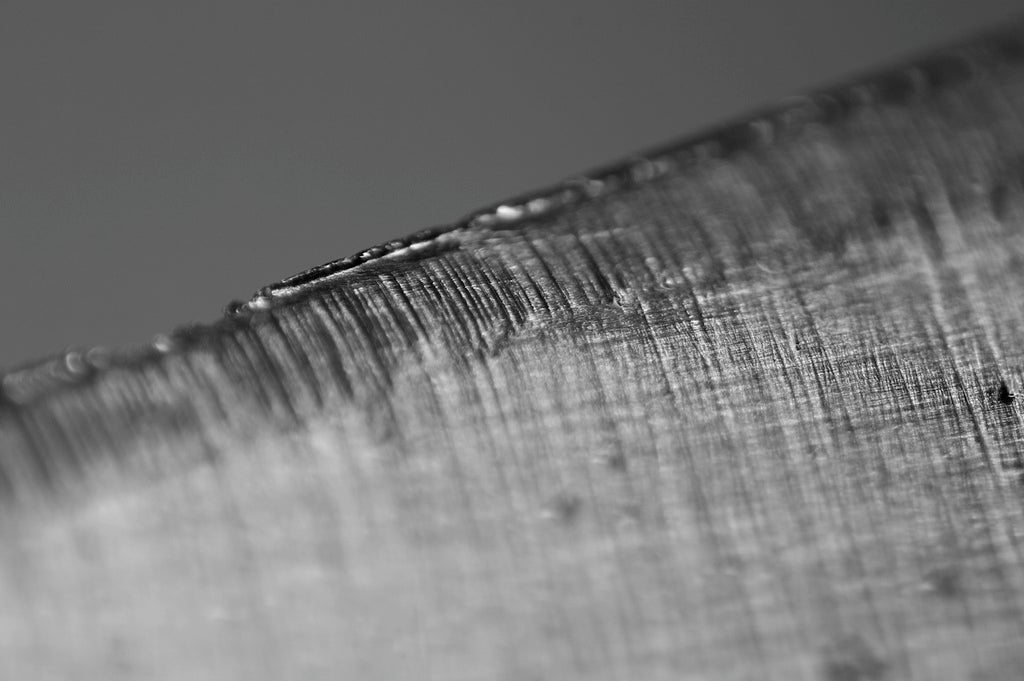
The problem is that this line is fragile. Even high-quality steel is still steel—metal made of tiny crystals locked together. Under use, those crystals bend, chip, and wear away. Each cut is a tiny act of erosion.
Sharpness is not a permanent state. It is a temporary condition created by shaping metal. Understanding this changes how you think about knives: they are not “good” or “bad,” but “well-maintained” or “neglected.”
2. The Most Common Reasons Your Knife Is Dull
2.1 Contact with Hard Surfaces
One of the fastest ways to dull a knife is letting it strike something harder than the blade itself. Glass cutting boards, ceramic plates, stone countertops, and even sinks are frequent offenders. Each impact rolls or chips the edge slightly. You may not see the damage, but you feel it in the next cut.
Wood and certain food-safe plastics are forgiving. They absorb some of the impact and allow the edge to pass without trauma. Hard surfaces don’t negotiate.
2.2 Edge Rolling Instead of Breaking
Most dull knives are not “blunt” in the way a hammer is blunt. Instead, the edge has rolled to one side or the other. Picture a thin wire bent sideways. The metal is still there, but it’s no longer aligned to do its job.
This rolling happens during normal cutting, especially with softer steels. It explains why a knife can feel sharp one day and disappointing the next, even if it hasn’t seen heavy use.
2.3 Abrasion from Food and Technique
Certain foods accelerate dulling. Acidic ingredients, hard rinds, seeds, and fibrous vegetables all abrade the edge over time. Technique matters too: twisting the blade mid-cut or scraping the edge across the board (instead of lifting it) stresses the metal unnecessarily.
Small habits compound. A knife doesn’t suddenly go dull—it slowly drifts away from its ideal shape.
2.4 Improper Storage
Throwing knives into a drawer is like tossing musical instruments down the stairs. Edges collide with other utensils, get nicked, and lose alignment. Even gentle contact, repeated many times, degrades sharpness.
Good storage doesn’t have to be fancy. It just has to respect the edge.
3. Honing vs. Sharpening: Two Different Jobs
One of the most misunderstood topics in kitchen care is the difference between honing and sharpening. They sound similar, but they solve different problems.
3.1 Honing: Realigning the Edge
Honing addresses edge rolling. When you use a honing rod, you are not removing much metal. Instead, you are guiding the bent edge back toward center. Think of it like combing messy hair rather than cutting it shorter.
Regular honing keeps a sharp knife feeling sharp longer. It does not, however, restore an edge that has been worn away.
3.2 Sharpening: Removing Metal to Create a New Edge
Sharpening is about shaping. It removes metal from both sides of the blade until they meet again in a clean line. This is necessary when honing no longer improves performance.
Sharpening takes more time and more care. It also shortens the life of the knife slightly, which is why it should be done thoughtfully—not constantly.
Understanding the difference helps you choose the right solution instead of overusing the wrong one.
4. The Myth of “Ruining” a Knife at Home
Many people avoid sharpening because they fear damaging their knife. This fear is understandable, but often exaggerated.
A knife is not ruined by thoughtful, conservative sharpening. It is ruined by neglect, abuse, or aggressive shortcuts. In fact, professional sharpeners remove metal too—they just do it with experience and consistency.
Home sharpening, when approached calmly and safely, is simply maintenance. You are not carving away value; you are preserving function.
5. Steel Types and How They Affect Dullness
Not all knives dull the same way. The type of steel matters.
5.1 Softer Steels
Softer steels tend to roll rather than chip. They lose their “bite” quickly but respond well to honing. Many Western-style kitchen knives fall into this category.
These knives benefit from frequent light maintenance and occasional sharpening.
5.2 Harder Steels
Harder steels hold an edge longer, but when they fail, they tend to chip rather than bend. Honing does less for them, and sharpening requires more precision.
These knives reward careful use and gentle surfaces.
5.3 Stainless vs. Carbon Steel
Stainless steel resists rust but may sacrifice some edge retention depending on formulation. Carbon steel sharpens easily and can become extremely sharp, but requires more attention to cleanliness and drying.
None of these types are “better” universally. They simply behave differently, and understanding that behavior prevents frustration.
6. How Sharpening Actually Works (Without the Drama)
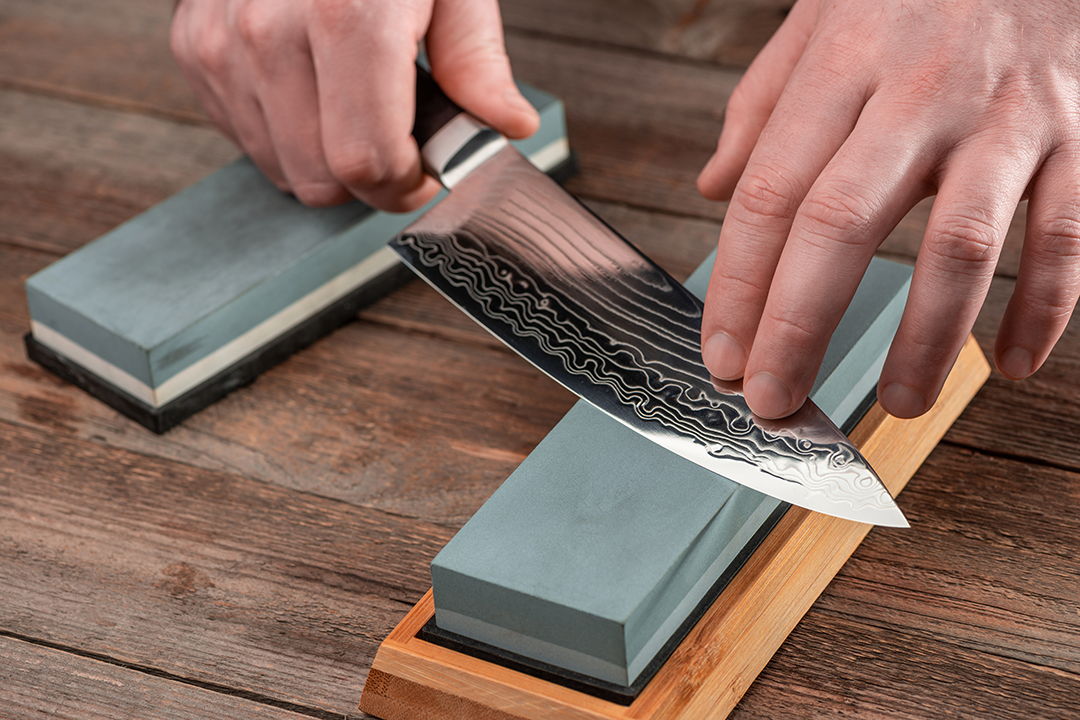
Sharpening is the process of abrasion. A harder material wears away a softer one in a controlled manner. Stones, plates, and other sharpening surfaces are designed to remove steel slowly and predictably.
When you sharpen, you are doing three things:
- Removing damaged metal
- Creating two clean planes
- Bringing those planes together at an edge
That’s it. No sparks. No magic. Just geometry and patience.
7. Common Home Sharpening Options Explained
There are many tools marketed for home sharpening. Some are excellent. Some are… enthusiastic. Understanding the categories helps you choose wisely.
7.1 Manual Sharpening Surfaces
These include stones and plates designed to abrade steel evenly. They offer control and adaptability, but require attention and respect. They reward slow, deliberate work.
7.2 Guided Systems
Guided systems use frames or fixtures to help maintain consistency. They reduce guesswork and are popular with beginners. The trade-off is less flexibility and a more mechanical feel.
7.3 Pull-Through Devices
These devices are convenient but aggressive. They remove a lot of metal quickly and can shorten a knife’s lifespan if overused. They are best seen as occasional solutions, not daily habits.
No tool is inherently bad. The problem arises when a tool is used without understanding its impact.
8. Safety: The Quiet Foundation of Good Sharpening
Because knives are sharp tools, safety must come first. Good sharpening is calm and controlled, never rushed. Distractions are the enemy.
Key safety principles include:
- Stable surfaces that don’t move
- Clean, dry hands
- Awareness of blade direction at all times
- Stopping immediately if focus fades
Sharpening should feel deliberate, not dramatic. If it feels stressful, something needs to change.
9. Why Angle Matters (But Not as Much as You Think)
Much is made of “perfect angles.” In reality, consistency matters more than exact numbers. A stable, repeatable motion produces better results than chasing precision without control.
Different knives are designed for different edge shapes. Trying to force every knife into the same geometry leads to disappointment. Respecting the knife’s design leads to harmony.
Think of angle as a range, not a point.
10. The Role of Grit: Coarse, Medium, Fine
Sharpening surfaces are described by grit, which refers to how coarse or fine the abrasive is.
- Coarse surfaces remove damage and reshape edges
- Medium surfaces refine and strengthen
- Fine surfaces polish and smooth
Skipping steps can leave an edge that looks good but performs poorly. Progression matters, but it doesn’t have to be complicated.
11. Signs Your Knife Needs Sharpening (Not Just Honing)
A knife that needs sharpening often shows subtle symptoms:
- It slips on smooth skins instead of biting
- It crushes delicate foods
- It requires more force for the same cuts
- Honing no longer improves performance
Listening to these signs prevents frustration and keeps your tools responsive.
12. Technique Habits That Keep Knives Sharp Longer
Sharpening is only half the story. Daily habits matter just as much.
12.1 Cutting Surface Choices
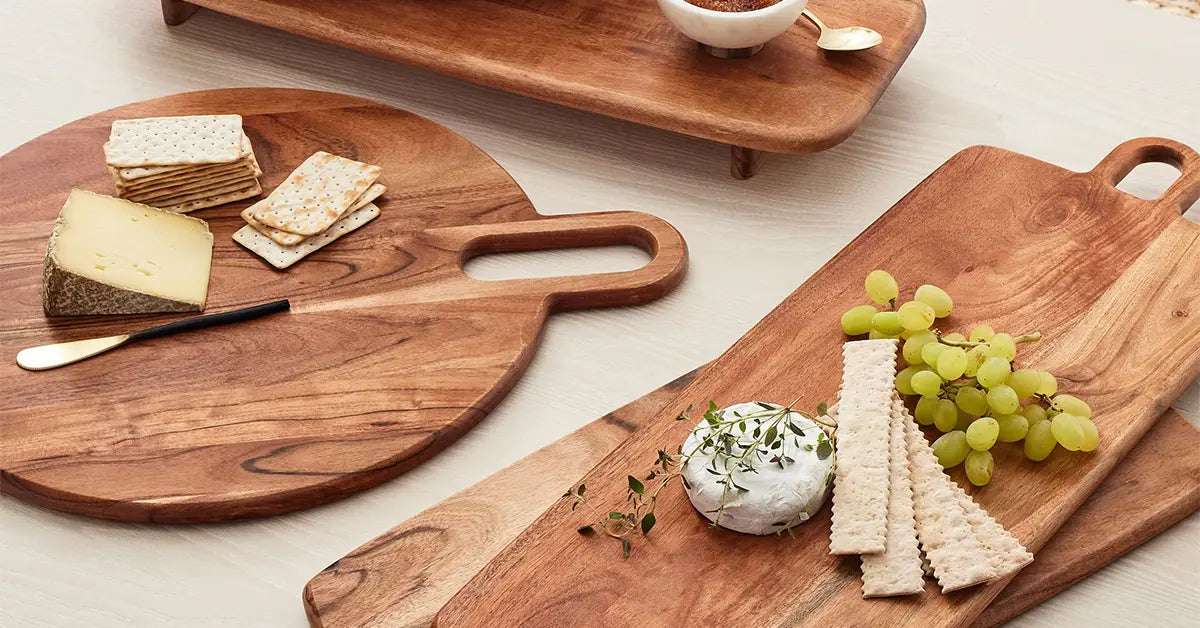
Soft, forgiving boards protect the edge. Hard, decorative boards punish it.
12.2 Cleaning Practices
Hand washing and immediate drying prevent corrosion and micro-damage. Dishwashers are harsh environments for knives, both chemically and mechanically.
12.3 Storage Solutions
Edge-friendly storage reduces accidental damage and makes knives safer to reach for.
Good habits extend the time between sharpening sessions and improve consistency.
13. The Psychology of Sharp Tools
A sharp knife changes how you cook. Movements become lighter. Cuts become cleaner. Confidence replaces hesitation.
Ironically, dull knives are often more dangerous because they require more force and invite slips. Sharpness, maintained responsibly, is a form of safety.
Understanding this reframes sharpening from a chore into an investment in ease.
14. How Often Should You Sharpen?
There is no universal schedule. Frequency depends on use, steel type, and habits.
A home cook might sharpen a few times a year. A professional cook might do it monthly. The key is responsiveness, not routine.
Sharpen when the knife asks for it.
15. Learning to Feel the Edge
With time, your fingers and eyes learn to read an edge. You notice light reflection where none should exist. You feel resistance where there should be flow.
This sensitivity turns sharpening from guesswork into dialogue. The knife tells you what it needs—if you listen.
16. Mistakes That Lead to Disappointment
Common sharpening mistakes include:
- Rushing the process
- Using too much force
- Ignoring progression
- Over-sharpening
- Treating all knives the same
Avoiding these mistakes doesn’t require expertise—just patience.
17. Sharpening as a Skill, Not a Trick
Sharpening is not about hacks or shortcuts. It’s a skill built through observation and calm repetition. Each session teaches you something new.
Progress is measured in feel, not speed.
18. When to Seek Professional Help
Some situations do benefit from professionals: major chips, warped blades, or heirloom knives. Knowing when to step back is part of responsible ownership.
Home sharpening and professional services are not rivals. They are partners.
19. Sustainability and Knife Care
Well-maintained knives last decades. Poorly maintained ones end up discarded and replaced. Sharpening is an act of sustainability, reducing waste and honoring materials.
Taking care of tools is a quiet form of environmental respect.
20. Building a Calm Sharpening Routine
The best sharpening sessions feel almost meditative. Choose a quiet moment. Set up properly. Work slowly. Clean up carefully.
Over time, this routine becomes a satisfying ritual rather than a dreaded task.
21. The Long-Term Payoff
A sharp knife saves time, reduces fatigue, and improves results. It makes cooking feel lighter and more precise. It also deepens your relationship with your tools.
Once you experience this consistently, dullness feels unnecessary.
22. Final Thoughts: Sharpness Is a Choice
Knives don’t go dull out of spite. They respond to how they are used, stored, and cared for. Sharpening at home is not about perfection—it’s about attention.
By understanding why your knife is dull and responding with thoughtful fixes, you take control of one of the most basic tools in the kitchen. The result is not just a sharper edge, but a smoother, more enjoyable cooking experience.