






Cooking meat without a thermometer might sound like guessing in the dark, but for centuries—long before digital probes and instant-read gadgets—great cooks relied on their senses, experience, and technique. Even today, many professional chefs still verify doneness without checking a temperature, using time-tested methods that are surprisingly precise.
This article is a deep, practical, and enjoyable guide to understanding how meat behaves as it cooks, how to read its visual and tactile signals, and how to confidently decide when it’s done—without ever touching a thermometer. Whether you cook at home, grill outdoors, or simply want to sharpen your culinary instincts, this guide will teach you how to see, feel, smell, and listen to your food like a pro.
1. Why Cooking Without a Thermometer Still Matters
Thermometers are excellent tools, but they’re not always available, practical, or fast. More importantly, they don’t teach you why meat is done—they only tell you that it is.
Learning to cook meat without a thermometer offers several advantages:
- Speed and flow: You don’t interrupt cooking by poking holes and losing juices.
- Skill development: You build intuition that works anywhere—campfires, outdoor grills, or unfamiliar kitchens.
- Better texture awareness: You learn to cook for feel, not just numbers.
- Professional confidence: Many restaurant kitchens rely on sensory checks during service.
Cooking without a thermometer isn’t about rejecting science—it’s about understanding it so well that you can recognize its effects in real time.
2. What Actually Happens to Meat as It Cooks
To judge doneness accurately, you need to know what heat does to meat.
Protein Transformation
Meat is mostly water held within a structure of proteins:
- At low heat, proteins are relaxed and flexible.
- As heat increases, proteins tighten and squeeze out moisture.
- At high heat, proteins become firm and dry.
This transformation is why raw meat feels soft and cooked meat becomes firm.
Fat Rendering
Fat melts gradually:
- Softens at warm temperatures
- Fully renders at higher heat
- Adds flavor, moisture, and tenderness
Proper doneness balances protein tightening with fat melting.
Moisture Loss
All meat loses moisture when cooked, but:
- Undercooked meat retains too much water and feels mushy
- Overcooked meat loses too much water and becomes dry
- Perfectly cooked meat feels springy and juicy
Understanding this balance is the foundation of doneness judgment.
3. The Visual Language of Doneness
Your eyes are one of your most powerful tools.
Surface Color
- Raw meat: Pale, glossy, and uneven in color
- Cooking meat: Gradually browns or lightens
- Well-cooked meat: Even color, matte surface
Browning is caused by the Maillard reaction, which occurs when proteins and sugars react under heat. A deeply browned surface often indicates proper cooking—but not always internal doneness.
Internal Color (When Cut)
Different meats show doneness differently:
- Beef: Red → pink → light pink → brown
- Pork: Pinkish → pale white
- Chicken: Pink → fully white with clear juices
- Fish: Translucent → opaque
Color alone is not perfect, but combined with texture, it’s highly reliable.
Juice Clarity
When you cut or press meat:
- Cloudy or bloody juices: Undercooked
- Slightly pink juices: Medium doneness
- Clear juices: Fully cooked
This is especially useful for poultry.
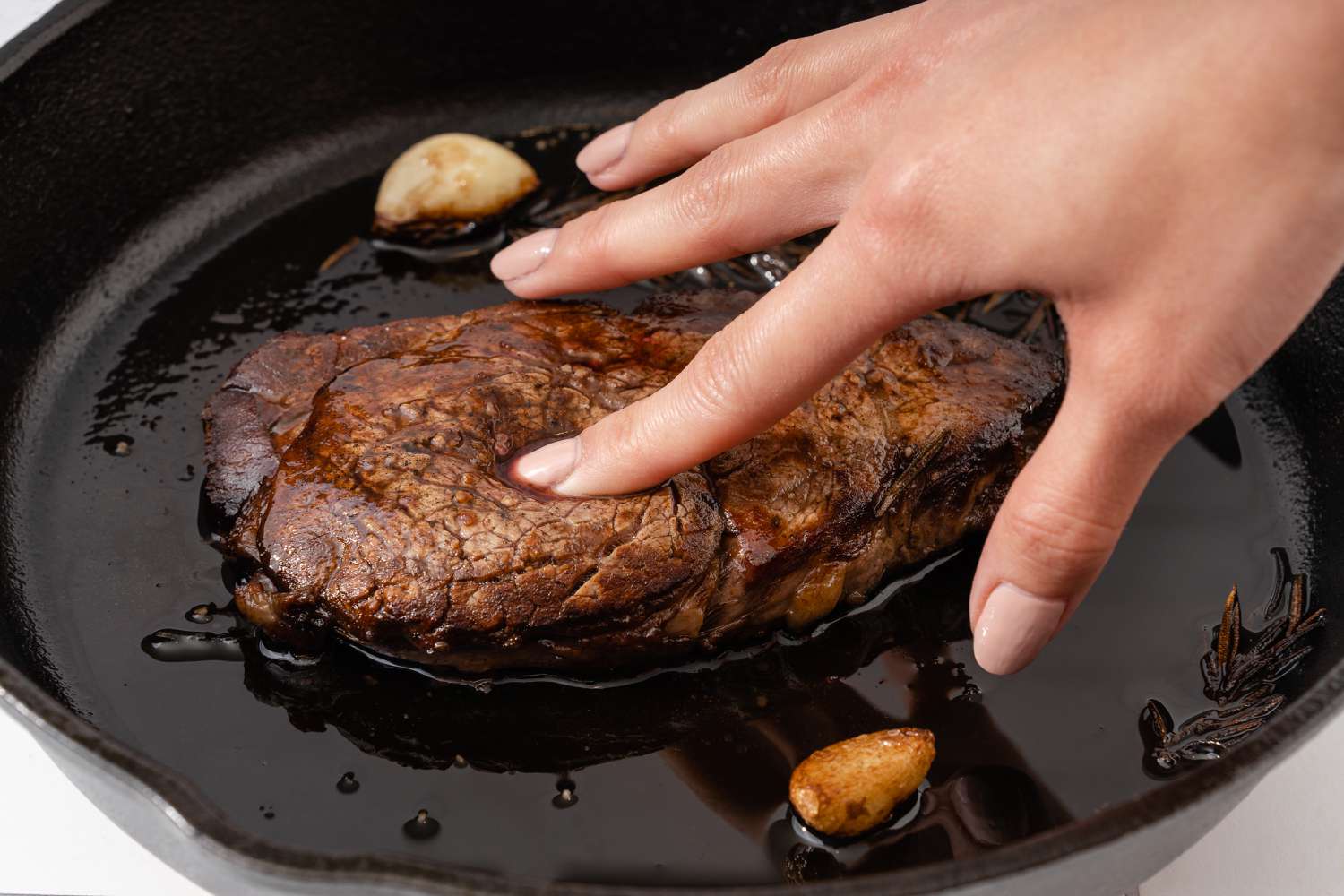
4. The Touch Test: Feeling Doneness with Your Hands
Touch is the most famous thermometer-free method.
The Finger Test (For Steak)
This method compares meat firmness to the fleshy pad at the base of your thumb.
- Relaxed hand: Rare (very soft)
- Thumb + index finger: Medium-rare
- Thumb + middle finger: Medium
- Thumb + ring finger: Medium-well
- Thumb + pinky: Well-done
Press the steak lightly with a finger or utensil and compare.
What You’re Feeling For
- Soft and squishy: Undercooked
- Springy with resistance: Perfectly cooked
- Hard and stiff: Overcooked
With practice, this becomes incredibly accurate.
5. Sound: The Secret Signal Most Cooks Ignore
Meat talks while it cooks—if you listen.
:max_bytes(150000):strip_icc()/GettyImages-184991653-2000-d122d3139d1a40209e4a983aa2fdd4be.jpg)
Sizzling Changes
- Loud, wet sizzling: Moisture still escaping, meat is early in cooking
- Steady, controlled sizzle: Ideal cooking phase
- Fading sizzle: Surface drying, nearing doneness
A sudden drop in sound often signals the meat is close to finished.
Popping and Crackling
Rendered fat crackles differently than water. As fat replaces moisture on the surface, the sound sharpens.
Experienced grill cooks often rely on sound as much as sight.
6. Smell: Aroma as a Doneness Indicator
Smell is subtle but powerful.
- Raw meat: Mild, metallic, slightly sweet
- Cooking meat: Savory, meaty, aromatic
- Perfect doneness: Rich, balanced aroma
- Overcooked: Bitter, burnt, or overly sharp
When meat smells “ready,” it usually is. Burnt smells mean you’ve gone too far.
7. Time and Thickness: Predictable Patterns
Time alone isn’t enough—but combined with thickness, it becomes reliable.
Why Thickness Matters
Heat travels from the outside in. A thick cut takes longer and shows stronger doneness gradients.
General Guidelines (Not Rules)
- Thin cuts cook fast and show doneness quickly
- Thick cuts need rest time after cooking
- Bone-in meat cooks more slowly
Experienced cooks learn to recognize when time aligns with sensory cues.
8. Meat-by-Meat Doneness Without a Thermometer
Beef
Beef is forgiving and ideal for thermometer-free cooking.
:max_bytes(150000):strip_icc()/20250722-MEATRESTINGUPDATE-Butter-basting-steak-fish-liz-clayman-d9afb24942da4cde9850708f230400f6.jpg)
Key signs:
- Firm but springy texture
- Rich brown crust
- Pink center when sliced (depending on preference)
Steaks respond exceptionally well to touch and color cues.
Pork
Modern pork can be slightly pink and still juicy.
Key signs:
- Pale interior with slight blush
- Clear juices
- Firm but not dry texture
Avoid cooking until chalky white—that’s overdone.
Chicken
Chicken requires full cooking, but you don’t need a thermometer.
Key signs:
- Opaque white meat throughout
- Clear juices when pierced
- Firm texture, not rubbery
Check near bones, where cooking is slowest.
Lamb
Lamb behaves like beef but has more fat.
Key signs:
- Deep brown crust
- Soft-to-springy texture depending on doneness
- Juicy interior
Fat aroma becomes sweet and rich when ready.
Fish
Fish offers the clearest doneness signals.
Key signs:
- Flesh turns opaque
- Flakes easily with gentle pressure
- Moist but not translucent
Overcooked fish becomes dry and chalky.
9. The Importance of Resting Meat
Doneness doesn’t stop when meat leaves the heat.
What Happens During Resting
- Juices redistribute
- Proteins relax slightly
- Texture improves
Skipping rest can make meat appear undercooked or dry.
Rule of thumb:
Rest meat for about one-third of its cooking time.
10. Carryover Cooking: The Invisible Heat
Even off the heat source, meat continues cooking.
- Thick cuts gain more internal heat
- High-heat cooking increases carryover
- Resting completes doneness gently
This is why experienced cooks stop cooking just before perfect doneness.
11. Common Mistakes When Judging Doneness
Pressing Too Hard
Heavy pressure gives false firmness readings. Always press lightly.
Cutting Too Early
Slicing meat immediately releases juices and distorts doneness clues.
Ignoring Thickness Differences
One side may be done while another isn’t—especially in uneven cuts.
Relying on Color Alone
Lighting, meat type, and marinades can mislead your eyes.
12. Practice Exercises to Build Doneness Instincts
Skill comes from repetition.
Exercise 1: Touch Comparison
Cook multiple steaks to different doneness levels and feel each one.
Exercise 2: Slice and Observe
Cut cooked meat and study color, juice, and texture.
Exercise 3: Sound Awareness
Cook in silence once. Focus only on sizzling changes.
Exercise 4: Aroma Tracking
Notice how smell evolves minute by minute.
13. Professional Chefs and Thermometer-Free Cooking
In busy kitchens, speed matters.
- Chefs memorize doneness through touch
- Line cooks rely on visual cues
- Thermometers are often backup tools
Culinary schools still teach sensory judgment first, tools second.
14. Cooking Methods and Their Doneness Signals
Pan-Searing
- Strong browning
- Audible sizzle
- Quick firmness change
Grilling
- Flame behavior changes as fat renders
- Surface dries when nearing doneness
Roasting
- Even color development
- Aroma fills the room gradually
Braising
- Meat becomes fork-tender
- Fibers separate easily
Each method has its own language.
15. Developing Trust in Your Senses
The biggest obstacle isn’t knowledge—it’s confidence.
- Your senses are accurate
- Meat follows predictable rules
- Mistakes teach faster than success
With practice, you’ll stop wondering if meat is done—you’ll know.
16. Final Thoughts: Cooking as Conversation
Cooking meat without a thermometer is not reckless or outdated. It’s a conversation between heat and food, interpreted by your senses.
When you understand how meat changes:
- Your cooking becomes faster
- Your results become more consistent
- Your confidence grows dramatically
Thermometers measure numbers.
Great cooks read signals.
Once you learn to listen, watch, smell, and feel, perfectly cooked meat stops being a mystery—and becomes second nature.