





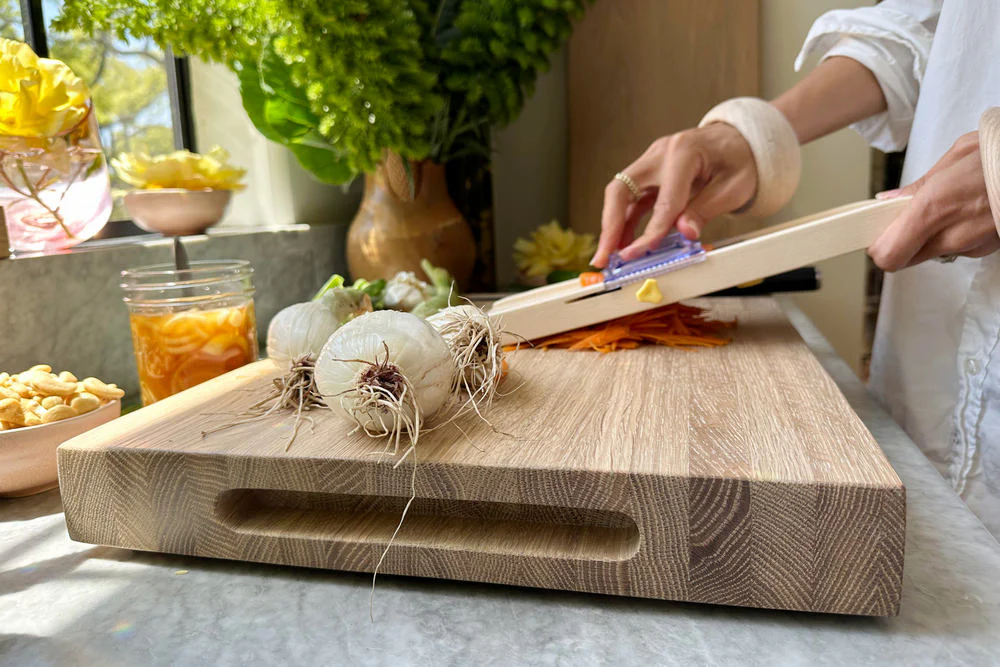

Most people think of a cutting board as a silent, neutral stage—a simple surface where ingredients briefly rest before becoming dinner. Knives matter. Ingredients matter. Heat matters. But the cutting board? It’s often treated as a background prop, interchangeable and forgettable.
That assumption is wrong.
Your cutting board is not passive. It touches your food more intimately than almost any other tool in the kitchen. It absorbs, releases, reacts, resists, and remembers. Over time, it can influence flavor, aroma, texture, and even how clean or “fresh” food tastes once it hits the plate.
This article explores a deceptively simple question with surprisingly deep implications: Is your cutting board affecting the taste of your food? The short answer is yes. The longer answer is a fascinating journey through materials science, chemistry, microbiology, craftsmanship, and everyday cooking habits.
Let’s step into the grain.
1. Taste Is More Fragile Than We Think
Taste is not just what happens on the tongue. It’s a complex sensory experience built from flavor compounds, aromas, textures, temperatures, and expectations. A tiny change—an unfamiliar scent, a faint bitterness, a metallic note—can shift how food is perceived.
Cutting boards influence taste in subtle but cumulative ways:
- By absorbing flavors and releasing them later
- By reacting chemically with food acids
- By harboring odors or residues
- By affecting knife performance and cut quality
- By changing how clean or fresh ingredients feel
These effects are rarely dramatic. Your carrots won’t suddenly taste like soap. Instead, the influence shows up as dullness, muddiness, off-notes, or a lack of clarity—especially noticeable in simple foods like fruit, vegetables, herbs, and raw proteins.
When food tastes “a little off” and you can’t explain why, your cutting board may be quietly involved.
2. A Brief History of Cutting Boards and Flavor
Cutting boards have always been shaped by available materials and culinary needs. For most of human history, boards were made from wood—thick slabs, tree stumps, or woven fibers. Flavor transfer was accepted as part of cooking, not a flaw.
As kitchens modernized, new materials appeared:
- Glass and stone promised hygiene and elegance
- Plastic offered affordability and dishwasher safety
- Bamboo arrived as a sustainable alternative
- Composite materials aimed for durability and cleanliness
Each innovation solved one problem while introducing another. Flavor interaction, once taken for granted, became something to control—or ignore.
Modern cooks often focus on cleanliness and convenience, assuming that neutral-looking materials are flavor-neutral. But neutrality is not guaranteed by appearance.
3. Wood Cutting Boards: Flavor, Memory, and Character
3.1 The Myth and Reality of Wood
Wood cutting boards are often described as “warm,” “traditional,” or “chef-approved.” But from a flavor perspective, wood is alive—even after the tree is cut.
Wood is porous. It absorbs moisture, oils, and aromatic compounds. This ability gives wood its complex relationship with flavor.
Contrary to popular belief, this doesn’t automatically make wood dirty or unsafe. In fact, wood’s structure can trap and immobilize bacteria. But flavor memory is another matter.
3.2 How Wood Absorbs and Releases Flavor
When you chop garlic on a wooden board, volatile sulfur compounds seep into the grain. Later, when you slice an apple, tiny traces may re-emerge—not enough to smell strongly, but enough to dull the fruit’s brightness.
This effect is subtle but real, especially with:
- Onions
- Garlic
- Chilies
- Herbs
- Strong spices
Over time, a board develops a flavor history. Some cooks love this. Others find it intrusive.
3.3 Wood Species Matter
Not all wood behaves the same.
- Maple, beech, and walnut are relatively neutral and fine-grained
- Oak can impart tannins and bitterness
- Teak contains natural oils that may affect delicate foods
- Softwoods (like pine) can release resins and odors
A high-quality hardwood board tends to interfere less with taste than cheaper or poorly finished wood.
3.4 When Wood Enhances Taste
In some cuisines, the interaction between wood and food is intentional. Think of fermented foods, cured meats, or rustic breads. A seasoned board can contribute character, much like a well-used pan.
The key is control. Wood can enhance flavor when its use is deliberate—and confuse flavor when it’s not.
4. Plastic Cutting Boards: Clean, Convenient, Complicated
4.1 The Illusion of Neutrality
Plastic cutting boards are marketed as hygienic and non-porous. At first glance, they seem like the safest choice for flavor purity.
But plastic tells a different story over time.
4.2 Micro-Scratches and Flavor Traps
Every knife cut creates microscopic grooves in plastic. These scratches trap:
- Fat
- Proteins
- Aromatic compounds
Unlike wood, plastic does not naturally “heal.” Scratches accumulate, forming a landscape where flavors linger.
This is why a plastic board used for fish may smell faintly fishy even after washing—and why that odor can subtly affect the taste of foods prepared afterward.
4.3 Plastic and Chemical Interaction
Certain plastics can interact with acidic or hot foods, especially if the board is low-quality or heavily worn. While these interactions are usually below safety thresholds, they may still influence taste perception, creating:
- A flat or “plastic” aftertaste
- Reduced clarity in fresh produce
- Lingering synthetic notes
These effects are mild but noticeable to sensitive palates.

4.4 Color-Coded Boards and Flavor Control
Professional kitchens often use color-coded plastic boards to separate food types. This system isn’t just about safety—it’s also about flavor integrity.
Using different boards for raw meat, vegetables, and aromatics reduces unintended flavor transfer. At home, using fewer boards increases the chance that yesterday’s fish influences today’s melon.
5. Bamboo Cutting Boards: Sustainable but Surprising
5.1 Bamboo Is Not Wood (Exactly)
Bamboo is a grass, not a tree. Bamboo boards are made by laminating strips together with adhesives. This construction gives bamboo its hardness and eco-friendly reputation—but also introduces new variables.
5.2 Hardness and Knife Interaction
Bamboo is harder than many hardwoods. This can lead to:
- Faster knife dulling
- Less clean cuts
- More cell damage in ingredients
Why does this matter for taste? Clean cuts preserve moisture and aroma. Ragged cuts release enzymes and cause oxidation, dulling flavor.
5.3 Glue, Grain, and Flavor
The adhesives used in bamboo boards are generally food-safe, but they are not flavor-neutral in every situation. Over time, moisture and heat can cause subtle off-odors, especially in lower-quality boards.
Bamboo boards also tend to absorb less—but when they do absorb, they may release flavors unevenly, creating unpredictable results.
6. Glass, Marble, and Stone: Pure Taste, Broken Tools
6.1 The Promise of Absolute Neutrality
Glass and stone boards are non-porous, non-reactive, and easy to clean. From a purely chemical perspective, they do not absorb or release flavors.
So problem solved?
Not quite.
6.2 Texture, Sound, and Perception
Cutting on glass or stone is loud and harsh. This sensory feedback affects how we cook. Many people unconsciously adjust pressure and speed, resulting in uneven cuts.
Uneven cuts mean:
- Inconsistent cooking
- Altered texture
- Uneven flavor development
Taste is not just chemistry—it’s also structure.
6.3 Knife Damage and Flavor Consequences
Glass and stone are brutal on knives. Dull knives crush food instead of slicing it cleanly, causing:
- Increased oxidation
- Faster moisture loss
- Muted aromas
Even if the board itself is neutral, its effect on your tools indirectly affects flavor.

7. Composite and Rubber Boards: The Professional Middle Ground
7.1 Designed for Balance
Composite and rubber cutting boards are common in professional kitchens. They aim to balance:
- Knife friendliness
- Hygiene
- Flavor neutrality
Materials like high-density rubber or compressed paper fibers offer a forgiving surface that resists deep scratches.
7.2 Flavor Performance
These boards absorb less than wood but more than glass. They don’t hold onto strong odors as stubbornly as plastic. For many chefs, they represent a practical compromise.
From a taste perspective, they interfere very little—especially when well-maintained.
8. Cross-Flavor Contamination: The Hidden Culprit
8.1 What Is Cross-Flavor Contamination?
Cross-flavor contamination occurs when flavor compounds from one food transfer to another through shared surfaces.
This is different from food safety. No one gets sick—but the taste suffers.
Examples include:
- Citrus tasting faintly of onion
- Cheese picking up garlic notes
- Herbs losing their distinct aroma
Cutting boards are prime vectors for this kind of contamination.
8.2 Why We Often Miss It
Cross-flavor contamination is hard to identify because:
- It’s subtle
- It builds gradually
- We adapt to it
Only when we eat the same food prepared on a different board—or in a different kitchen—do we notice the difference.
9. Odor vs. Taste: Closely Linked, Easily Confused
Smell accounts for a large portion of what we perceive as taste. If a cutting board holds odors, it almost certainly influences flavor.
Even when an odor is faint or unnoticed, it can affect:
- Sweetness perception
- Freshness
- Balance
A board that smells “clean enough” may still be affecting your food in ways you don’t consciously register.
10. Cleaning Methods and Flavor Integrity
10.1 Water, Soap, and Timing
How you clean your board matters as much as what it’s made of.
- Delayed cleaning allows flavors to penetrate deeper
- Excessive soaking can spread odors
- Inadequate drying traps moisture and smell
A board that never fully dries becomes a flavor sponge.
10.2 Natural Deodorizers
Salt, lemon, and baking soda are often used to refresh boards. These methods work by:
- Drawing out absorbed compounds
- Neutralizing odors
- Lightly resurfacing the board
Used regularly, they can significantly reduce flavor transfer.
10.3 When Cleaning Is Not Enough
At some point, a board becomes too scarred or saturated to fully recover. When flavors persist despite proper cleaning, it may be time to resurface or replace the board.
11. Matching the Board to the Food
One of the most effective ways to protect flavor is to assign boards by task.
For example:
- One board for aromatics (onion, garlic, spices)
- One for fruit and raw vegetables
- One for raw proteins
This approach doesn’t require perfection—just consistency. Even two boards can dramatically reduce flavor interference.
12. The Role of Professional Kitchens
Professional chefs are acutely aware of flavor purity. While they may not talk about cutting boards often, their practices reveal priorities:
- Multiple boards
- Frequent replacement
- Strict cleaning routines
These habits aren’t only about safety. They’re about delivering food that tastes exactly as intended.
13. Sensory Experiments You Can Try at Home
If you’re curious, you can test your own boards.
Try this:
- Slice a neutral apple on your usual board
- Slice another apple on a brand-new or different-material board
- Taste them side by side
Pay attention to freshness, sweetness, and clarity. The difference may surprise you.
14. Choosing the Right Board for Flavor
There is no single “best” cutting board. The right choice depends on:
- What you cook most often
- How sensitive you are to subtle flavors
- How much maintenance you’re willing to do
For many home cooks, a combination works best: a high-quality hardwood board for general use and a separate board for strong-smelling ingredients.
15. Small Surface, Big Influence
The cutting board is one of the most underestimated tools in the kitchen. It doesn’t heat food, season it, or serve it—but it touches nearly everything you eat.
Over time, it shapes flavor in quiet, cumulative ways.
If your food sometimes tastes less vibrant than you expect, the answer may not be the recipe, the ingredients, or your skill. It might be the surface beneath your knife.
Paying attention to your cutting board isn’t about obsession. It’s about respect—for ingredients, for flavor, and for the small details that make food truly enjoyable.