






Few culinary experiences are as quietly thrilling as breaking into a perfectly made pastry. The crust shatters into delicate shards, releasing a soft sigh of butter and warmth. Each bite dissolves almost instantly, leaving behind richness rather than resistance. This is flaky, melt-in-your-mouth pastry at its finest—and while it may seem magical, it is anything but mysterious.
Behind that golden crust lies a precise dance of ingredients, temperature, technique, and timing. Pastry is not about brute force or complicated gadgets; it is about restraint, understanding, and respect for physics and chemistry. In this article, we’ll uncover the real secrets behind exceptional pastry, from the microscopic behavior of fat and flour to the calm mindset that separates a good baker from a great one.
Whether you are a curious beginner or an experienced home baker looking to refine your touch, this deep dive will help you understand not just how to make flaky pastry, but why it works when it does—and why it fails when it doesn’t.
The Poetry of Pastry: Why Flakiness Matters
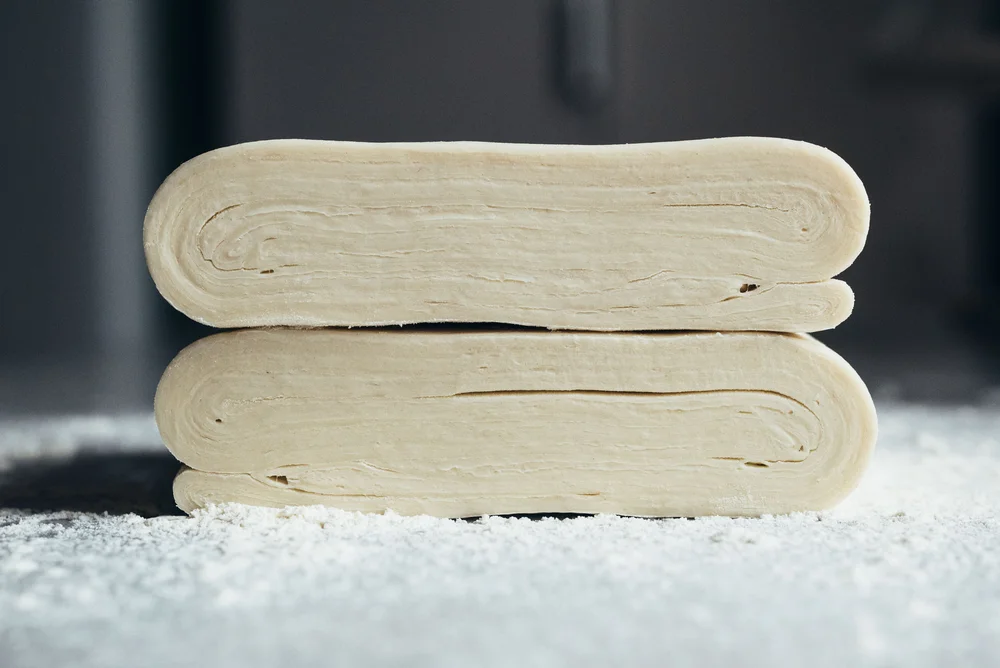
Flakiness is not just a texture; it’s a structure. It is the result of hundreds of paper-thin layers separating, lifting, and crisping in the oven. These layers trap steam, expand, and solidify into something that feels both light and indulgent.
A melt-in-your-mouth pastry, meanwhile, is defined by tenderness. It offers almost no resistance when bitten, breaking down quickly with the warmth of your mouth. The best pastries manage to be both flaky and tender, crisp and delicate—a balance that demands intention at every step.
Understanding what creates that balance begins with the building blocks.
Flour: The Quiet Architect
Protein Content and Its Consequences
Flour seems simple, but its protein content quietly dictates the final texture of your pastry. Protein forms gluten when mixed with water, and gluten provides strength and elasticity. In bread, that’s a virtue. In pastry, it’s a potential threat.
- High-protein flours (like bread flour) create too much gluten, leading to tough, chewy pastry.
- Low-protein flours (like pastry flour or cake flour) produce less gluten, resulting in tenderness.
For most flaky pastries, all-purpose flour strikes a workable balance. It offers enough structure to hold layers without becoming leathery. Some bakers blend all-purpose flour with a small portion of cake flour to further soften the texture.
Milling and Freshness
Freshly milled flour absorbs liquid differently and may behave unpredictably if you’re not used to it. Older flour, on the other hand, can taste flat and absorb moisture unevenly. Consistency matters more than novelty when it comes to pastry flour.
Fat: The Star Performer
If flour is the architect, fat is the star of the show. Flakiness is impossible without fat, and the type, temperature, and handling of fat are critical.
Butter vs. Shortening vs. Lard
- Butter delivers unmatched flavor and aroma. Its water content helps create steam, which lifts layers. However, butter melts quickly, making it more challenging to control.
- Shortening has a higher melting point and no water, which can make flakiness easier to achieve, but at the cost of flavor.
- Lard produces exceptional flakiness and tenderness due to its crystalline structure, though its flavor is more noticeable.
Many professional bakers blend fats—for example, mostly butter for flavor with a small amount of shortening for stability.
Cold Is Not a Suggestion—It’s a Rule
Cold fat is the single most important factor in flaky pastry. When cold pieces of fat are incorporated into flour, they remain distinct. In the oven, those solid pieces melt, leaving behind air pockets that become flakes.
If the fat melts too early—during mixing or rolling—it blends into the flour, eliminating the layers before baking even begins.
This is why:
- Butter is chilled thoroughly.
- Bowls and tools are sometimes chilled.
- Warm kitchens are the enemy of pastry.
Water: The Invisible Trigger
Water may seem secondary, but it plays two essential roles: hydrating flour and creating steam.
How Much Is Enough?
Too little water, and the dough won’t hold together. Too much, and gluten develops excessively. The goal is just enough water to bind the dough into a cohesive mass.
Cold water is essential. Some bakers even use ice water, not because ice itself matters, but because temperature control does.
Water Distribution Matters
Uneven hydration leads to uneven texture. Drizzling water gradually and mixing gently allows better control. A pastry dough should look shaggy, not smooth, before resting.
:max_bytes(150000):strip_icc()/12111-best-ever-pie-crust-DDMFS-4x3-635911f51f304bf6b18d67ba1432c491.jpg)
Salt and Sugar: Small Additions, Big Effects
Salt enhances flavor and subtly tightens gluten, improving structure without toughness when used sparingly. Sugar adds sweetness, but it also affects browning and tenderness.
Even savory pastries benefit from a touch of sugar to encourage caramelization and balance flavor.
The Science of Layers: How Flakiness Is Born
Flaky pastry is essentially controlled chaos. Layers form when fat coats portions of flour unevenly. During rolling, these fat-coated sections flatten into sheets.
In the oven:
- Fat melts.
- Water in the dough turns to steam.
- Steam pushes layers apart.
- Heat sets the structure.
The key is maintaining distinct layers of fat and dough until baking begins. Everything else in the process serves this goal.
Mixing: Less Is More
Overmixing is one of the most common mistakes in pastry-making. Every extra motion encourages gluten formation and warms the fat.
Hand vs. Machine
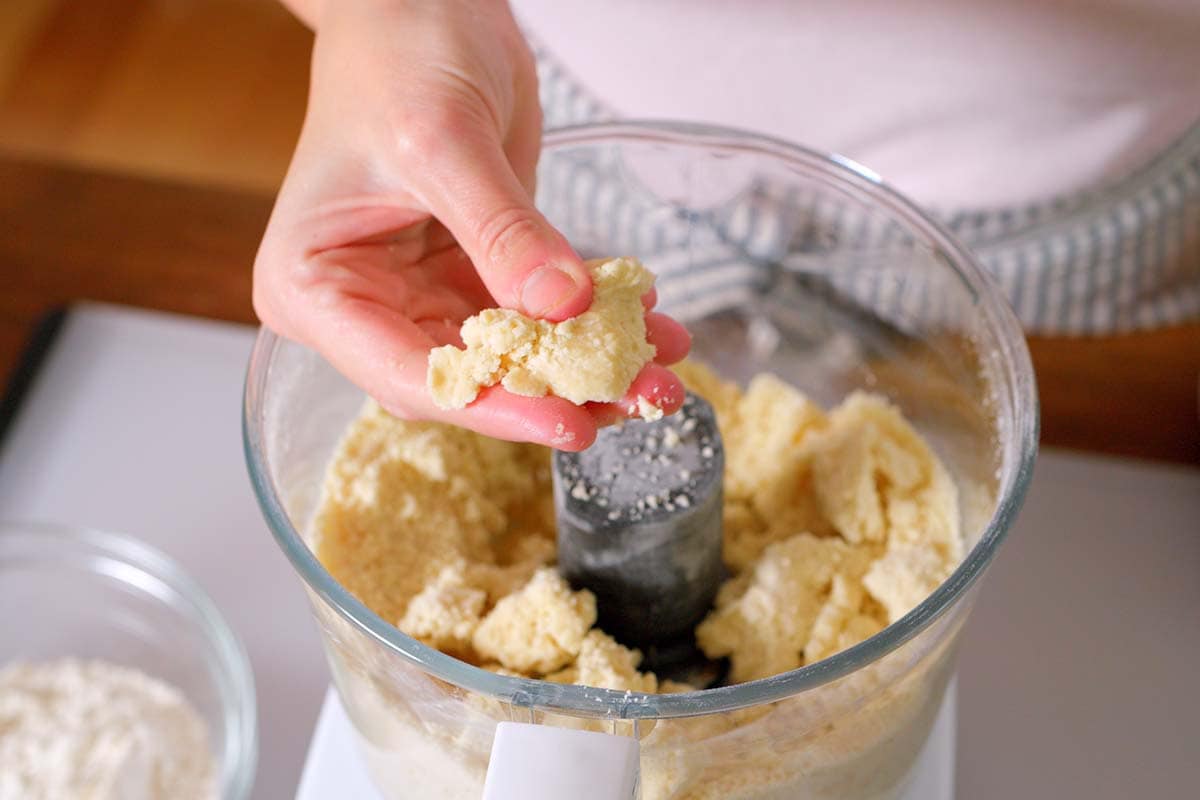
Hands provide sensitivity but transfer heat. Food processors are fast but easy to overuse. Many bakers combine methods: pulsing fat and flour briefly, then finishing by hand.
The dough should never look smooth at this stage. Visible streaks or chunks of butter are not flaws—they are promises of flakiness to come.
Resting: The Power of Patience
Resting dough is not optional. It serves two critical purposes:
- Gluten relaxation – Resting allows gluten strands to loosen, making rolling easier and preventing shrinkage.
- Moisture redistribution – Water spreads evenly, improving consistency.
A minimum rest of 30 minutes in the refrigerator is standard, but longer rests—up to 24 hours—can improve both flavor and texture.
Rolling: Where Technique Meets Touch
Rolling pastry is not about force; it’s about persuasion.
Key Principles
- Roll from the center outward.
- Rotate the dough frequently to maintain even thickness.
- Use minimal flour to prevent sticking without drying the dough.
If the dough resists or springs back, it needs more rest. Fighting it will only build gluten and ruin tenderness.
Folding and Lamination: Optional, but Powerful
Some pastries, like puff pastry and croissants, rely on intentional lamination—repeated folding of dough and butter to create hundreds of layers.
Even simpler pastries can benefit from a few gentle folds during rolling. This technique, sometimes called “rough puff,” enhances flakiness without the labor of full lamination.
Temperature Control: The Silent Discipline
Pastry rewards those who respect temperature. Every stage has an ideal thermal window:
- Mixing: Cold ingredients, cool environment
- Rolling: Dough chilled but pliable
- Baking: Hot oven to create rapid steam
If the dough becomes soft or greasy at any point, stop and chill. There is no penalty for patience, only for ignoring warning signs.
Baking: The Moment of Truth
A hot oven is essential. Most flaky pastries bake best between 200–220°C (400–425°F). This high heat creates immediate steam, lifting layers before fat fully melts away.
Preheating Is Non-Negotiable
An underheated oven allows fat to melt slowly and leak out before structure sets, resulting in greasy, flat pastry.
Visual Cues Over Timers
Perfect pastry announces itself:
- Deep golden color
- Visible layers
- Lightness when lifted
Trust your senses more than the clock.
Common Pastry Problems—and Their Real Causes
Tough Pastry
- Too much water
- Overmixing
- High-protein flour
Greasy Pastry
- Oven too cool
- Fat melted before baking
Shrinkage
- Insufficient resting
- Overworked dough
Lack of Flakiness
- Fat too warm
- Fat too finely mixed
Each problem points back to the same core principles: temperature, restraint, and timing.
Flavor Beyond Butter: Elevating the Experience
While texture defines great pastry, flavor completes it.
- Use cultured butter for complexity.
- Add a pinch of acidity (like lemon juice or vinegar) to brighten flavor without affecting structure.
- Experiment with subtle infusions—herbs, spices, or citrus zest—used sparingly.
The best pastries taste intentional, not overloaded.
The Baker’s Mindset: Calm, Not Rushed
Perhaps the most overlooked secret to exceptional pastry is mental, not mechanical. Pastry demands calm attention. Rushing leads to warm dough, heavy hands, and careless shortcuts.
Great bakers learn to pause, observe, and adjust. They listen to the dough. They know when to stop, chill, rest, or start again tomorrow.
Pastry is not a test of speed or strength. It is a quiet collaboration between human and ingredient.
Tradition Meets Understanding
For centuries, bakers made exquisite pastry without thermometers or food processors. What they had was intuition shaped by repetition. Today, we have the advantage of science to explain what they already knew instinctively.
When you understand why pastry works, recipes become guides rather than rules. You gain the confidence to adapt to your environment, ingredients, and taste.
The True Secret, Revealed
So, what is the secret to flaky, melt-in-your-mouth pastry?
It is not a single trick or ingredient. It is a combination of:
- Cold fat, handled gently
- Minimal water, added thoughtfully
- Controlled gluten development
- Respect for rest and temperature
- And a patient, observant baker
When these elements come together, pastry transforms from a simple dough into something extraordinary—fragile yet structured, rich yet light, fleeting yet unforgettable.
And when it finally shatters beneath your fork, you’ll know: there was no magic involved. Only understanding, care, and a little bit of butter.