






Dense bread is one of the most common frustrations in home baking. You follow a recipe carefully, wait patiently for the dough to rise, and imagine a loaf that’s airy, tender, and full of irregular holes. Then you slice into it and discover something closer to a brick than a cloud. The flavor might be fine—even delicious—but the texture is heavy, tight, and stubbornly compact.
The good news? Dense bread is rarely a mystery. It is almost always the result of specific, understandable factors. Bread is a living system made from flour, water, yeast, salt, time, and technique. When one or more of these elements is out of balance, the structure collapses or never develops in the first place.
This article takes a deep, practical look at why homemade bread turns out dense and how to fix it. We will explore the science of gluten, fermentation, hydration, and handling—without drowning in jargon. You’ll learn how small choices, from flour type to proofing temperature, shape the final crumb. Most importantly, you’ll gain the confidence to diagnose your own bread and improve it consistently.
Let’s break the loaf open and see what’s really going on inside.
1. What “Dense Bread” Really Means
Before fixing dense bread, it helps to define it. Density in bread usually shows up in one or more of these ways:
- A tight, uniform crumb with very small holes
- A heavy loaf that feels solid for its size
- A gummy or slightly wet interior, even after baking
- Poor oven spring (little expansion in the oven)
Not all dense bread is bad. Some traditional breads—like rye loaves or certain seeded breads—are intentionally compact. The problem arises when your goal is a lighter crumb and you consistently miss it.
Density is not a single mistake. It’s a symptom. And like any symptom, it can have multiple causes.
2. Bread Is a Structure, Not Just a Recipe
Bread is not a cake. You don’t simply mix, bake, and hope for the best. Bread dough is a flexible structure built from gluten and gas.
- Gluten forms the elastic network.
- Yeast produces carbon dioxide.
- That gas stretches the gluten, creating volume and airiness.
If the gluten is weak, damaged, or insufficient, it can’t trap gas.
If the yeast doesn’t produce enough gas—or produces it at the wrong time—the dough stays compact.
If the dough is mishandled, the structure collapses.
Understanding this structure-first mindset is key. Recipes give proportions, but technique determines success.
3. The Role of Flour: Not All Flour Is Equal
Protein Content Matters
Flour is the backbone of bread. Its protein content determines how much gluten can form.
- Low-protein flours (like cake or pastry flour) produce weak gluten.
- Medium-protein flours (all-purpose) can work but require careful handling.
- High-protein flours (bread flour) create stronger, more elastic doughs.
If your bread is dense, check your flour first. Using low-protein flour makes it much harder to build a strong structure, especially for lean breads.
Old or Improperly Stored Flour
Flour ages. Over time, it loses strength and absorbs moisture from the air. Old flour can result in slack dough that never quite rises properly.
Store flour in a cool, dry place in an airtight container. If it smells stale or musty, it’s time to replace it.
4. Hydration: Too Little, Too Much, or Misjudged
Water activates gluten and feeds yeast. Getting hydration wrong is one of the fastest ways to dense bread.
Too Little Water
A dry dough is stiff and resistant. Gluten can’t fully develop, and yeast struggles to move and multiply. The result is a loaf that rises poorly and bakes up tight.
Too Much Water (Without Skill)
Very wet doughs can create beautiful open crumbs—but only if handled properly. Beginners often add too much water without adjusting technique, leading to dough that collapses instead of rising.
Measuring Errors
Volume measurements are notoriously unreliable for flour. A “cup” can vary wildly depending on how it’s scooped. Too much flour equals too little water, even if the recipe looks right.
Using a scale is one of the simplest ways to instantly improve bread texture.
5. Yeast: Alive, but Not Invincible
Dead or Weak Yeast
Yeast is a living organism. Heat, age, and improper storage can kill or weaken it.
Signs of yeast problems include:
- Dough that barely rises
- Very slow fermentation
- Flat, heavy loaves
If your yeast doesn’t foam when tested (if using active dry yeast), don’t expect it to lift a loaf.
Too Little Yeast
Under-yeasted dough ferments slowly and may not generate enough gas before the structure sets. This often leads to compact crumbs.
Too Much Yeast
Surprisingly, too much yeast can also cause density. Rapid gas production can overstretch and tear the gluten network, causing collapse before baking.
Balance matters more than speed.
6. Salt: The Silent Regulator
Salt does more than add flavor.
- It strengthens gluten
- It controls yeast activity
- It improves dough elasticity
Too little salt allows yeast to run wild, producing gas faster than the dough can handle. Too much salt can suppress yeast almost completely.
Dense bread can come from either extreme.
Salt should be measured carefully and mixed evenly into the dough.
7. Mixing and Kneading: Building the Network
Under-Kneading
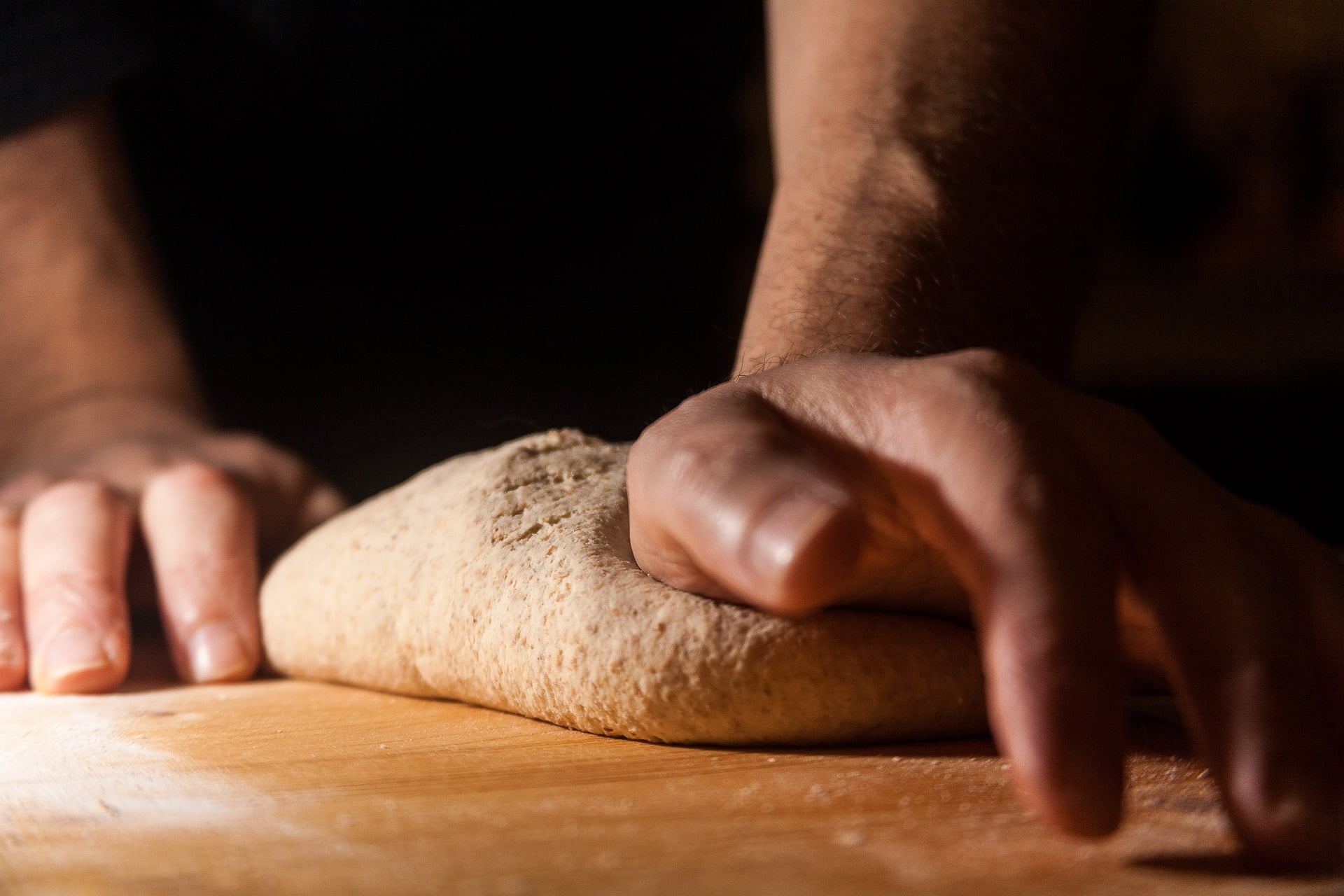
If gluten isn’t sufficiently developed, the dough cannot trap gas. Under-kneaded dough tears instead of stretching, leading to poor rise.
Signs of under-kneading:
- Dough feels rough and sticky
- Tears easily when stretched
- Fails the “windowpane test”
Over-Kneading (Yes, It Happens)
Especially with machines, dough can be kneaded too much. Over-kneaded dough becomes tight, stiff, and resistant, resulting in limited expansion.
The key is development, not exhaustion.
8. Time: Fermentation Is Not Optional
Rushing the Rise
One of the biggest mistakes in home baking is impatience.
Fermentation does more than make dough bigger:
- It develops flavor
- It improves gluten structure
- It allows gas bubbles to organize and strengthen
Short, rushed rises lead to tight crumbs and dull flavor.
Bulk Fermentation vs. Final Proof
Dense bread often comes from confusing these two stages.
- Bulk fermentation builds strength and flavor.
- Final proof prepares the loaf for the oven.
Skipping or shortening either stage disrupts the structure.
9. Temperature: The Invisible Ingredient
Yeast is sensitive to temperature.
- Too cold: fermentation slows dramatically
- Too hot: yeast weakens or dies
Ideal dough temperature typically falls in a warm but comfortable range. Cold kitchens in winter often cause dense bread simply because fermentation never fully happens.
Dough should feel alive—not sluggish, not overheated.
10. Shaping: Where Many Loaves Fail
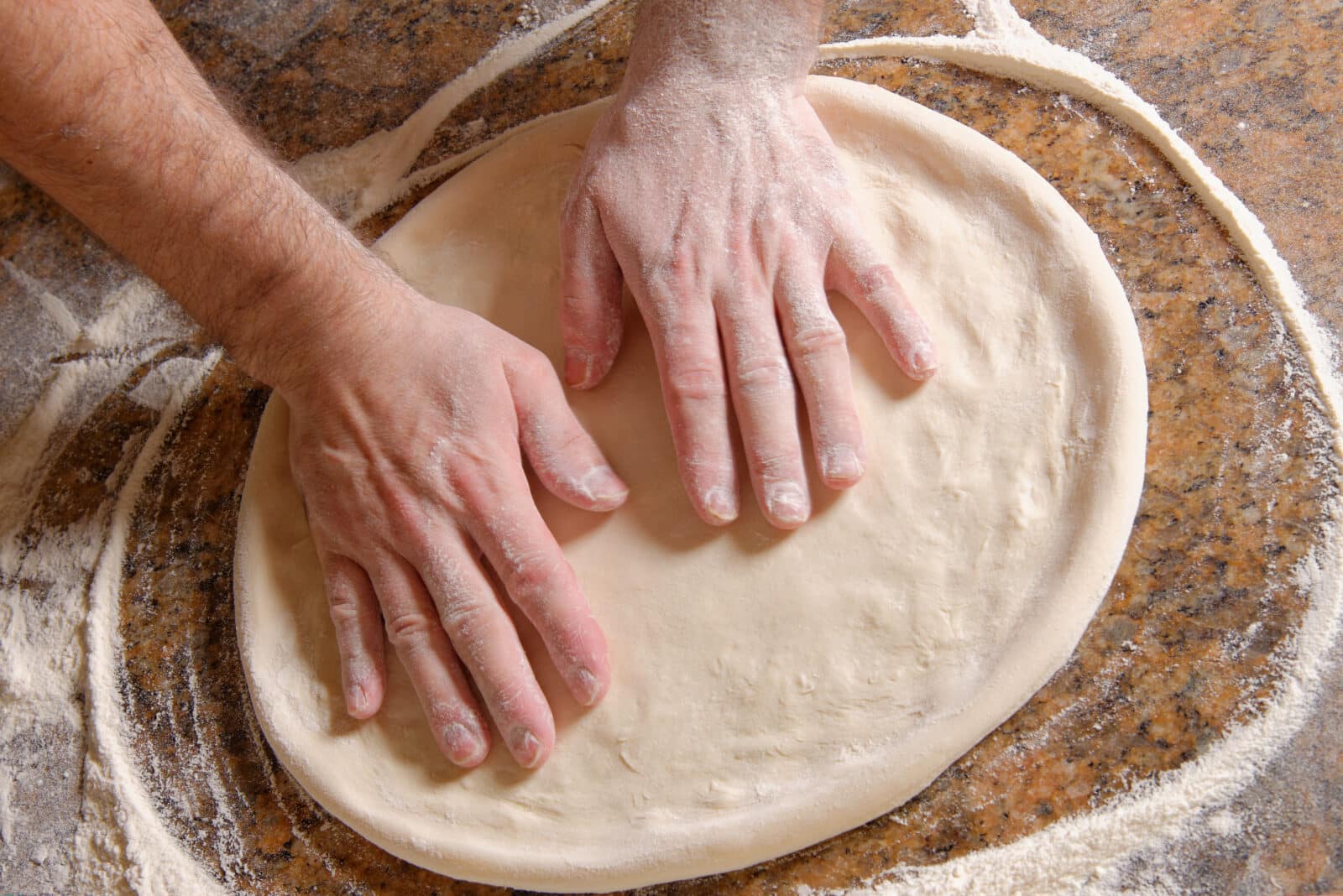
Shaping is not just cosmetic. It creates surface tension, which helps the loaf hold gas and rise upward instead of spreading outward.
Weak Shaping
If the dough is shaped loosely:
- Gas escapes
- The loaf spreads
- The crumb tightens
Over-Handling
Aggressive shaping can knock out too much gas and tear the gluten network, undoing hours of fermentation.
Good shaping is firm, confident, and efficient.
11. Proofing Errors: Under or Over
Under-Proofed Dough
If dough goes into the oven too early:
- Gas bubbles are small and tight
- Oven spring is limited
- Crumb remains dense
Over-Proofed Dough
If dough rises too long:
- Gluten weakens
- Dough collapses
- The loaf bakes up flat and heavy
Learning to judge proofing by feel—not just time—is essential.
12. Oven Issues: Heat Sets the Structure
Insufficient Oven Temperature
Bread needs a hot oven to create oven spring. If the oven is too cool:
- Yeast stops working too early
- The crust sets before expansion
- The loaf stays dense
Lack of Steam
Steam keeps the crust flexible in the early stages of baking, allowing maximum expansion. Without steam, the crust hardens too quickly.
13. Cutting Too Soon: The Hidden Gummy Crumb
Sometimes bread isn’t actually dense—it’s just under-set.
Cutting hot bread releases steam and compresses the crumb. The interior may appear gummy or heavy even if baked correctly.
Patience matters after baking too.
14. Recipe Design: Not All Recipes Are Equal
Some recipes are poorly balanced or overly simplified.
Watch out for:
- Very low hydration without explanation
- Excessive flour added during kneading
- Unrealistically short rise times
- No mention of dough temperature or feel
A good recipe teaches technique, not just steps.
15. Diagnosing Your Own Bread: A Practical Checklist
When your bread turns out dense, ask:
- Was my flour appropriate and fresh?
- Did I measure accurately?
- Was my dough properly hydrated?
- Did the dough ferment long enough?
- Was the dough strong and elastic?
- Did I shape with tension?
- Was it proofed correctly?
- Was the oven hot enough?
Bread improves fastest when you analyze results instead of guessing.
16. The Most Common Beginner Mistakes (Quick Summary)
- Adding too much flour
- Rushing fermentation
- Using weak flour
- Kneading blindly by time instead of feel
- Proofing by the clock instead of the dough
- Baking in a lukewarm oven
Fixing just one of these often transforms a loaf.
17. Texture Is a Skill, Not Luck
Light, airy bread is not about talent. It’s about understanding how dough behaves and responding to it. Every dense loaf is feedback, not failure.
As you gain experience, you’ll stop asking, “Why is my bread dense?” and start saying, “I know exactly what happened—and how to fix it next time.”
That moment is when baking stops being stressful and starts being deeply satisfying.