






Fresh herbs are small, leafy miracles. They turn plain food into memorable food, add fragrance without heaviness, and bring color, aroma, and personality to a dish in a way dried herbs simply can’t replicate. Yet for all their culinary power, fresh herbs are famously fragile. One wrong move—too much moisture, too little airflow, the wrong temperature—and that vibrant bunch of basil or parsley can collapse into a slimy, wilted disappointment.
So what is the best way to store fresh herbs for maximum flavor?
The short answer: there is no single method that works for every herb. The long answer—and the useful one—is that fresh herbs fall into different categories, each with its own ideal storage strategy. Understanding why herbs spoil, how their structure affects freshness, and what storage environment preserves their essential oils is the key to keeping them alive, aromatic, and delicious for as long as possible.
This article takes a deep, practical, and surprisingly fascinating dive into herb storage. We’ll explore the science of freshness, break herbs into clear groups, explain the best storage methods step by step, debunk common myths, and share professional-level tips that chefs quietly rely on. By the end, you’ll not only store herbs better—you’ll understand them better.
1. What “Fresh” Really Means for Herbs
Before talking about storage, it’s important to define what freshness means in the context of herbs.
Freshness is not just about appearance. A herb can look green yet taste flat. True freshness is a combination of:
- Aroma: Strong, clean, and characteristic of the herb
- Essential oil content: These volatile oils are where flavor lives
- Cell integrity: Intact cell walls preserve moisture and aroma
- Moisture balance: Neither dried out nor waterlogged
Once herbs are cut from the plant, they begin to lose moisture and aromatic compounds immediately. Storage doesn’t stop this process—it slows it. The goal is not to “freeze time” but to reduce stress on the herb so its flavor compounds degrade as slowly as possible.
2. Why Fresh Herbs Lose Flavor So Quickly
Understanding the enemies of fresh herbs makes storage strategies feel logical rather than mysterious.
2.1 Moisture Loss
Herbs have a high surface-area-to-volume ratio. This means they lose water fast. When moisture escapes, cells collapse, leaves wilt, and flavor compounds evaporate.
2.2 Excess Moisture
Ironically, too much water is just as dangerous. Standing moisture encourages microbial growth, leading to sliminess and rot.
2.3 Oxygen Exposure
Oxygen oxidizes essential oils. Too much airflow dries herbs; too little airflow traps moisture.
2.4 Temperature Stress
Cold can damage delicate leaves, while warmth accelerates decay. Each herb has a temperature “sweet spot.”
2.5 Physical Damage
Bruising, crushing, or chopping releases enzymes that degrade flavor rapidly.
Good storage is about balancing all five of these factors.
3. The Critical Herb Divide: Tender vs. Hardy Herbs
The biggest mistake people make is treating all herbs the same. In reality, herbs fall into two broad categories, and each demands a different approach.
3.1 Tender Herbs
These have soft stems and delicate leaves with high moisture content.
Examples:
- Basil
- Cilantro
- Parsley
- Mint
- Dill
- Chives
- Tarragon
Tender herbs wilt easily, bruise easily, and dislike cold temperatures.
3.2 Hardy Herbs
These have woody stems, thicker leaves, and lower moisture content.
Examples:
- Rosemary
- Thyme
- Sage
- Oregano
- Bay leaves
- Marjoram
Hardy herbs tolerate refrigeration better and dry out more slowly.
Once you know which group your herb belongs to, storage becomes straightforward.
4. The Best Way to Store Tender Herbs (The Bouquet Method)
For tender herbs, the best storage method mimics how flowers are kept fresh.
4.1 Why the Bouquet Method Works
Tender herbs continue to respire after harvest. They benefit from:
- Access to water
- Gentle airflow
- Protection from dehydration
This method keeps stems hydrated while preventing leaf rot.
4.2 Step-by-Step Bouquet Storage
- Trim the stems
Cut about 1–2 cm off the bottom, just like flowers. - Remove damaged leaves
Any yellowed or bruised leaves should go. - Place in a jar or glass
Add enough water to cover the stem ends, not the leaves. - Loosely cover the leaves
Use a breathable plastic bag or reusable produce cover. - Choose the right location
- Basil: room temperature, away from direct sunlight
- Cilantro, parsley, dill, mint: refrigerator door or upper shelf
- Change the water every 1–2 days
Clean water dramatically extends life and flavor.
4.3 How Long Herbs Last This Way
- Basil: 5–7 days (sometimes longer)
- Cilantro & parsley: up to 2 weeks
- Mint: 10–14 days
- Dill: about 1 week
Flavor remains vibrant far longer than when herbs are sealed in plastic.
5. The Best Way to Store Hardy Herbs (The Wrapped Chill Method)
Hardy herbs prefer cool temperatures and moderate humidity.
5.1 Why This Method Works
Hardy herbs:
- Lose moisture more slowly
- Are less prone to rot
- Benefit from reduced respiration in cold environments
5.2 Step-by-Step Wrapped Storage
- Do not wash immediately
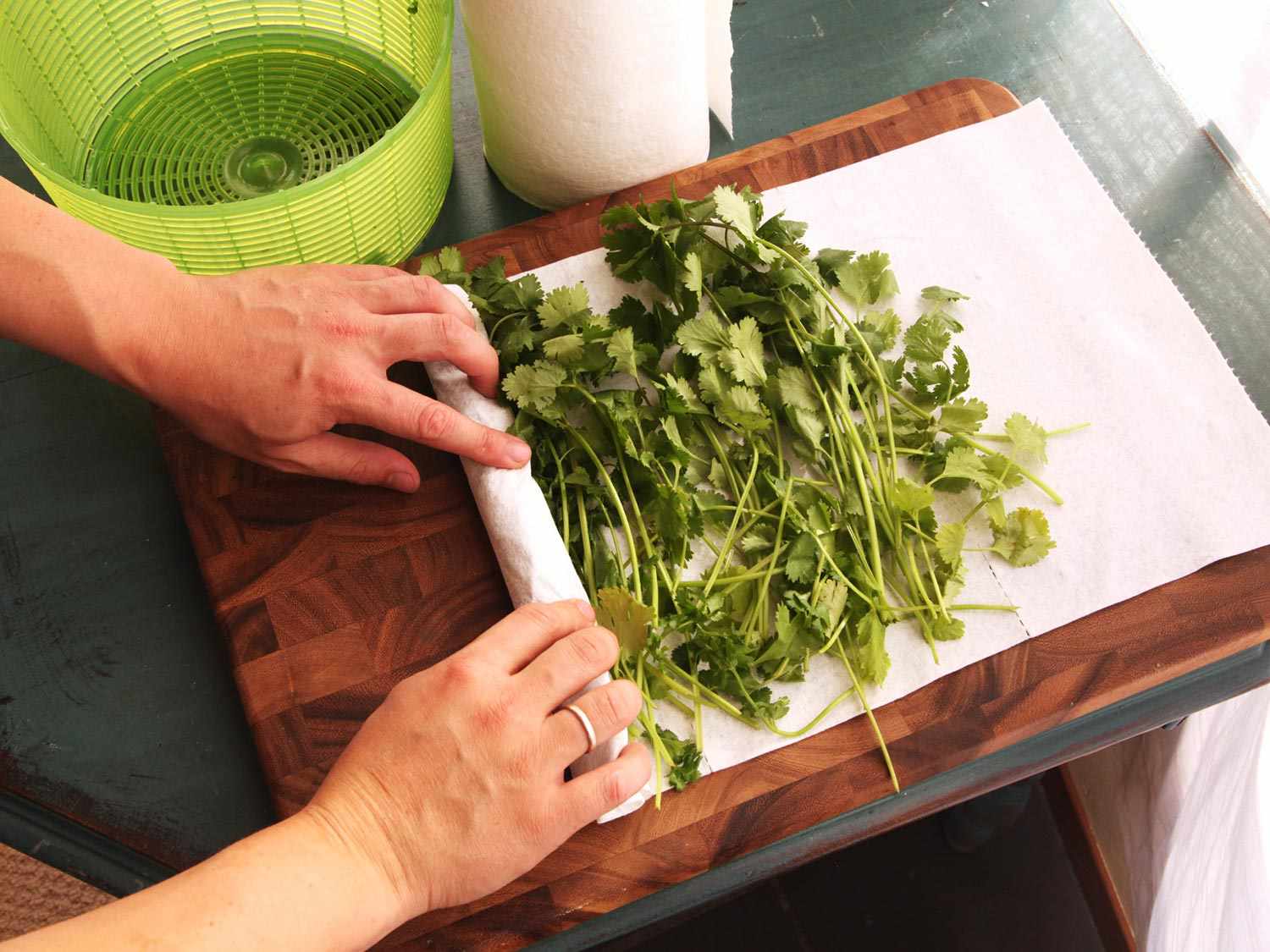
Wash only before use to avoid trapped moisture. - Wrap loosely in a slightly damp paper towel
The towel should feel barely moist, not wet. - Place in a breathable container
A perforated bag or a loosely closed container works best. - Store in the refrigerator
The crisper drawer is ideal.
5.3 How Long Hardy Herbs Last
- Rosemary & thyme: 2–3 weeks
- Sage & oregano: 1–2 weeks
- Bay leaves: several weeks
Hardy herbs often taste better after a few days of rest, as surface moisture stabilizes.
6. Why Basil Is the Exception to Almost Every Rule
Basil deserves its own section because it behaves unlike any other common herb.
6.1 Basil Hates the Cold
Temperatures below about 10°C cause blackening and flavor loss. Refrigeration damages basil’s cell structure.
6.2 Best Storage for Basil
- Treat like flowers
- Keep at room temperature
- Change water daily
- Use within a week for peak flavor
6.3 Extra Tip
If basil leaves begin to droop, trim the stems again. Basil often “revives” within an hour.
7. Should You Wash Herbs Before Storing?
This is one of the most debated questions—and the answer depends on the herb and the storage method.
7.1 When Washing Helps
- For bouquet storage of tender herbs
- When herbs are visibly dirty
- If you will use them within a few days
7.2 When Washing Hurts
- For wrapped storage of hardy herbs
- When water cannot fully evaporate
7.3 Best Practice
If you wash herbs:
- Dry them thoroughly using a towel or salad spinner
- Never store herbs wet unless stems are intentionally submerged
8. Containers: Plastic, Glass, or Something Else?
8.1 Plastic Bags
Pros:
- Retain humidity
- Easy and cheap
Cons:
- Trap excess moisture
- Encourage rot if sealed tightly
8.2 Glass Containers
Pros:
- Neutral odor
- Easy to clean
- Good visibility
Cons:
- Can trap condensation if sealed
8.3 Breathable Produce Containers
These are ideal because they balance humidity and airflow. If unavailable, slightly open containers work well.
9. Advanced Chef-Level Herb Storage Tips
9.1 The Two-Zone Refrigerator Strategy
Store herbs in the warmest part of the fridge, usually the door or upper shelf, to reduce cold damage.
9.2 Rotate and Inspect Daily
Remove damaged leaves immediately. One decaying leaf accelerates spoilage.
9.3 Separate Strong-Scented Herbs
Rosemary and sage can transfer aroma to delicate herbs like parsley.
9.4 Store Whole, Not Chopped
Cutting releases enzymes and volatile oils. Chop only what you need.
10. Freezing Fresh Herbs Without Losing Flavor
Freezing isn’t ideal for texture, but it preserves aroma surprisingly well.
10.1 Best Herbs for Freezing
- Parsley
- Cilantro
- Dill
- Chives
- Basil (with preparation)
10.2 Ice Cube Method
- Chop herbs
- Place in ice cube trays
- Cover with olive oil or water
- Freeze and store in freezer bags
These cubes are perfect for soups, sauces, and sautés.
10.3 Whole-Leaf Freezing
Hardy herbs like rosemary can be frozen whole and stripped later.
11. Drying vs. Storing Fresh: When to Choose Each
Drying concentrates flavor but changes it. Some herbs retain character when dried; others lose their identity.
11.1 Herbs That Dry Well
- Rosemary
- Thyme
- Oregano
- Sage
11.2 Herbs Best Used Fresh
- Basil
- Cilantro
- Parsley
- Chives
Knowing when not to store fresh herbs is just as important.
12. Common Mistakes That Kill Herbs Fast
- Sealing herbs in airtight containers while wet
- Storing basil in the fridge
- Crushing herbs under heavy items
- Ignoring temperature differences
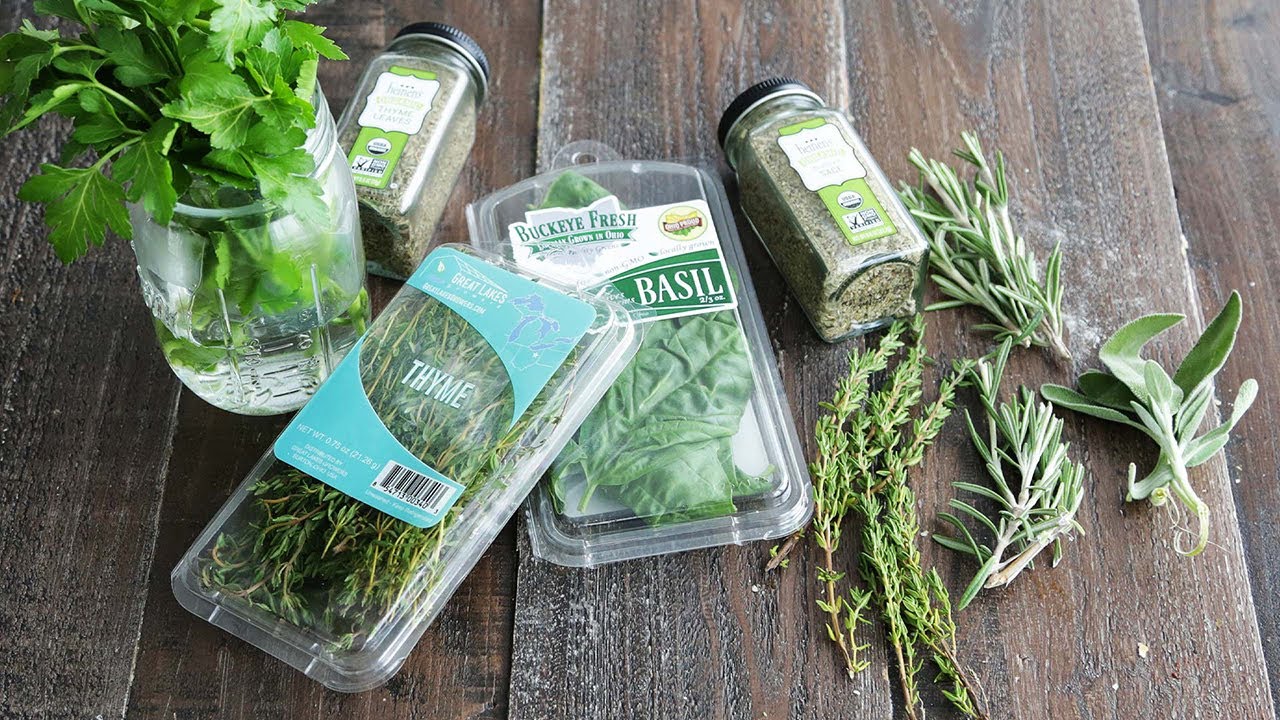
- Leaving herbs in original store packaging
Avoiding these mistakes alone can double herb lifespan.
13. Flavor Preservation: The Final Goal
Storing herbs is not about making them last forever. It’s about preserving flavor during their natural lifespan. The best storage method:
- Maintains moisture balance
- Protects essential oils
- Minimizes stress
- Respects each herb’s biology
When herbs are stored correctly, they don’t just last longer—they taste better every time you use them.
14. A Simple Herb Storage Cheat Sheet
- Tender herbs → bouquet method
- Hardy herbs → wrapped refrigeration
- Basil → room temperature only
- Never seal wet herbs
- Freeze when abundance exceeds use
Master these rules, and fresh herbs become a reliable, joyful part of everyday cooking rather than a source of waste.
Conclusion: Treat Herbs Like Living Ingredients
Fresh herbs aren’t just ingredients; they’re living plant matter with preferences, sensitivities, and personalities. When you store them thoughtfully, they reward you with brighter flavors, better aromas, and less waste.
The best way to store fresh herbs for maximum flavor isn’t a single trick—it’s an understanding. Once you have that, every bunch of herbs becomes an opportunity, not a countdown clock.