







Introduction: The Box Is Louder Than You Think
Packaging used to be invisible. It arrived, did its job, and disappeared—sometimes into a bin, sometimes into a drawer, often into the environment. Today, packaging speaks. It speaks about values, science, economics, design, and responsibility. It whispers convenience and shouts waste. It promises protection and threatens pollution. And increasingly, it asks a blunt question of businesses and consumers alike: does eco-friendly packaging really matter?
This article answers that question without slogans, without hand-waving, and without moralizing. We will examine what “eco-friendly packaging” actually means, how it performs in the real world, where it succeeds, where it fails, and why it matters far beyond appearances. We will move from materials science to supply chains, from consumer psychology to lifecycle analysis, from regulation to innovation. Along the way, we’ll separate facts from fashionable myths and show why the humble package is one of the most powerful levers in modern sustainability.
If you expect a simple yes or no, you won’t find it here. What you will find is something more useful: clarity.
1. What Do We Mean by “Eco-Friendly Packaging”?
Before judging whether eco-friendly packaging matters, we must define it precisely. The term is widely used and frequently abused.
At its core, eco-friendly packaging refers to packaging systems designed to reduce environmental harm across their entire lifecycle—from raw material extraction to production, transportation, use, and end-of-life.
This typically involves one or more of the following characteristics:
- Reduced material use (lightweighting, minimal design)
- Renewable or responsibly sourced materials (paper, bamboo, biopolymers)
- Recyclability or compostability
- Reusability
- Lower carbon footprint
- Non-toxic inks, coatings, and adhesives
Importantly, eco-friendly does not automatically mean biodegradable, paper-based, plastic-free, or recycled. Those are tools, not guarantees.
A package made from recycled plastic may outperform a paper package in carbon emissions. A compostable film may cause harm if it contaminates recycling streams. A reusable container may increase emissions if it travels too far or is rarely reused.
Eco-friendly packaging is not a label. It is a systems outcome.
2. Why Packaging Is Not a Small Problem
Packaging feels trivial because it is thin, light, and temporary. But globally, it is anything but.
Packaging accounts for a substantial share of material production, energy use, and waste generation. It dominates municipal waste streams, contributes to marine pollution, and shapes consumer behavior on a massive scale.
Three facts make packaging especially important:
- Volume: Packaging is produced in enormous quantities, often for single use.
- Visibility: Unlike industrial waste, packaging is seen, touched, and discarded by consumers.
- Velocity: Packaging moves fast—from factory to home to landfill in days or even minutes.
Because of this, even small improvements in packaging design can create outsized environmental benefits. Conversely, poor packaging choices can negate sustainability gains elsewhere in a product’s lifecycle.
Packaging is not the side story. It is a multiplier.
3. The Lifecycle Lens: Where Impact Really Happens
To understand whether eco-friendly packaging matters, we must look at lifecycle assessment (LCA) thinking.
An LCA examines environmental impacts across five key stages:
- Raw material extraction
- Material processing
- Manufacturing and converting
- Transportation and distribution
- End-of-life management
Eco-friendly packaging matters most when it improves outcomes across multiple stages—or significantly improves one stage without harming others.
Raw Materials
Virgin plastic comes from fossil fuels. Paper comes from trees. Aluminum comes from bauxite ore. None of these are impact-free.
Eco-friendly strategies here include:
- Using recycled content
- Using renewable resources with responsible forestry or agriculture
- Reducing material intensity
Manufacturing
Some materials require high temperatures, long processing times, or chemical treatments. Energy source matters here: the same material can have very different footprints depending on where and how it is made.
Transportation
Packaging weight and shape influence fuel consumption. Lightweight flexible packaging often outperforms rigid alternatives, even if it looks “less green.”
End-of-Life
This is where perception often diverges from reality.
A package is only recyclable if:
- The material is technically recyclable
- Collection systems exist
- Sorting systems recognize it
- End markets exist
- Consumers dispose of it correctly
Eco-friendly packaging matters most when design aligns with real-world waste systems, not idealized ones.
4. The Plastic Paradox: Villain, Hero, or Misunderstood Tool?
No discussion of packaging is complete without addressing plastic.
Plastic has become the symbol of environmental harm. Yet from a purely functional perspective, plastic is remarkably efficient: light, strong, flexible, and protective.
The paradox is this:
- Plastic excels at reducing food waste, emissions from transport, and breakage.
- Plastic fails catastrophically at end-of-life when mismanaged.
Eco-friendly packaging does not mean eliminating plastic at all costs. It means using plastic intelligently.

This includes:
- Reducing unnecessary plastic
- Designing mono-material structures for recycling
- Using recycled plastic where possible
- Avoiding problematic additives and colors
- Pairing plastic use with robust collection systems
Replacing plastic with heavier materials can increase emissions, water use, and energy consumption. Eco-friendly packaging is not about material purity; it is about net environmental benefit.
5. Paper, Cardboard, and the Comfort of Familiarity
Paper-based packaging enjoys high consumer trust. It feels natural, recyclable, and benign. Often, it is.
But paper is not impact-free.
Paper production can involve:
- Deforestation
- High water use
- Chemical pulping processes
- Energy-intensive drying
Well-designed paper packaging can be excellent, especially when:
- Sourced from certified forests
- Made with high recycled content
- Designed for reuse or easy recycling
- Free from plastic laminations
Poorly designed paper packaging can be deceptive, especially when coated, lined, or combined with non-recyclable layers.
Eco-friendly packaging demands honesty about trade-offs. Paper is not automatically better—it is context-dependent.
6. Compostables: Promise, Potential, and Pitfalls
Compostable packaging sounds like a perfect solution. Use it, throw it away, and let nature handle the rest.
Reality is more complicated.
Compostable materials typically require:
- Specific temperature and humidity conditions
- Industrial composting facilities
- Clear labeling and consumer understanding
Without these, compostables can:
- Behave like conventional plastics in landfills
- Contaminate recycling streams
- Confuse consumers
Eco-friendly packaging using compostables works best in controlled environments:
- Food service with on-site composting
- Closed-loop systems
- Regions with mature composting infrastructure
Compostability is not a universal solution. It is a targeted one.
7. Reuse: The Most Powerful Strategy (When It Works)
From an environmental standpoint, reuse often beats recycling and composting. Extending a package’s life spreads its environmental cost over many uses.
Reusable packaging includes:
- Refillable containers
- Returnable shipping boxes
- Durable transport packaging
- Deposit-based systems
However, reuse only works when:
- Return rates are high
- Transportation distances are reasonable
- Cleaning processes are efficient
- Users are willing participants
Eco-friendly packaging embraces reuse not as a niche ideal, but as a designed behavior system.
8. Design Matters More Than Materials
One of the most overlooked truths in sustainable packaging is this:
Design decisions often matter more than material choices.
Good design can:
- Reduce material use by 30–50%
- Improve stackability and transport efficiency
- Eliminate unnecessary components
- Guide proper disposal behavior
- Enhance reuse potential
Bad design can sabotage even the greenest materials.
Eco-friendly packaging is not about swapping materials at the end of the process. It is about integrating sustainability into design from the start.
9. The Consumer Factor: Perception, Behavior, and Trust
Packaging does not exist in isolation. It interacts with human behavior.
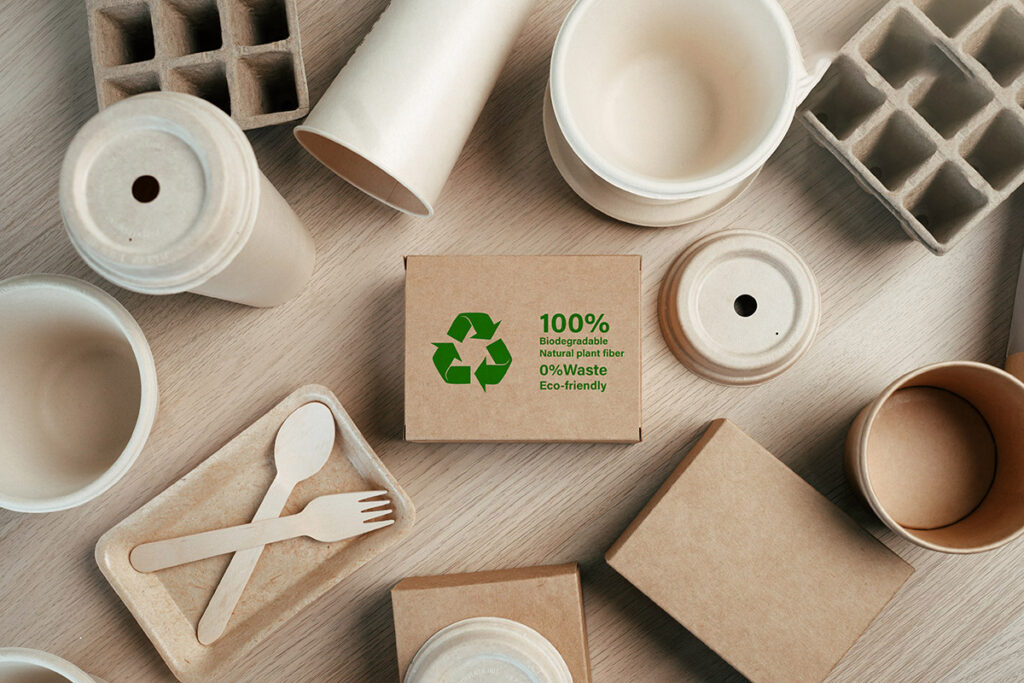
Consumers:
- Judge sustainability visually
- Rely on simple cues
- Often misunderstand labels
- Want convenience and clarity
Eco-friendly packaging matters because it shapes:
- Brand trust
- Purchase decisions
- Disposal behavior
- Long-term habits
Clear labeling, intuitive design, and honest communication are as important as material choices. Confusing or misleading packaging can do more harm than good by eroding trust and increasing contamination.
10. Greenwashing: When Eco-Friendly Becomes a Costume
As sustainability gains attention, the risk of greenwashing grows.
Greenwashing in packaging includes:
- Vague claims (“eco,” “natural,” “green”)
- Highlighting one minor improvement while ignoring major impacts
- Using imagery that implies sustainability without evidence
- Promoting recyclability where no infrastructure exists
Eco-friendly packaging matters only when it is credible.
Credibility comes from:
- Measurable improvements
- Transparent communication
- Alignment with real-world systems
- Willingness to acknowledge trade-offs
Trust is fragile. Once lost, it is expensive to rebuild.
11. Regulation and Responsibility: The Direction of Travel
Around the world, packaging regulation is tightening.
Common policy trends include:
- Extended Producer Responsibility (EPR)
- Recycled content mandates
- Single-use restrictions
- Labeling requirements
- Waste reduction targets
Eco-friendly packaging is no longer optional risk management. It is strategic compliance.
Companies that invest early in better packaging systems gain:
- Regulatory resilience
- Supply chain stability
- Innovation advantage
- Brand credibility
Those that delay face disruption, cost spikes, and reputational damage.
12. The Economics of Eco-Friendly Packaging
A common objection is cost.
Eco-friendly packaging can be:
- More expensive per unit
- Less familiar to suppliers
- Harder to scale initially
But cost analysis must include:
- Material reduction savings
- Transport efficiency gains
- Waste management fees
- Regulatory penalties avoided
- Brand value creation
In many cases, well-designed eco-friendly packaging reduces total system cost.
Short-term price increases can lead to long-term resilience and profitability.
13. Innovation: Where the Field Is Heading
Packaging innovation is accelerating.
Key directions include:
- Advanced recycling technologies
- Bio-based polymers with improved performance
- Smart packaging that reduces food waste
- Modular and reusable logistics systems
- Digital tracking of packaging lifecycles
Eco-friendly packaging is becoming smarter, not just greener.
The future belongs to systems that combine:
- Material science
- Design thinking
- Data
- Infrastructure alignment
14. Does Eco-Friendly Packaging Really Matter? A Direct Answer
Yes—but not in the simplistic way it is often presented.
Eco-friendly packaging matters because:
- Packaging is a high-impact, high-visibility system
- Design choices scale rapidly
- It influences waste, emissions, and behavior
- It reflects and reinforces broader sustainability strategies
It does not matter when:
- It is treated as a cosmetic fix
- It ignores real-world systems
- It sacrifices function without benefit
- It replaces one problem with another
Eco-friendly packaging is not a moral badge. It is an engineering, design, and systems challenge.
When done well, it is one of the most effective sustainability tools available.
15. Final Thoughts: From Container to Catalyst
Packaging is no longer just a container. It is a message, a system, and a responsibility.
Eco-friendly packaging matters because it forces better questions:
- What do we really need?
- How long should it last?
- Where does it go next?
- Who is responsible?
Answering those questions well leads not only to better packaging, but to better products, better supply chains, and better outcomes.
The box is small. The impact is not.