





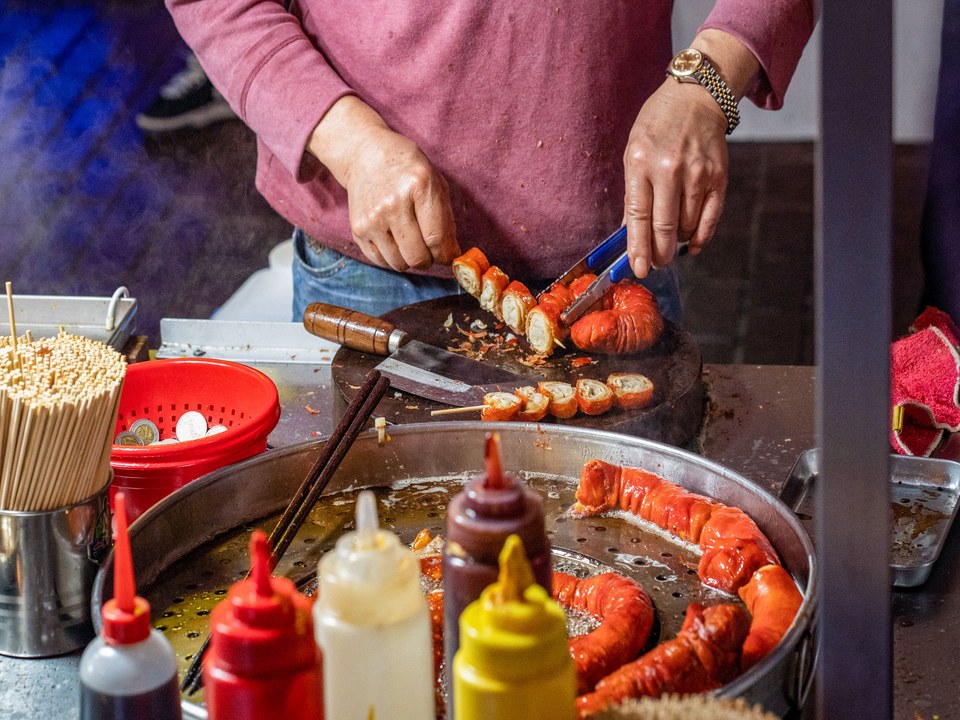

Food is the most intimate archive a city possesses. Buildings can be demolished, borders redrawn, and languages forgotten, but recipes—passed hand to hand, mouth to mouth—often survive upheaval with astonishing resilience. When you taste a city, you are not merely sampling flavors; you are encountering layers of conquest and commerce, climate and class, migration and memory. The question, then, is not whether history exists in food, but how deeply it is embedded—and how clearly we can learn to read it.
This essay explores how urban foodways function as living historical documents. We will examine how geography sets the first conditions of taste, how power and politics leave marks on everyday meals, how migration reshapes culinary identities, and how modern cities negotiate authenticity in a globalized world. Along the way, we will look at techniques, ingredients, and dining rituals as evidence—edible clues that, when assembled, tell the story of a city across centuries.
Food as a Historical Language
History is often taught through dates, wars, and rulers. Food tells a different kind of story: slower, more intimate, and often more honest. A dish rarely exists by accident. It emerges from a specific set of constraints—what grows nearby, what can be preserved, what people can afford, and what cultural rules govern eating.
Think of food as a language with grammar and accent. Ingredients form the vocabulary, techniques the syntax, and presentation the rhetoric. A city’s cuisine develops an accent over time, shaped by who speaks it and who is forced to adapt to it. When newcomers arrive, they learn the local grammar but introduce new words. When empires expand, they impose their culinary dialects, sometimes subtly, sometimes brutally.
Unlike written records, food history is not centralized. It is scattered across kitchens, markets, and street stalls. It survives because people eat every day. This repetition is what makes food such a powerful historical medium: it encodes continuity. A stew cooked today may follow the same logic as one simmered three hundred years ago, even if the cook has never read a history book.
Geography: The First Author of Taste
Every city begins with geography, and geography begins the menu.
Rivers, coasts, plains, and mountains dictate what is possible long before culture enters the conversation. A port city will almost inevitably develop a cuisine open to the world—rich in seafood, spices, and foreign techniques. An inland city surrounded by farmland may favor grains, preserved meats, and slow cooking methods that maximize caloric return.
Climate matters just as much. Hot, humid environments encourage fermentation and spicing—not only for flavor but for preservation and safety. Cold climates reward fat, smoke, and salt. These are not aesthetic choices; they are survival strategies that later become traditions.
Consider the simple act of seasoning. Salt was once a strategic resource, shaping trade routes and urban wealth. Cities with access to salt mines or coastal evaporation ponds could preserve food and support larger populations. Their cuisines often developed complex cured products—hams, fish, cheeses—that became markers of identity long after refrigeration made them unnecessary.
Geography, then, writes the opening chapter. It establishes the constraints within which creativity operates. Every subsequent historical influence must negotiate with these original conditions.
Markets: Where History Changes Hands
If geography is the author, markets are the editors.
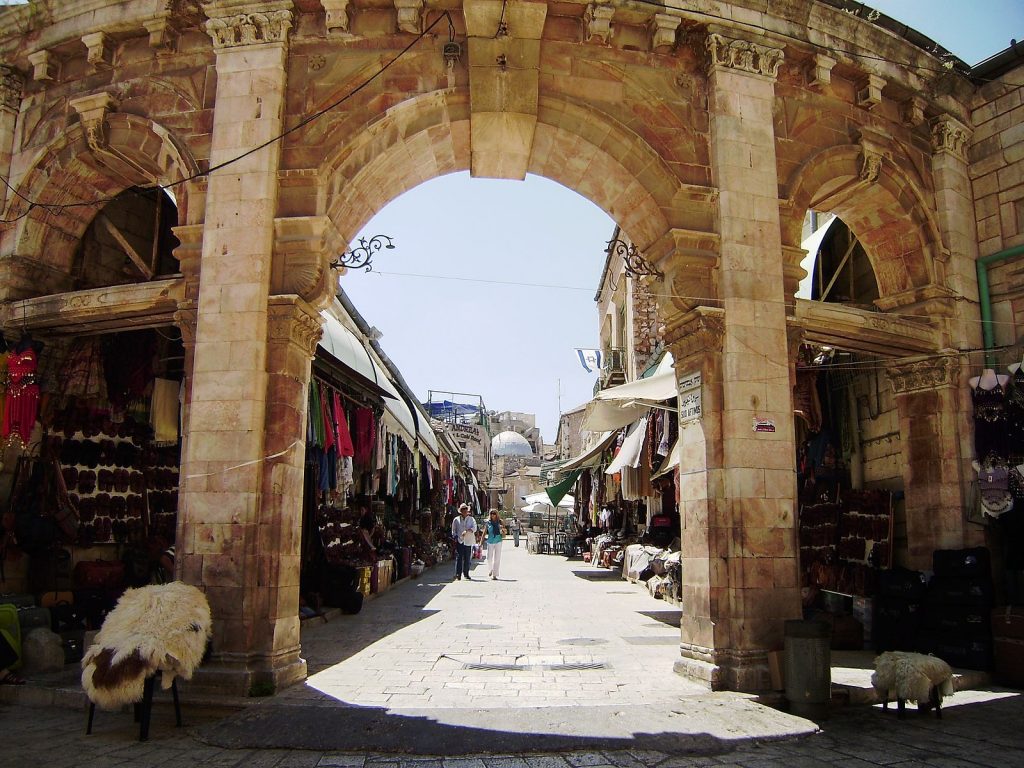
Urban markets are where rural production meets urban demand, where imported goods challenge local habits, and where economic shifts become edible almost immediately. A new spice appearing on market stalls is not just a flavor innovation; it is evidence of trade agreements, colonial ventures, or technological advances in transportation.
Markets also reveal social hierarchies. What is sold cheaply, what is considered luxury, and what is deemed unfit for consumption all reflect class structures. Offal-heavy cuisines, for example, often emerge in cities where the working poor make creative use of what elites discard. Over time, these dishes may be rebranded as delicacies, their origins sanitized or romanticized.
The rhythm of the market—daily, weekly, seasonal—mirrors the agricultural calendar and religious life of the city. Fasting days, feast days, harvest festivals: all leave traces in what is bought and sold. To walk through a historic market is to see time layered on the stalls, each product a clue to past needs and present desires.
Power on the Plate: Politics, Empire, and Control
Food is never neutral. It is regulated, taxed, rationed, and politicized.
When a city becomes part of an empire, its cuisine absorbs the logic of power. Colonial administrators may introduce new crops to feed armies or extract profit. Local populations adapt these ingredients into their own culinary systems, sometimes subverting the original intent. What begins as control can end as tradition.
Take the introduction of sugar, coffee, or tea—commodities tied to global systems of labor and exploitation. Urban cafés become sites of intellectual exchange, political plotting, and social change, all fueled by ingredients whose histories are far from innocent. To sip these beverages without acknowledging their past is to taste history selectively.
War leaves particularly deep marks on urban food. Scarcity forces substitution, innovation, and sometimes radical simplification. Dishes created during periods of rationing often persist long after abundance returns, carrying with them stories of resilience. A humble soup or bread may encode memories of siege, migration, or economic collapse.
Government policy also shapes taste. Laws regulating bread weight, meat quality, or alcohol production standardize certain foods while marginalizing others. Over time, these regulations crystallize into what people consider “normal” or “traditional,” even when they originated in bureaucratic necessity.
Migration: The Engine of Culinary Change
Cities are magnets. They draw people seeking work, safety, or opportunity. Each wave of migration rewrites the city’s menu.
Migrants arrive with culinary memories and techniques, but they must adapt to available ingredients and local tastes. This process produces hybrid dishes—neither purely old nor entirely new. These hybrids are often dismissed as inauthentic, yet they are among the most historically honest foods a city produces.
Urban enclaves form around shared language and food. Restaurants become informal archives, preserving techniques that may have disappeared in the place of origin. Over time, these foods escape the enclave, influencing the broader city cuisine. What was once “foreign” becomes familiar, then essential.
Migration also challenges hierarchies of taste. Foods associated with newcomers are often stigmatized before being celebrated. This cycle—rejection, tolerance, appropriation—reveals much about how cities negotiate identity. When a dish crosses class boundaries, it often loses its original context, gaining prestige while shedding its story.
To taste migrant food is to taste movement: the compression of distance, the negotiation of belonging, and the creativity born of constraint.
Technique as Memory
Ingredients change, but techniques endure.
How food is cooked often tells us more about history than what is cooked. Slow braising suggests fuel scarcity or tough cuts of meat. Deep-frying implies access to abundant fat and stable heat sources. Fermentation indicates a need for preservation and a deep understanding of microbial life long before it was scientifically described.
Urban kitchens are shaped by architecture. Narrow apartments encourage one-pot meals. Communal ovens foster shared baking traditions. Street food arises where private cooking space is limited, turning public space into a culinary stage.
Techniques are also taught socially, not academically. They are learned by watching, repeating, and correcting. This embodied knowledge resists standardization, which is why it survives political change so well. A city may change rulers, but grandmothers continue to cook as they always have, adjusting only when forced by circumstance.
When chefs attempt to “modernize” traditional dishes, they often focus on ingredients or presentation, forgetting that technique is the true carrier of memory. Alter the technique too much, and the historical thread snaps.
Rituals of Eating: Time, Place, and Meaning
Food is not only what is eaten, but when, where, and with whom.
Urban dining rituals structure daily life. Breakfast foods reflect work patterns. Lunch customs reveal class divisions. Late-night eating tells stories of labor, leisure, and safety. These rhythms change slowly, even as cities modernize.
Religious and civic rituals anchor cuisine in the calendar. Specific dishes appear only on certain days, reinforcing collective memory. To eat them outside their proper time feels wrong, not because of logic, but because of history.
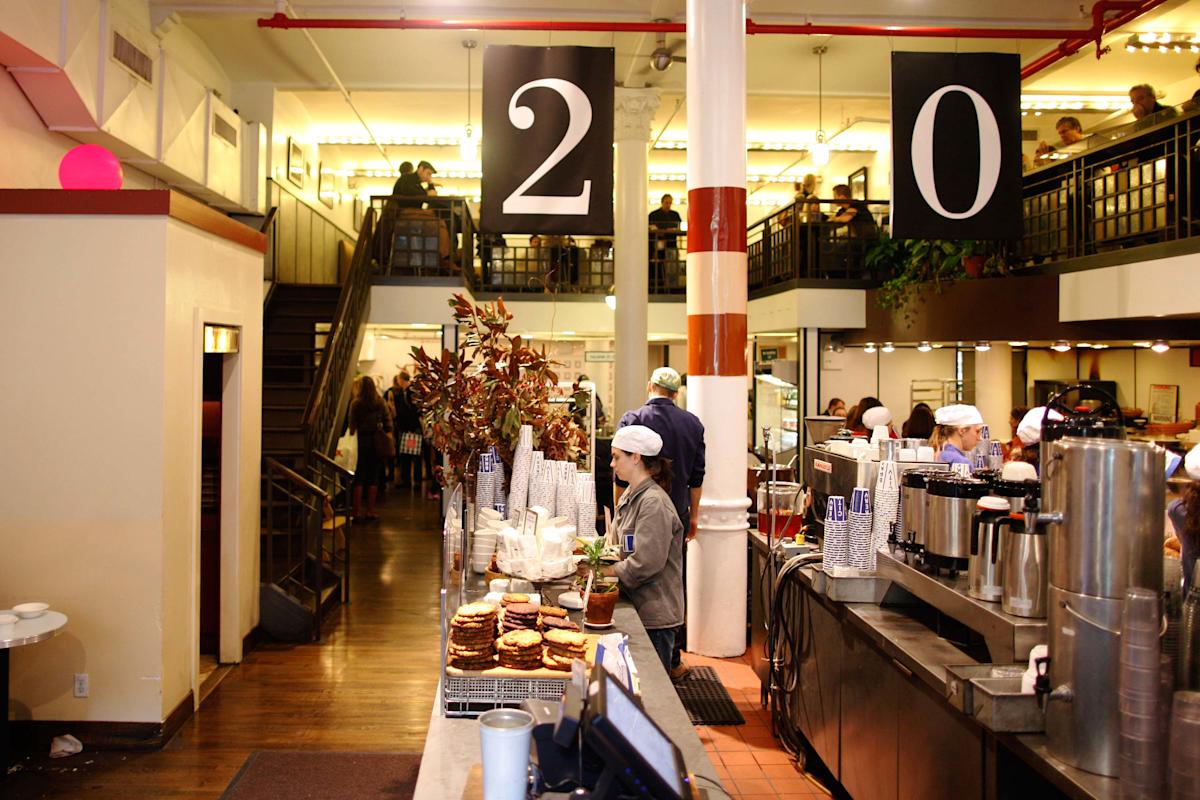
Public eating spaces—taverns, cafés, tea houses—serve as social laboratories. They are where ideas circulate, alliances form, and identities are performed. The layout of these spaces, the foods they serve, and the etiquette they enforce all reflect the values of the city at a particular moment.
When these rituals disappear, something more than a meal is lost. The city loses a way of synchronizing itself, of reminding its inhabitants that they share time as well as space.
Class, Labor, and the Invisible Hands
Behind every iconic dish lies labor—often invisible, often undervalued.
Urban food history is inseparable from class. Who cooks and who eats, who serves and who is served, are questions loaded with power. Many celebrated city dishes originate in working-class kitchens or street stalls, created to be filling, cheap, and portable.
As these foods gain popularity, the labor behind them is frequently erased. Recipes are codified, prices rise, and the original cooks are replaced by professionalized versions of themselves. The dish remains, but its social context shifts.
Understanding a city’s food requires acknowledging these dynamics. A dish is not just a combination of flavors; it is a record of labor relations, gender roles, and economic structures. To taste without seeing the hands that made it is to read history incompletely.
Authenticity: A Moving Target
Cities love the word “authentic,” but authenticity is slippery.
What is considered authentic food is often defined by nostalgia rather than history. A dish frozen at a particular moment becomes a symbol, even though it may have been different a generation earlier. This selective memory simplifies complex histories into marketable narratives.
Globalization intensifies this tension. As cities become culinary destinations, they package their food for visitors. Menus are translated, flavors adjusted, and stories streamlined. The result can be a polished version of history that hides as much as it reveals.
Yet authenticity is not necessarily about purity. It is about continuity of meaning. A dish that evolves in response to real social change may be more authentic than one artificially preserved. Cities that understand this allow their food to breathe, to adapt without forgetting.
Modern Cities, Ancient Flavors
In contemporary cities, historical foodways coexist with innovation. Street vendors use digital payments. Traditional dishes are plated with modern aesthetics. Old markets share space with food halls.
This layering is not a problem; it is the point. Cities are palimpsests, and so are their cuisines. The challenge is to recognize the layers rather than flatten them.
When chefs engage thoughtfully with history, they do more than recreate flavors. They ask questions: Why did this dish exist? What problem did it solve? Whose voices does it represent? The answers guide innovation that respects context rather than exploiting it.
For diners, tasting history requires attention. It means asking where ingredients come from, why a dish is eaten a certain way, and what has changed. It means understanding that pleasure and knowledge are not opposites; they enhance each other.
Learning to Taste Historically
So, can you taste the history of a city in its food? Yes—but only if you learn how to listen with your palate.
History in food is not always loud. It whispers through techniques, through timing, through the persistence of certain flavors against all odds. It hides in humble dishes more often than in elaborate ones.
To taste historically is to accept complexity. A single bite may contain geography, empire, migration, labor, and memory. It may be delicious and troubling at the same time. This tension does not diminish the pleasure; it deepens it.
Cities are living organisms, and their food is their metabolism. By paying attention to what a city eats—and how—it becomes possible to understand not just where it has been, but who it is becoming.
In the end, food does what history books often cannot: it makes the past present. It places centuries on your tongue and asks you to consider them, not as abstractions, but as something warm, fragrant, and undeniably real.